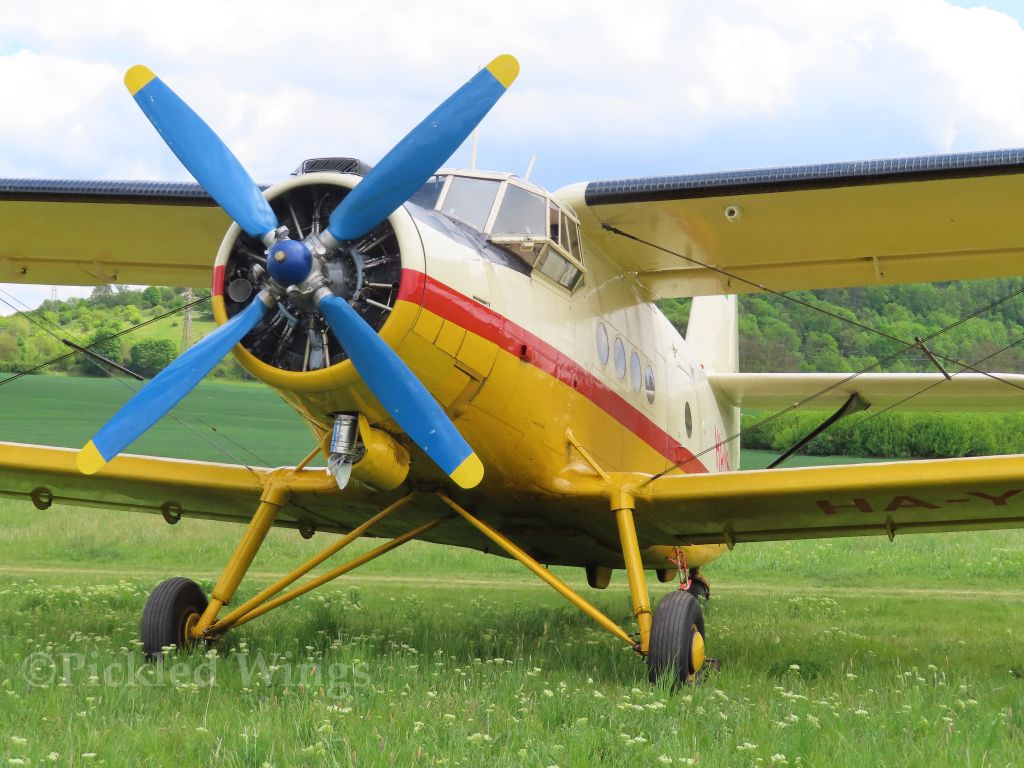
Antonov: Carrying the Weight
Since the dissolution of the Soviet Union in 1991, Antonov has been a state-owned enterprise headquartered in Kyiv, Ukraine. Since its founding in 1946, Antonov has become best known on the world stage as a producer of transport aircraft of all sizes.
The Antonov design bureau was founded in 1946 in Novosibirsk, Siberia. Headed by Oleg Antonov (1906–1984), the bureau was moved to Kyiv, Ukraine, in 1952. It was a wise move, as Kyiv had an aviation heritage stretching back to the early 1900s, along with a well-established infrastructure for producing aircraft and associated technologies.
Oleg Antonov graduated from the Kalinin Polytechnic Institute in Leningrad (now St. Petersburg) in 1930 and spent his early professional years designing gliders for the Moscow Glider Factory. He had designed at least 30 different gliders when the state closed the factory in 1938 after an instructor pilot used a glider to defect to the West.
During the Second World War, Antonov worked as chief designer at Yakovlev and oversaw development and production of the Yak-3 fighter in Novosibirsk. Following the war, Antonov wished to work more independently. He was appointed head of the Novosibirsk factory, which formally became his own design bureau in 1946.
The first aircraft produced by the new design bureau was the An-2, which flew for the first time on 31 August 1947. It was manufactured for far longer than anyone expected and in numbers few could have imagined.
The aircraft was initially intended as a utility type for forestry and agricultural work. However, its adaptability, durability, and simplicity allowed it to become much more.
Let’s spend some time with the Antonov An-2:
A Biplane After World War Two? Seriously?
Monoplanes had been increasing in number throughout the interwar years, and the Second World War firmly established the single-wing configuration as the standard in aircraft design. After the war, monoplanes dominated aviation, and biplanes were often viewed as relics of a bygone era.
With that in mind, one could be forgiven for questioning the logic of the Antonov design bureau when it developed the large biplane An-2 immediately after the conflict. However, there was sound reasoning behind the choice. To understand that logic, one must consider both the performance specifications the An-2 was required to meet and the Polikarpov Po-2 aircraft whose roles it was intended to assume..
The Polikarpov Po-2 was a biplane widely used in forestry and agriculture throughout the Soviet Union during the interwar period and into the post-war years. It earned a strong reputation for simplicity, versatility, excellent low-speed and low-altitude performance, and outstanding STOL (Short Take-Off and Landing) characteristics.
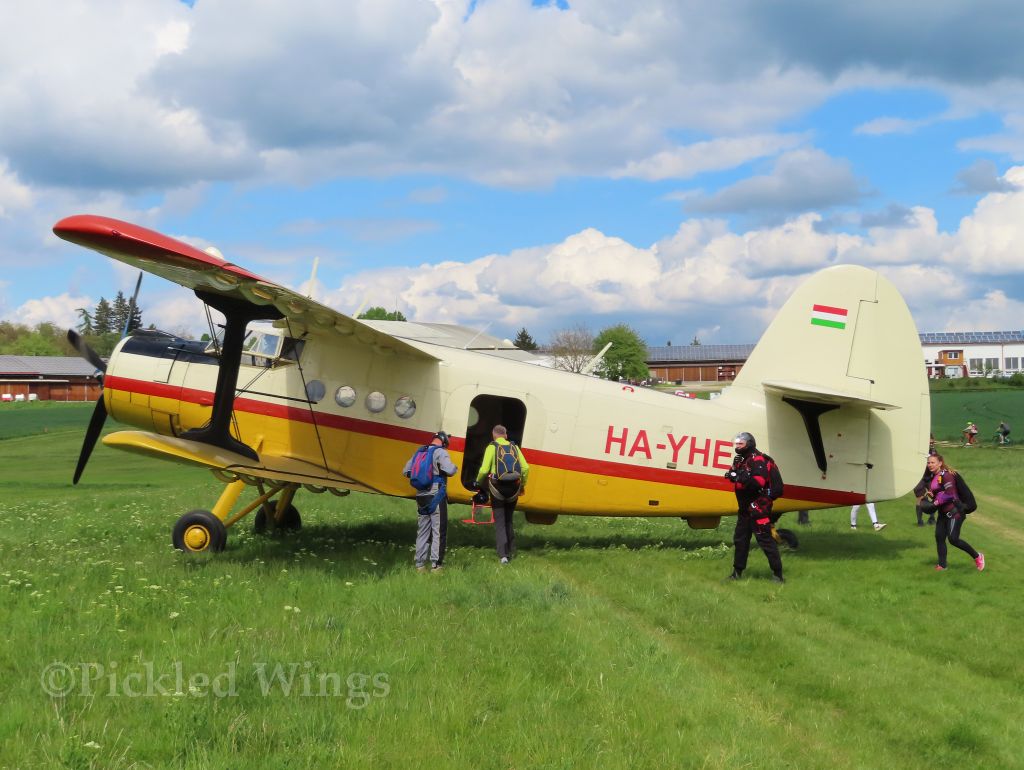
By adopting a biplane configuration, Antonov gave the An-2 an enormous wing area that provided exceptional lift and enabled it to meet the demanding low-speed and STOL performance requirements. The wings were fabric-covered over a metal frame, making repairs in remote areas relatively straightforward. Applying a patch to a fabric-covered wing was far less complex than repairing one built with stressed metal construction.
The decision to use a radial engine was also based on the realities of the environments in which the aircraft would operate. Radial engines were durable and comparatively easy to maintain in austere conditions.
Antonov recognized that the An-2 would need to be every bit as basic, rugged, and resilient as the regions in which it was expected to serve. A true bush plane was required, and that is exactly what the An-2 became.
Outstanding in Many Fields
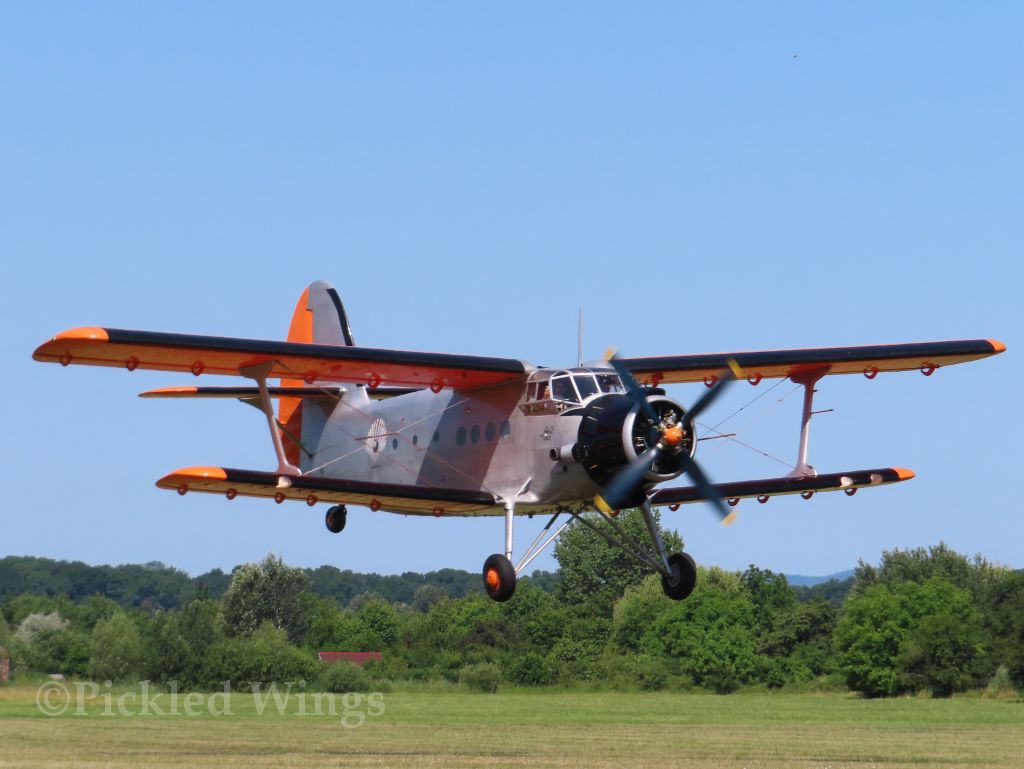
The An-2 quickly expanded beyond agricultural and forestry work. It continually found new roles, including aerial survey and photography, monitoring gas and electrical lines, air ambulance duties, general transport, research flights, bush flying, wildlife management, glider towing, and skydiving.
In demonstrating its adaptability, the aircraft also accumulated an impressive list of achievements:
- For 45 years, it held the record for the longest continuous production run of any aircraft.
- It remains the largest single-engine biplane ever to enter series production.
- More than 18,000 examples were built in the Soviet Union, Poland, and China.
- The An-2 has served with civil and military operators in more than 70 countries.
- In military service, it has performed medical evacuation, light attack, surveillance, weather reconnaissance, and many other missions.
A Stable Full of Colts
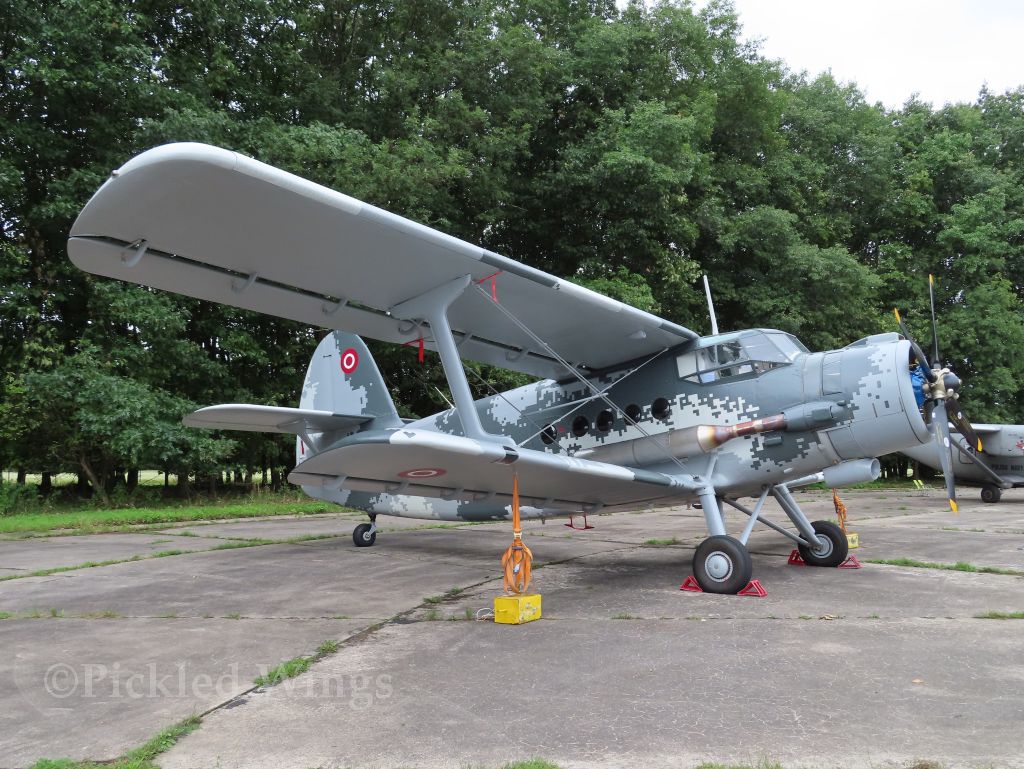
With more than 18,000 aircraft built between 1947 and 2001, the An-2 family can be challenging to sort out. The existence of production lines in three countries adds further complexity.
The following list presents the principal variants by country of manufacture.
Soviet-Produced Versions
Major Soviet production took place between 1947 and 1960. The prototype first flew in Novosibirsk, and initial production occurred in Kyiv. In 1960, most manufacturing shifted to Poland, while limited Soviet production continued in Dolgoprudny, near Moscow.
- An-2T: Baseline cargo model.
- An-2TP: Convertible cargo and passenger variant with folding bench seats, accommodating either freight or 12 passengers.
- An-2P: Dedicated passenger version with 12 forward-facing upholstered seats, cabin heating, and soundproofing.
- An-2SKh: Agricultural crop-dusting version.
- An-2TD: Paratroop transport variant with static-line cable anchors, jump signalling lights, and seating for 12 military or sport parachutists.
- An-2V / An-2W: Floatplane version.
- An-2S: Air ambulance variant capable of carrying up to six stretchers, along with a medical attendant station and emergency equipment.
- An-2PF: Dedicated photogrammetric mapping aircraft with camera ports in the underside of the fuselage.
- An-2L: Forest firefighting variant with internal fire-retardant tanks.
- An-2M: Heavily modernized agricultural version with a sealed cockpit to protect the pilot from chemical exposure.
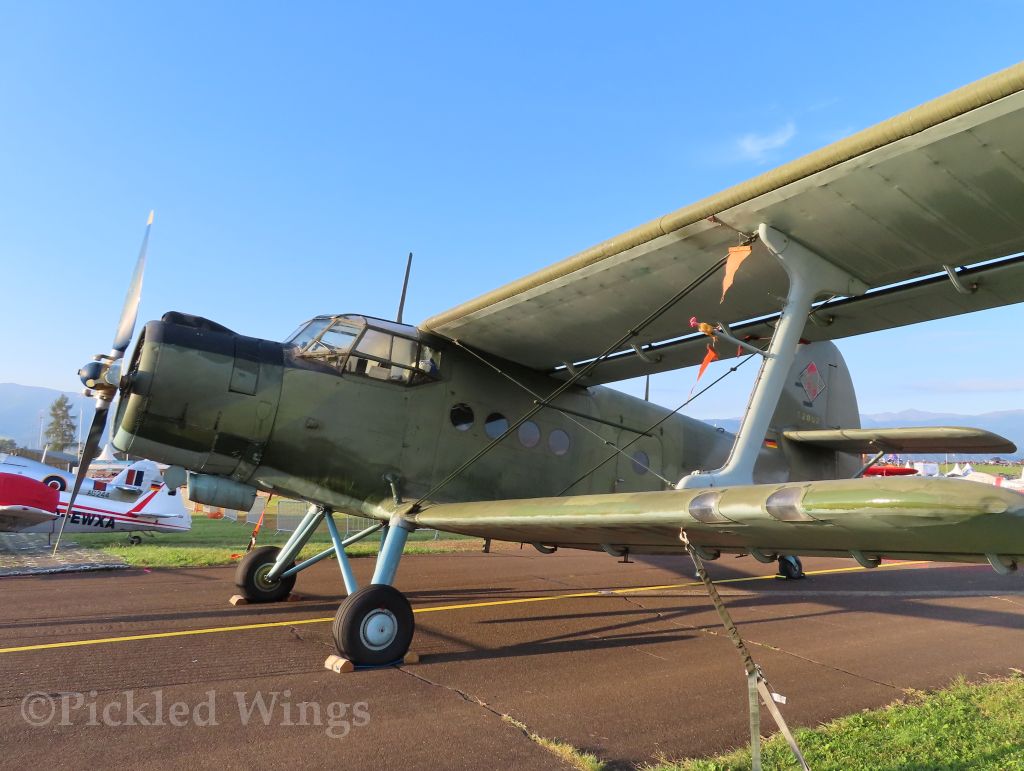
Polish-Produced Versions
Polish-built An-2s were manufactured by PZL-Mielec in south-eastern Poland between 1960 and 1991. With more than 11,900 examples completed, Poland was by far the largest producer of the type.
- An-2T: Standard cargo and utility transport model.
- An-2TD: Paratroop variant with 12 seats, static-line cables, and drop signalling lights.
- An-2TP: Convertible passenger and cargo transport based on the An-2TD.
- An-2P: Civilian passenger version with seating for 12 in a soundproofed cabin.
- An-2PD-5 / 6: VIP and executive transport versions with luxury interiors.
- An-2PF / An-2P Photo: Photo-mapping and aerial reconnaissance platforms.
- An-2PR (An-2PRTV): Television relay and broadcasting variant used by Polish television networks.
- An-2PK: VIP transport configuration with specialized cold-weather modifications.
- An-2 Geofiz (An-2Geo): Geophysical survey aircraft equipped with specialized research equipment.
- An-2M: Polish-designed floatplane version broadly equivalent to the Soviet An-2V.
- An-2R: Agricultural version with a hopper capable of carrying 1,300 kilograms (2,866 pounds) of liquid or powdered chemicals.
- An-2S: Air ambulance variant configured for stretchers and medical attendants.
Chinese-Produced Versions
Production of the An-2 in China began in the late 1950s. Manufacturing was initially assigned to Nanchang Aircraft, transferred to Harbin Aircraft in 1968, and moved to Shijiazhuang Aircraft in 1970. Some sources indicate that production of the Y-5, the Chinese derivative of the An-2, continued into the 2020s at a very low rate.
- Nanchang Y-5: Basic utility and transport model built from Soviet blueprints.
- Nanchang Y-5II: Initial agricultural version.
- Nanchang Y-5A: Passenger and light transport version.
- Nanchang Y-5C: Floatplane version.
- Nanchang Y-5D: Dedicated trainer for bomber crews and navigators.
- Nanchang Y-5K: VIP transport version with seating for 5 to 7 passengers.
- Shijiazhuang Y-5B: Improved agricultural variant optimized for hot and humid climates.
- Shijiazhuang Y-5B-100: Version fitted with distinctive multi-winglet upper wingtips to improve climb performance and lift-to-drag ratio.
- Shijiazhuang Y-5B(T) / Y-5C (late): Modernized paratroop versions with updated avionics; the later Y-5C also incorporated the wingtip modifications of the Y-5B-100.
- Shijiazhuang Y-5U: Unmanned aerial vehicle (UAV) based on the Y-5B, developed in both civilian and military forms.
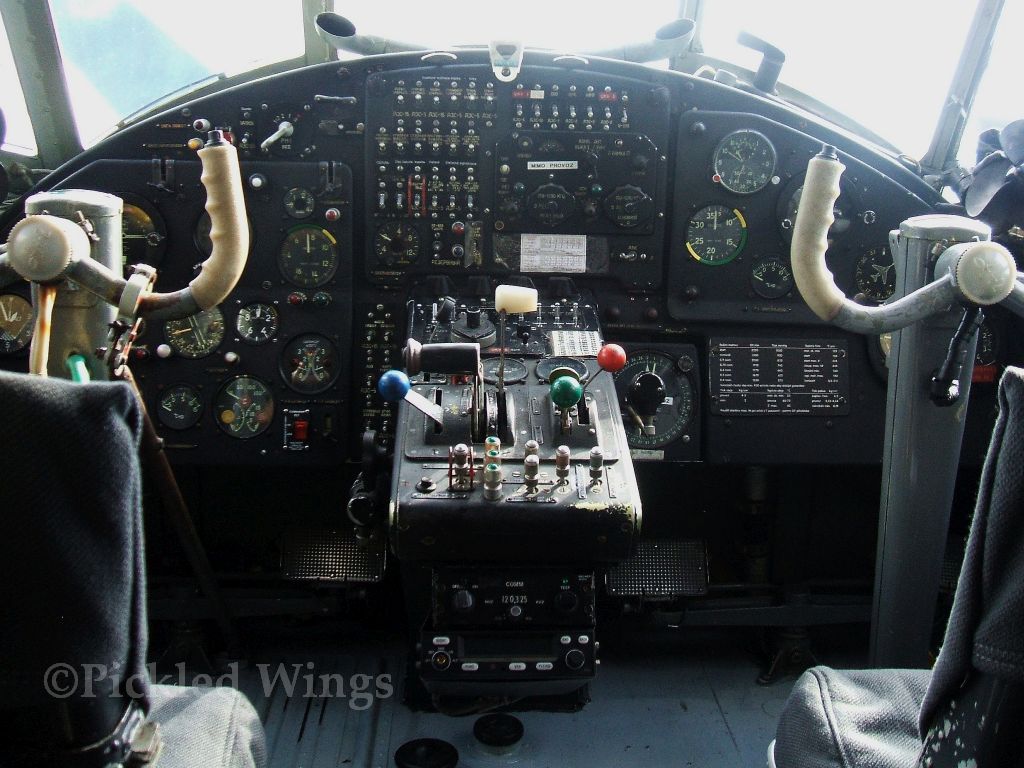
The Secret to Near-Everlasting Life?
If one were assembling a formation of aircraft likely to remain in active service as their original designs approached the century mark, the An-2 would almost certainly have a place in it. Its large production run and the continued abundance of airworthy examples are important factors, but they are only part of the story.
The An-2 is remarkably self-sufficient, placing minimal demands on the airports and airstrips from which it operates. Among its built-in support systems is an on-board air pump that can adjust tyre and brake pressures to suit a wide range of operating surfaces. An on-board fuel pump also allows the aircraft to draw fuel directly from drums, eliminating the need for specialized fuelling vehicles.
The An-2 has one of the lowest stall speeds of any powered aircraft. In practical terms, this means it is extraordinarily difficult to fly slowly enough for it to depart controlled flight. Even among STOL aircraft, this capability is exceptional and enables the An-2 to operate from locations that many other aircraft cannot.
Numerous attempts have been made over the decades to replace the An-2, including turboprop-powered derivatives. Yet the Colt continues to endure.
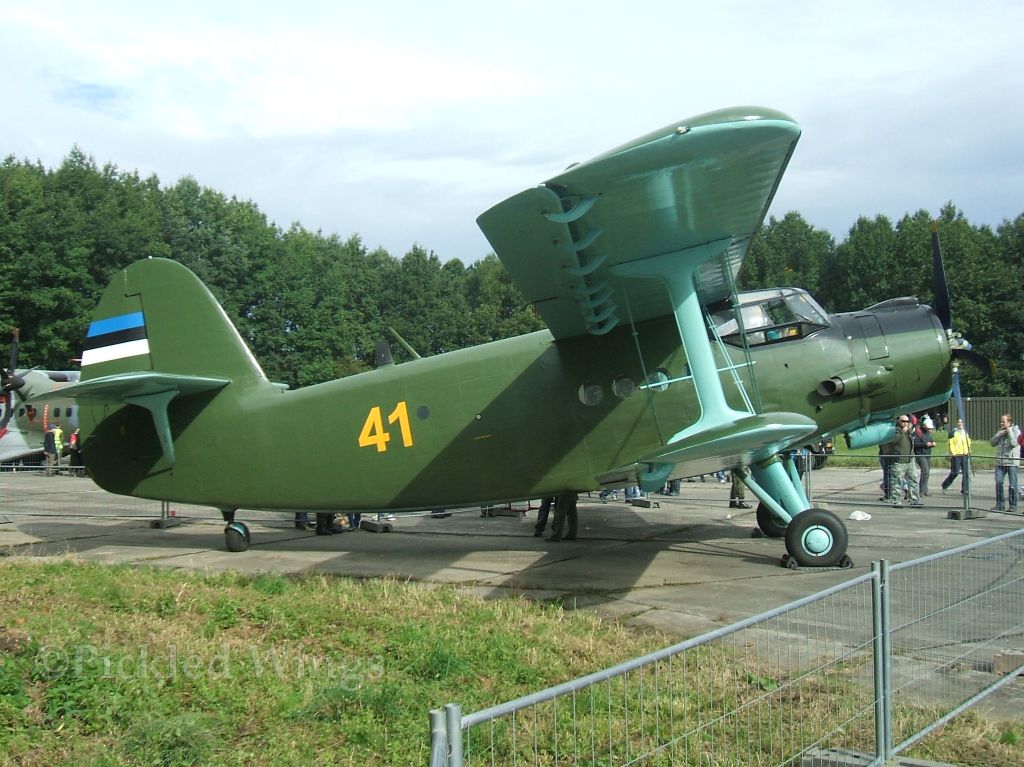
Colts Today and Learning More
While some An-2s have found permanent homes in museums, many others remain in active service with civil and military operators. Their unique flying qualities continue to be valued and sought after in many parts of the world. According to some estimates, more than 500 airworthy Colts were still flying worldwide in early 2026.
The An-2 has also attracted a global community of enthusiasts dedicated to preserving and operating the type. Even after its final practical roles are eventually assumed by newer aircraft, Colts will almost certainly continue to appear on airshow circuits for quite some time to come.
The dedicated An-2 page on the Antonov company’s website is a good place to start for further information online about the aircraft and its development history.
To appreciate the An-2 from a pilot’s point of view, this link will take you to an evocative and informative article on the Achtung, Skyhawk! Website.
This link will take you to a detailed article on the Afterburner Aviation Magazine website about attempts to replace the An-2.


A classic design for sure. I believe North Korea has used them to infiltrate special forces too!
I’ve read that they did use it in some sort of special ops related work, but I’ve also read that they only experimented with it that way and never put such variants into service.
I must look back at my photos of a captured example in South Korea