Feeding the Flame of Success
The Let aircraft company is one of the younger players in Czech aviation history. Founded in 1936 in Kunovice as a division of the much older Avia company—which itself was then a division of Škoda Works—Let quickly found its place in the industry.
Following the Second World War and Socialist take over of the former Czechoslovakia, Let was nationalised. This allowed the company to become a designer and manufacturer of its own aircraft rather than producing for others.
Let is still based in Kunovice, in the southeast of the Czech Republic. Since 2022, it has been under the ownership of the Prague-based Omnipol Group, a major importer and exporter of defence and aviation products in both the Czech Republic and the former Czechoslovakia.
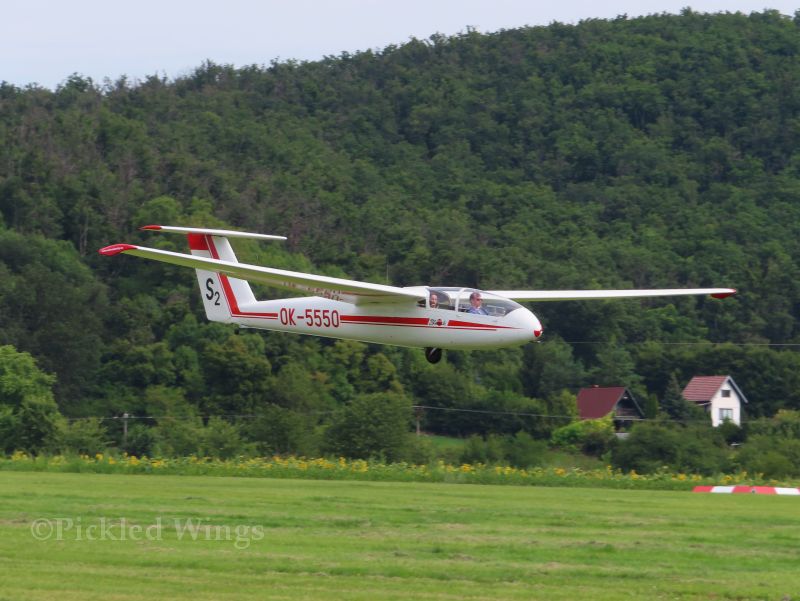
Despite its relative youth among Czech aircraft manufacturers, Let has given the small nation some of its most successful designs. Chief among them is the L-13 Blaník sailplane.
The L-13 was a resounding success at home and abroad. It was widely exported and over 3,000 were built between 1958 and 1978. This makes it the most-produced sailplane of the post–Second World War era, and one of the most-produced sailplanes in history.
Only a few years after L-13 production ended, momentum grew to create a new and improved version to carry the Blaník legacy forward.
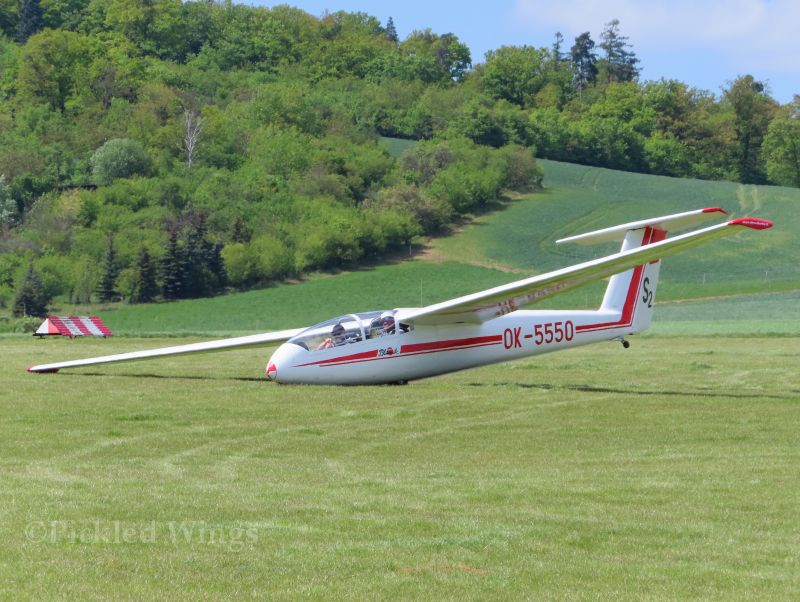
That improved aircraft would take shape as the L-23 Super Blaník, let’s spend some time with it:
Striking Hot Iron
By the mid-1980s, there was strong interest in reviving sailplane production at Kunovice
For Let, it was a matter of staying active in the sailplane business. The company had other aircraft, but the L-13 Blaník had been its only glider design in several years, and production of that type had ended. Given the great success of the L-13, it was certainly in Let’s interest to build on it and maintain its reputation in that sector of aviation.
Other forces pushing for an improved Blaník included Omnipol and Svazarm. At the time, Omnipol held a complete monopoly on the import and export of aircraft in Czechoslovakia. The L-13 had been a highly reliable product for them, generating many satisfied customers, so it was very much in Omnipol’s interest to have an updated version to offer.
Svazarm, which existed from 1951 to 1990, was an organisation that promoted cooperation between the civilian population and the military. It provided military-style training in a number of disciplines, including flight. The L-13 was a major training type within Svazarm, and the organisation also encouraged development of an improved variant.

A Tall Order
Improving on the L-13 Blaník was no easy task. It was an immensely popular aircraft with many advantages.
At its heart, the L-13 was a training glider of primarily metal construction, renowned for its resilience to hard landings and other novice pilot mistakes. It also had a semi-retractable main landing wheel that helped protect the fuselage if a pilot forgot to lower it before landing.
The L-13 was also known for its affordability and cost-effectiveness. As fibreglass and other high-maintenance composite materials became the norm in sailplane construction, a simple, tough, metal design like the Blaník still had strong appeal.
Whatever changes were made, what made the Blaník the Blaník had to be preserved.
In the spring of 1986, a team was assembled to design and produce the improved version. The new variant first flew in May 1988 and entered full production in 1989 as the L-23 Super Blaník.
Building a Better Blaník
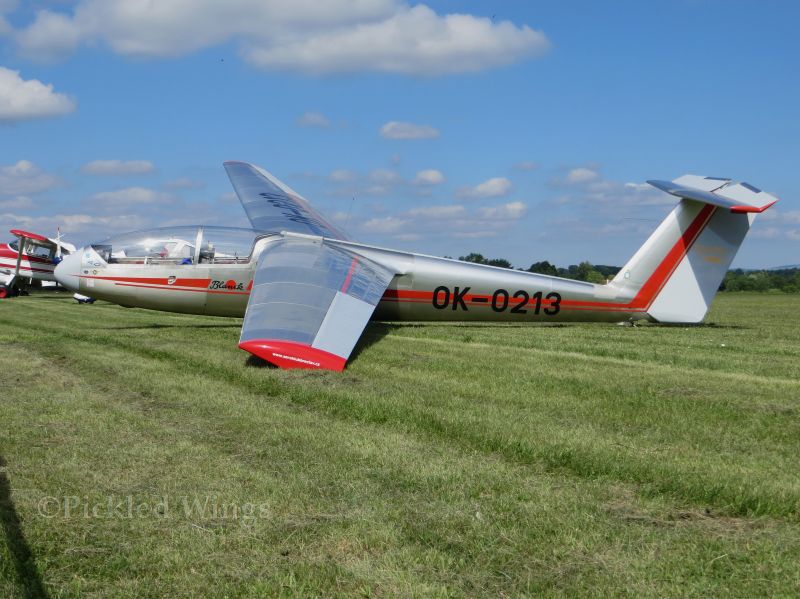
As with the L-13 before it, the L-23 was primarily of metal construction and retained the semi-retractable main landing wheel. The main areas of improvement, aside from handling, were ergonomics, safety, and weight reduction. These goals drove substantial redesigns of the tail, forward fuselage, and wings.
Tail redesign
The tail was completely reworked. The vertical fin was swept back, and the horizontal stabiliser was moved from the base of the fin to the top.
This higher position made the stabiliser less vulnerable to damage during rough-field landings. It also allowed the component to be built as a single piece, simplifying both its construction and its attachment to the aircraft.
Another improvement at the tail was replacing the L-13’s metal skid with a swivelling tail wheel, making the aircraft far easier to handle on the ground.

Wing redesign
The L-23’s wing was also substantially changed. Designers deleted the wing flaps, which the L-13 had but were rarely used in practice. This made the L-23 wing lighter and simpler, though the trade-off was reduced aerobatic capability compared to the L-13. However, the modifications improved handling at higher speeds.
The large metal wingtip skids of the L-13 were replaced with much lighter fibreglass structures containing small wheels. Like the tail wheel, these improved ground handling.
Later-production L-23s could also be fitted with optional wing extensions, which improved efficiency and glide performance.
Forward fuselage redesign
Up front, the focus was on pilot comfort and visibility.
The cockpit was slightly roomier than that of the L-13, with improved seating, including a seat that could be ballasted to compensate for lighter pilots.
The canopy and sill were redesigned to extend farther downward than the L-13’s, giving the pilot better outward visibility. Later-production aircraft also featured reduced canopy framing, which improved visibility further.
The canopy was divided into two sections: the front hinged sideways, and the rear hinged upward and backward. This made the sections lighter and easier to manage, and also made entry and exit from the rear seat more convenient.
The Super Blaník’s Place
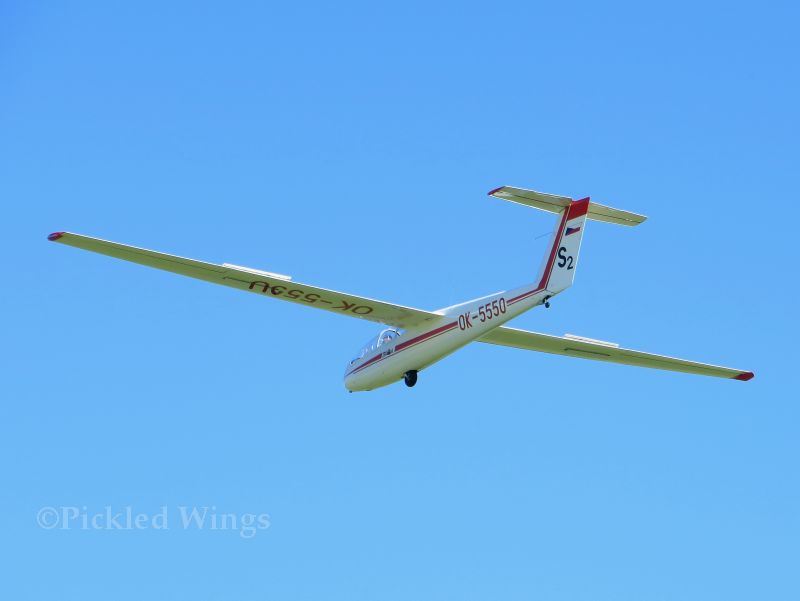
While the L-23 Super Blaník was every bit as rugged a trainer as the L-13, it never achieved the same production run. About 300 L-23s were built between 1989 and 2007.
A major factor in the smaller number was the fall of socialism in Europe in 1989, which brought financial challenges and ownership changes to Let.
Additionally, by the time the L-23 reached the market, more modern sailplanes were available. The L-23 was a worthy heir to the L-13, but ultimately it was a modification of an older design, and flying clubs often chose newer models when budgets allowed.
Even so, the L-23 has enjoyed popularity with those who fly it, and it has been exported to roughly 30 countries. Among its operators is the United States Air Force Academy, where it is known as the TG-10B Merlin.
The L-23 also gave something back to the Blaník family. In the late 1990s, the concept of an aerobatics trainer within the lineage took shape. The result was the L-13AC, which first flew in July 1997. It inherited some of the L-23’s modifications: its wing was a shortened, modified version of the L-23’s, and it shared the L-23’s forward fuselage, though with a one-piece canopy.

The L-23 Today and Learning More
With about 300 built and exports to some 30 countries, the L-23 remains a workhorse, and many are still flying today.
Since 2014, the type certificates for all Blaník-family aircraft have been held by the Prague-based Blaník Aircraft company. As such, ongoing support remains available to keep the type in the air for years to come.
Nostalgia also plays a role in keeping the Blaník family alive. Many pilots around the world learned to fly in an L-13 or L-23 and hold fond memories of them. Within the sailplane community, these aircraft are very much considered “classics.”
To learn more about the L-23 and its place in the Blaník lineage, a good first stop is this article on the Orlita.net website. It covers the entire aircraft family in detail; the L-23 specific part starts halfway down the page. It’s all in Czech, but responds well to online translators.

 Pickled Wings