Wings of Commerce
Zlín Aviation was founded in 1934 by Jan Antonín Bat’a (1898–1965) in the eastern Czech town of Otrokovice, near the city of Zlín. Bat’a had inherited the family shoe business in 1932 after his half-brother, Tomáš—the founder of the company—was killed in an airplane crash while travelling on company business.
J. A. Bat’a was a visionary who was highly competitive and possessed keen business acumen. In spite of the Great Depression, he had grand plans for the diversification and expansion of company operations beyond shoes, and far beyond the borders of his homeland.
Even before J. A. Bat’a inherited the company, it maintained a well-established aviation arm. This operation functioned partly as a flight school and partly as a means of providing and maintaining air transport for company executives, allowing them to shuttle quickly between various facilities within the rapidly expanding Bat’a business empire. This made the company one of the earliest in the world to make systematic use of aircraft for commercial purposes.
J. A. Bat’a reorganized this aviation arm into Zlín Aviation as a means of entering Czechoslovakia’s burgeoning aviation sector as both a designer and manufacturer of aircraft. Initially, the company focused on gliders before transitioning to powered aircraft in 1935. This shift was overseen by Jaroslav Lonek (1904–1945), who served as the company’s chief designer between 1935 and 1938.
Lonek designed the Zlín Z-XII, a two-seat touring aircraft that first flew in 1935 and became Czechoslovakia’s first mass-produced and successfully exported aeroplane. Between 250 and 260 examples were built and sold to no fewer than fifteen countries.
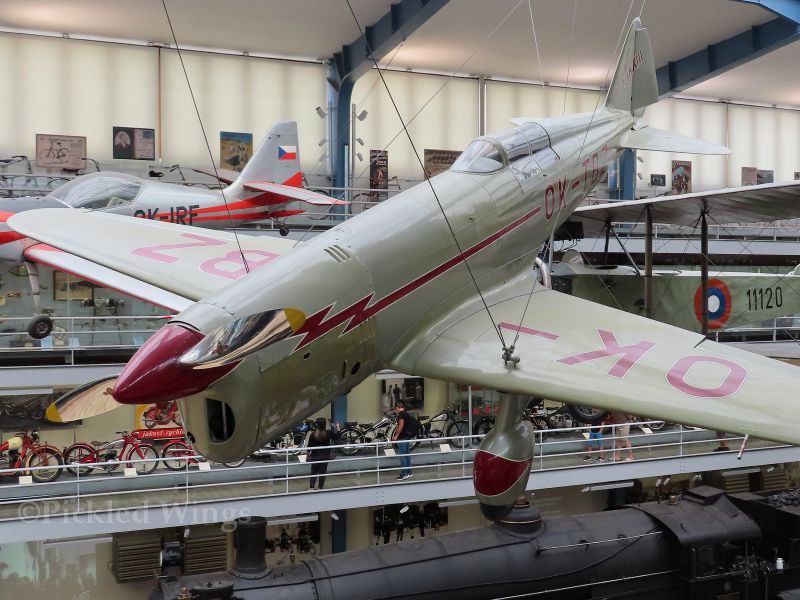
The Z-XII was followed by the Z-XIII in 1937. The Z-XIII was a light and exceptionally fast aircraft intended for use as a high-speed courier, moving documents and personnel between the far-flung locations of the ever-expanding Bat’a business empire.
However, there was more to the Z-XIII than its courier role. Let’s spend some time with it:
A Thin Disguise
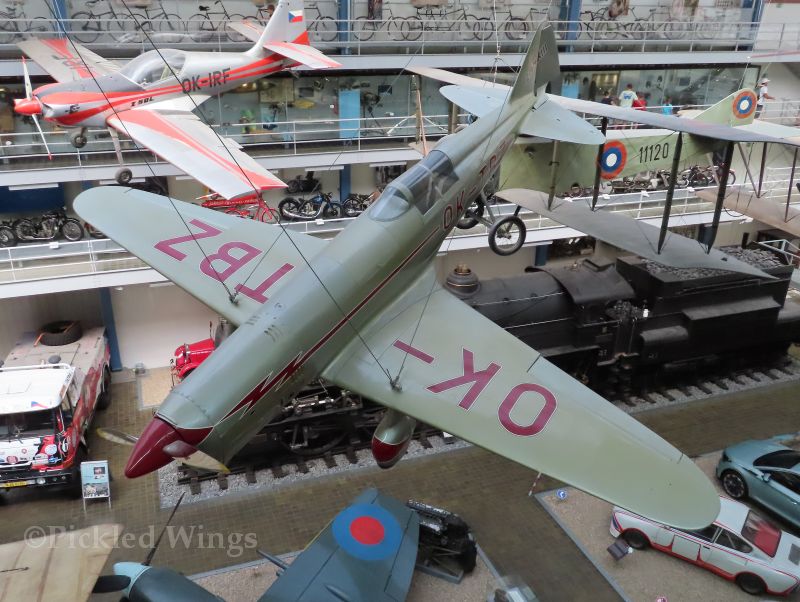
When it first flew in 1937, the sleek and swift Zlín Z-XIII was publicly promoted as a sport and liaison aircraft. Designed by Jaroslav Lonek, it was presented as a high-speed courier capable of shuttling documents and people connected to Bat’a business interests.
The Z-XIII had a top speed of approximately 350 km/h, which was exceptionally fast for an aircraft of its class at the time. Its very high landing speed—around 140 km/h—meant that it required a highly skilled pilot to handle safely.
From a design standpoint, the aircraft was of primarily wooden construction and incorporated several advanced technical features. It was among the first aircraft to employ wing flaps and a variable-pitch propeller. The wings were built as a single unit, to which the fuselage was attached, and the aircraft could be converted from a single-seat to a two-seat configuration with relative ease.
Yet the Z-XIII’s high speed and modern design features—unusual for sport or liaison aircraft—betrayed the presence of a potential fighter lurking just beneath its skin. This was no accident. J. A. Bat’a had intended it to be so.
Almost as soon as Adolf Hitler was appointed Chancellor of Germany in 1933, Bat’a, like many other Czechs, recognized the threat posed by the Nazi regime to Czechoslovakia. He soon set in motion a number of efforts aimed at supporting the training and development of a strong military force capable of defending the country.
The Saga of the “Bat’a Fighter”
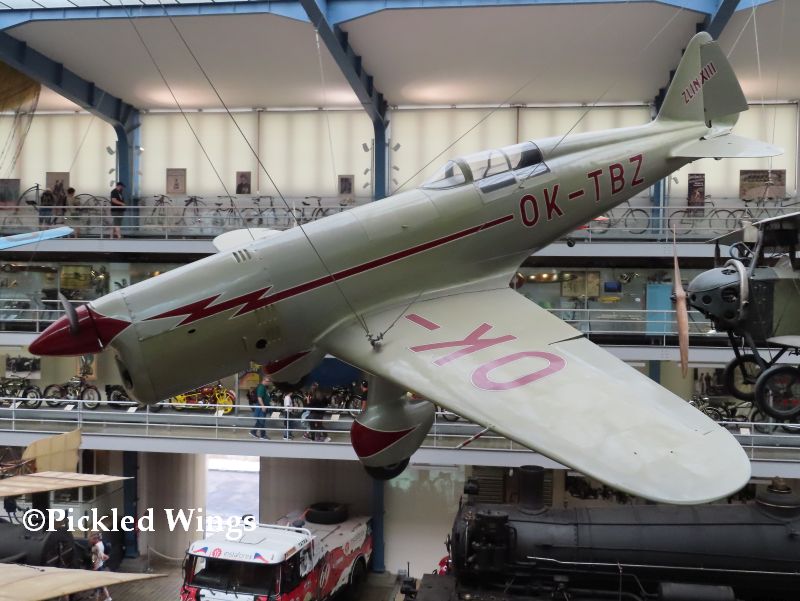
The Z-XIII was offered to the Czechoslovak military by Bat’a as a potential fighter aircraft. Unfortunately, events soon overtook these ambitions. The Munich Agreement of 1938 ensured that no meaningful external military assistance would be provided to Czechoslovakia, leaving the country vulnerable to German occupation. Any hopes of developing the Z-XIII into a fighter were effectively dashed.
Shortly before the outbreak of the Second World War, Bat’a and his family fled to the Americas and eventually settled in Brazil.
In March 1939, the Zlín airfield and factory were annexed by German forces and forced to produce training aircraft for the Luftwaffe, primarily the Bücker Bü 181 and the Klemm Kl 35.
Zlín employees made considerable efforts to divert German attention away from the Z-XIII, fearing it might be commandeered for German use. Initially, the aircraft was tucked away in an inconspicuous corner of the factory and its appearance altered. This ruse succeeded only briefly, as German authorities soon became aware of the aircraft’s existence.
An alternative plan was devised to fly the Z-XIII to the relative safety of Yugoslavia. Unfortunately, this plan collapsed following the arrest of one of those involved.
The aircraft was then placed under deeper disguise, presented as a derelict airframe. As German priorities shifted toward the production of the Bü 181 and Kl 35, interest in the Z-XIII faded. In this disguised state, the aircraft survived the remainder of the war untouched.
What Remains Today
Ultimately, the Z-XIII existed only as a single prototype and never flew again after the German occupation of Czechoslovakia.
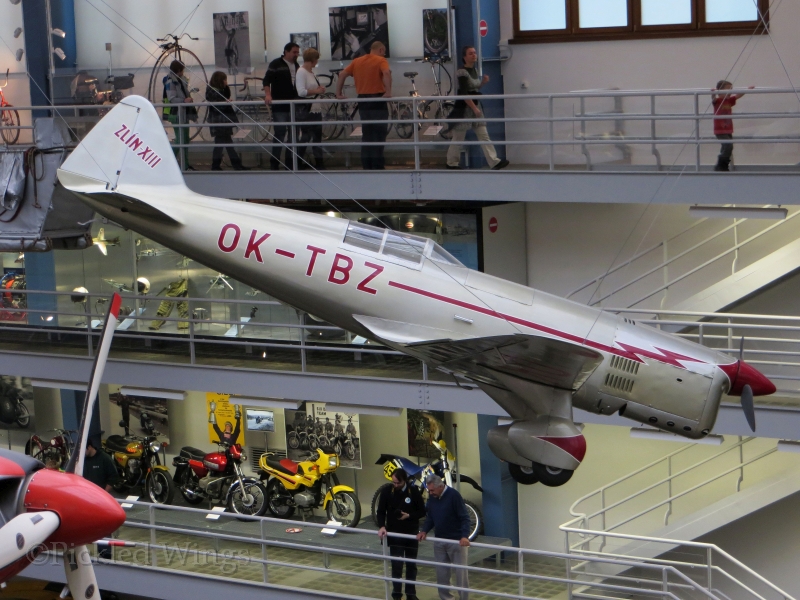
Fortunately, thanks to the foresight and quiet determination of Zlín employees of the period, the original prototype survives to this day. Shortly after the war, it was placed in the care of the National Technical Museum in Prague, where it has remained ever since.
Between 1989 and 1990, the aircraft was restored and placed on permanent display in the museum’s transportation hall. Should you find yourself in Prague, a visit to this remarkable museum comes highly recommended.
Further Reading
Given the Z-XIII’s brief operational life and the fact that it existed only as a single prototype, there is nevertheless a respectable amount of information available online.
The Afterburner Aviation Magazine website contains a concise summary of the Z-XIII, including its dimensions and performance figures.
Additionally, a well-written article on the Free Czechoslovak Air Force Associates website provides detailed coverage of the aircraft’s development and history, along with an informative account of J. A. Bat’a’s efforts to support the training and growth of the Czechoslovak air force.
 Pickled Wings