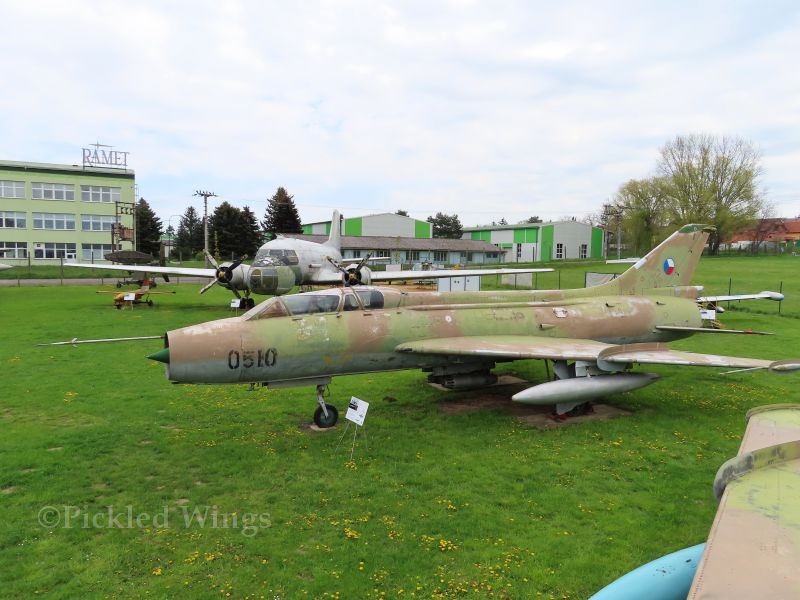
First of the “Fitter” Line
The first series of Su-7 aircraft entered service with the Soviet Air Force in 1959 after a long and difficult flight-testing phase hampered by an unreliable engine. The Su-7 was certainly fast, with thin, highly swept wings, but it failed in the role of tactical dogfighter the Soviets had envisioned for it. Its range was limited, and engine troubles persisted. As a result, only 132 of the initial series were produced.
The type was given a second chance when it was adapted for the tactical strike role. Until then, the Soviets had been making do with MiG-15s and MiG-17s, but a more specialized aircraft was needed. In 1958, official approval was granted to develop the Su-7 into a ground-attack platform. This led to the Su-7B, which became the foundation for all subsequent Su-7 variants. Full production of the Su-7B began in 1960.
The Su-7 also served as the basis for the later Su-17, Su-20, and Su-22 strike aircraft, which collectively formed the backbone of Warsaw Pact tactical strike forces for over three decades. Under NATO’s system of codenames, the entire family carried the designation “Fitter.”
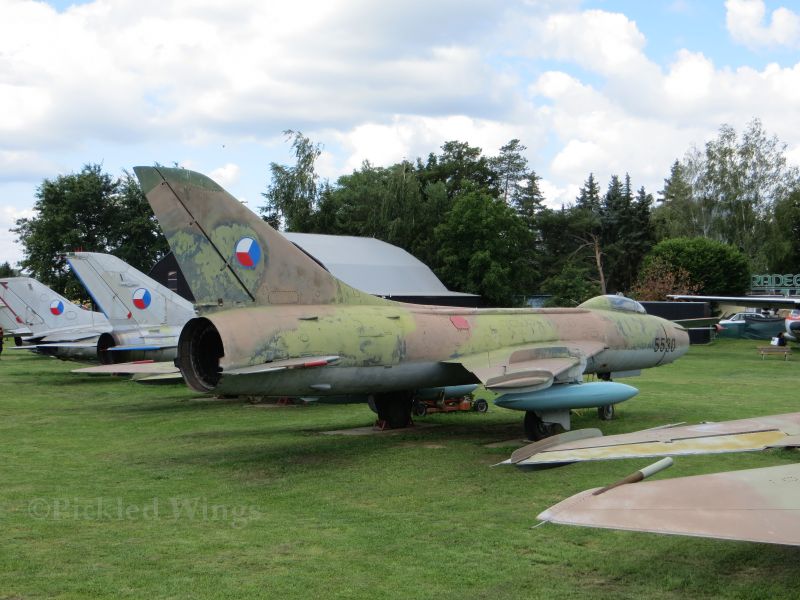
Down and Dirty
In January 1961, the first Su-7Bs entered Soviet service, but the aircraft’s range remained disappointing. Modifications were introduced to increase internal fuel capacity and allow for more external tanks. These adjustments helped, but range issues persisted throughout the Su-7’s career. The modified version was designated Su-7BM and became the first variant to be exported, with Czechoslovakia as its initial customer in 1964.
The Su-7 received more than its share of negative press during its lifetime, with particular focus on its shortcomings. In addition to range problems—caused largely by its inefficient engine—the aircraft was difficult to land. Its highly swept wings demanded a very high landing speed, and poor cockpit visibility only added to the challenge. The Su-7 also required long runways for both takeoff and landing, again due to its wing design. Another weakness was its relatively small weapons load for such a large airframe.
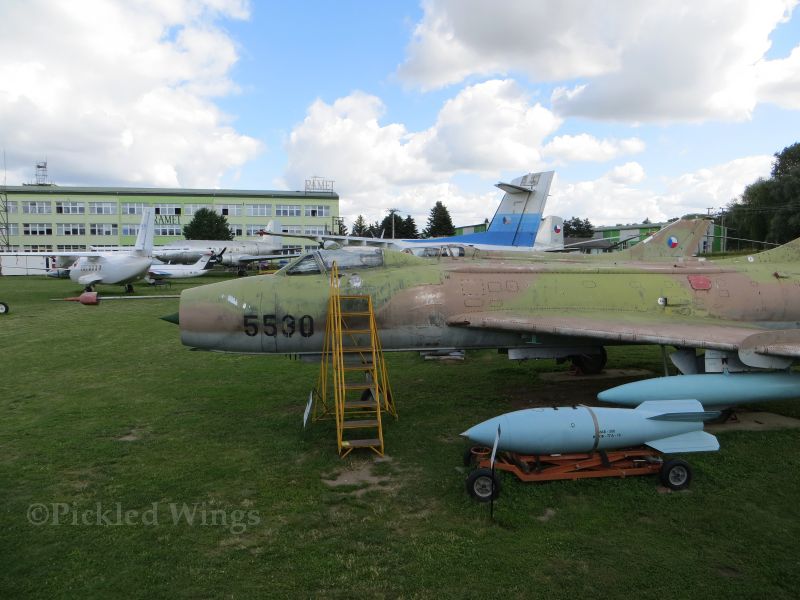
These criticisms might leave one wondering what the Su-7 could offer to balance the equation. The biggest strength was its blistering speed: among the fastest aircraft of its day, it could outrun most adversaries. It also offered rock-solid stability, making it a remarkably accurate strike platform. A third advantage was durability. The Su-7 was exceptionally tough and could sustain heavy damage while still bringing its pilot home.
From a maintenance standpoint, the Su-7 was relatively simple to service and could be turned around quickly between missions. Aside from its landing quirks, pilots generally found it a predictable and steady aircraft to fly. Whatever its detractors said, the Su-7 earned the respect of those who operated and maintained it.
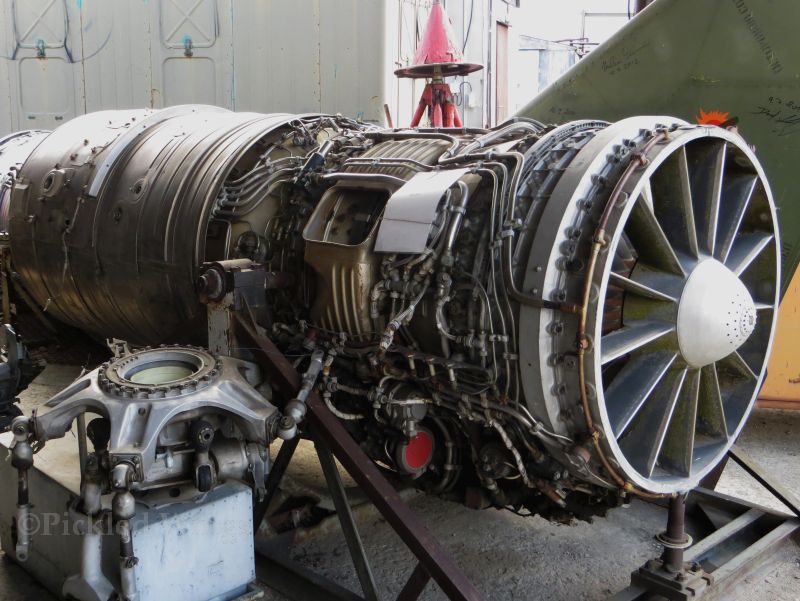
In for the Long Haul
Perhaps the most remarkable aspect of the Su-7 was its longevity. First entering service in 1959, it remained in frontline use until the early 1990s, when the Czech Republic, Poland, and Syria retired their last examples.
This endurance is striking given that the Su-17—developed directly from the Su-7 to address its shortcomings—entered service in 1970. By the early 1980s, the Su-17 had already evolved into the Su-20 and Su-22. By rights, these advances should have made the Su-7 obsolete, yet it soldiered on for decades.
In combat, the Su-7 saw action with Egypt and Syria during the 1967 Six-Day War and was used extensively by India during the 1971 Indo-Pakistan War.
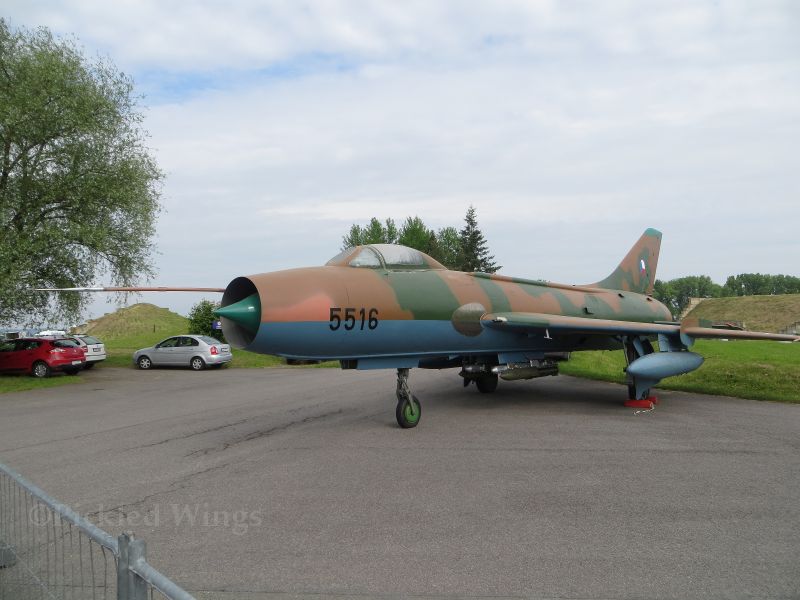
Where the Early “Fitter” Fits
As noted earlier, the Su-7 was the first member of an extensive family of strike aircraft grouped under the “Fitter” codename in NATO’s system for Soviet hardware.
Later Fitters were quite different from the Su-7 despite their family resemblance. In fact, they were distinct enough to warrant articles of their own. The Su-7 branch consisted of three major versions with several sub-variants:
Su-7
The initial production variant and the only version intended as a tactical fighter. It proved unsuited for the role, and only a small number were built, with short service lives.
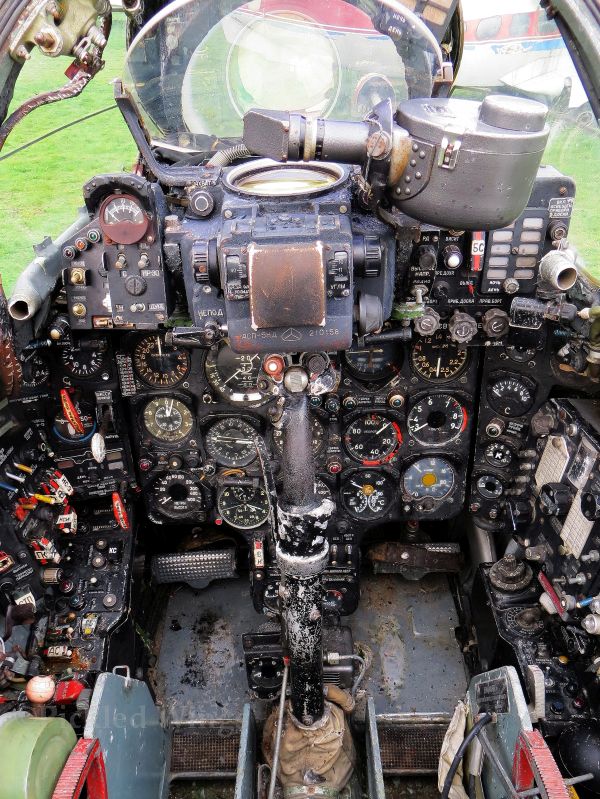
Su-7B / BM / BKL / BMK
- The Su-7B first flew in 1959 and was a reworked design for the tactical strike mission. It and its sub-variants were the most numerous in the family.
- The Su-7BM introduced engine and fuel system upgrades, allowed for underwing fuel tanks, and received weapons system improvements that enabled it to carry nuclear weapons.
- The Su-7BKL was optimized for rough-field operations with strengthened landing gear, larger braking parachutes, and provisions for rocket-assisted takeoff.
- The Su-7BMK was a simplified version of the BM intended for export.
Su-7U / UM / UMK
These were two-seat trainers based on the B, BM, and BMK variants, respectively. Due to the extra seat, all had reduced fuel capacity. NATO assigned these trainer variants the codename “Moujik.”

What Remains and Learning More
More than 1,800 Su-7s were built, and roughly a dozen countries operated the type.
As of early 2020, some sources suggested North Korea still had Su-7s in its inventory. Given the country’s secrecy and strained relations with the outside world, such claims are difficult to verify—particularly regarding operational status.
With its flying days long past, the best chance to see a Su-7 today is in a museum. Unsurprisingly, most are found in countries that once flew the aircraft.
- Write up of the Su-7 at the Polish Aviation Museum website.
- Exerpt from a book about the Su-7 in Indian air force service.
- Very informative interview with former Czechoslovak air force Su-7 pilot, Major František Kružík. It’s all in Czech, but has high quality English subtitles.
 Pickled Wings
The SU was very popular with Indian pilots during the war with Pakistan, easy to fly and maintain, they averaged about 6 sorties per day, per pilot. It was here that the rugged nature was really seen. One took a missile to back end, suffered enormous damage, and still got back to base safely! Classic.
Very true. It was one tough bird.
Unusual for a Soviet design to need long runways, they usually like rough, short field type aircraft. I guess that got fixed with the swing-wing later version Fitter, but at the cost of weight and complexity. What a fad that was. You don’t see new swing-wing designs any longer, but back then designers loved them too much. Looking back it looks like a kludge. Our last one was probably the F-14 or the Aardvark. And the Su-24 Fencer still flies. Thanks for the post, the Soviet planes are sinister and mysterious.