From Obscurity to Omnipresence
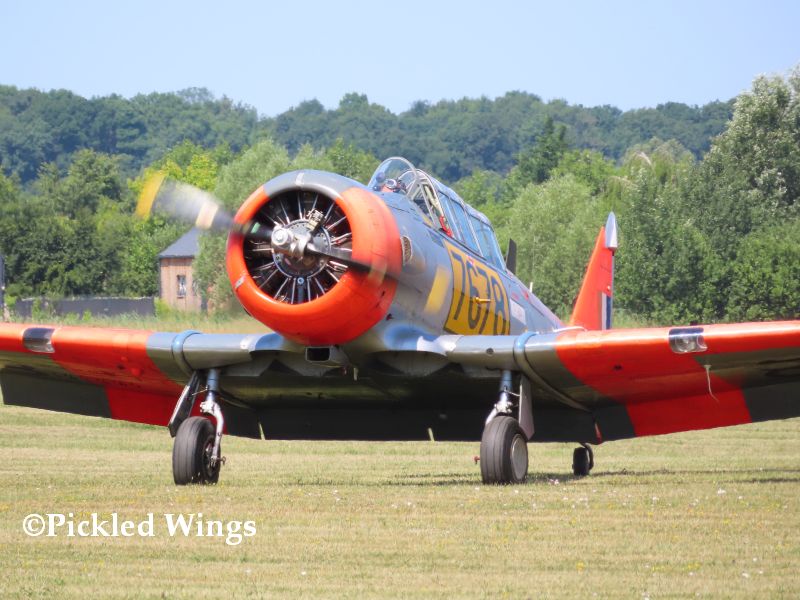
The North American T-6 Texan, or Harvard as it was known in British Commonwealth service, is about as legendary as any aircraft could possibly be. Serving as the standard advanced trainer for Allied pilots throughout the Second World War, it attained a level of fame and recognition for itself that easily equals aircraft such as the Spitfire and Mustang fighters that it prepared pilots for. Today, it remains as easily recognized and celebrated as any of the combat aircraft it was used to train pilots for.
For all the accolades the aircraft earned in both wartime and in post war service, its beginnings are to be found in a rather unremarkable and unassuming pre-war trainer: North American Aviation’s model NA-16.
Having first flown in 1935, the NA-16 would become the progenitor for a huge family of closely related training aircraft produced in a mind-boggling number of sub-variants that would number over 17,000 aircraft when the last of its many descendant aircraft rolled off the assembly lines. The greatest percentage of the family were the Texan/Harvard line, which numbered around 15,500 examples.
Let’s spend some time with the Texan and Harvard family of aircraft:
Building the Legend
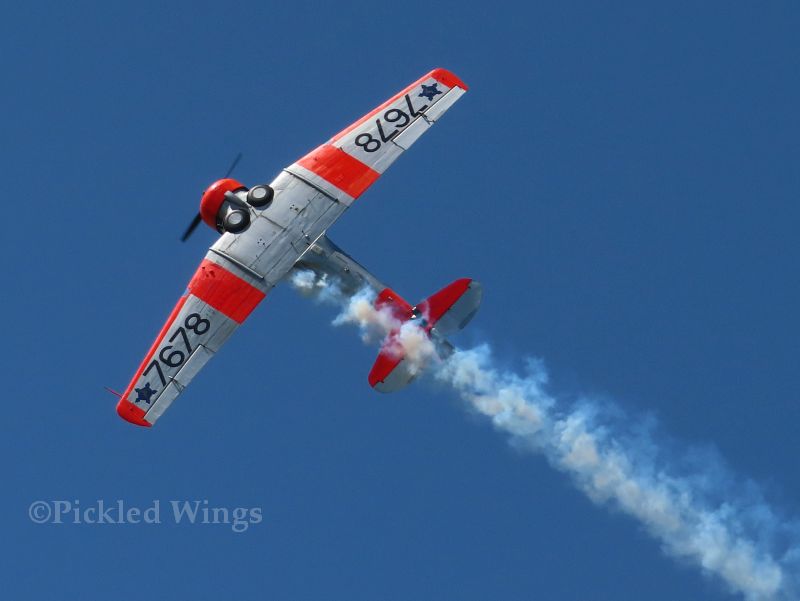
The road from NA-16 to the Texan and Harvard included the NA-26, a modified NA-16 which was entered into a U.S. Army Air Corps competition for a new basic combat aircraft. The NA-26 won the competition and went into production under the designation BC-1.
The BC-1 led to three lines of trainers: the AT- series for the U.S. Army, the SNJ- series for the U.S. Navy and Marines, and the Harvard series for the British Commonwealth. In many cases, the difference between aircraft is simply one of the naming conventions of the service it was in.
From a very early point in its service life, the Texan built a reputation for itself as a rugged aircraft that was easy to maintain. These qualities made it very popular among air arms of developing nations and kept the Texan in active military service for several years after the end of the Second World War.
It also had a reputation as a demanding teacher: it could be a great pleasure to fly but also had enough vices and idiosyncrasies that no laziness or complacency on the pilot’s part could be afforded if the plane and pilot were to return to the ground in one piece.
In an advanced training aircraft such as the Texan, peculiarities and quirks in handling worked in the student pilot’s favor. They taught the pilot to stay alert and in control of the aircraft at all times and to expect the unexpected.
It was often said that any pilot who could master a Texan would find it easy to fly the more advanced combat types that came after it, like the P-51 Mustang fighter, as they were typically more predictable in flight behaviour.
Pilots who did master the Texan found in it a very responsive and powerful aircraft, capable of all the aerobatics the fighters could do—though more slowly—and an aircraft they could not help but respect in spite of all the frustrations it caused them in learning to fly it.
A Tutor and a Tiger
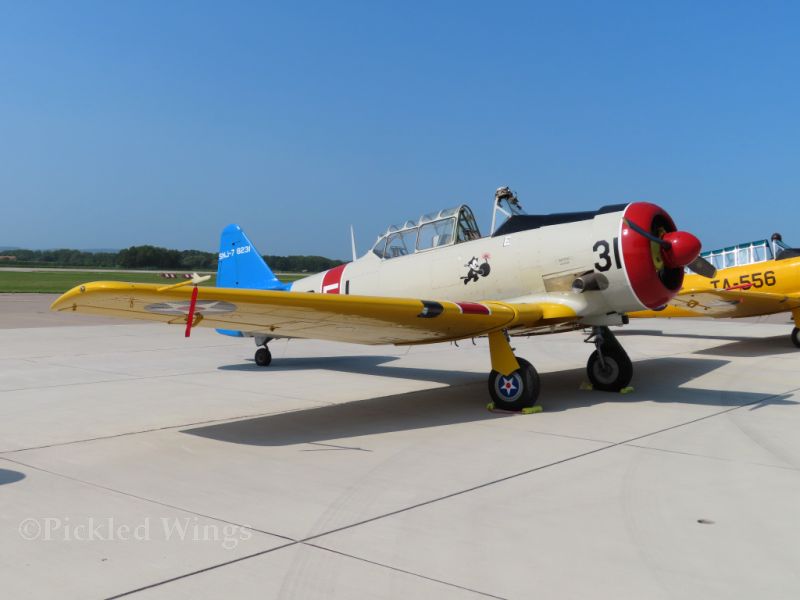
Throughout the Second World War, the Texan served as the backbone of advanced flight training for the U.S. Army Air Force, U.S. Navy, and U.S. Marine Corps.
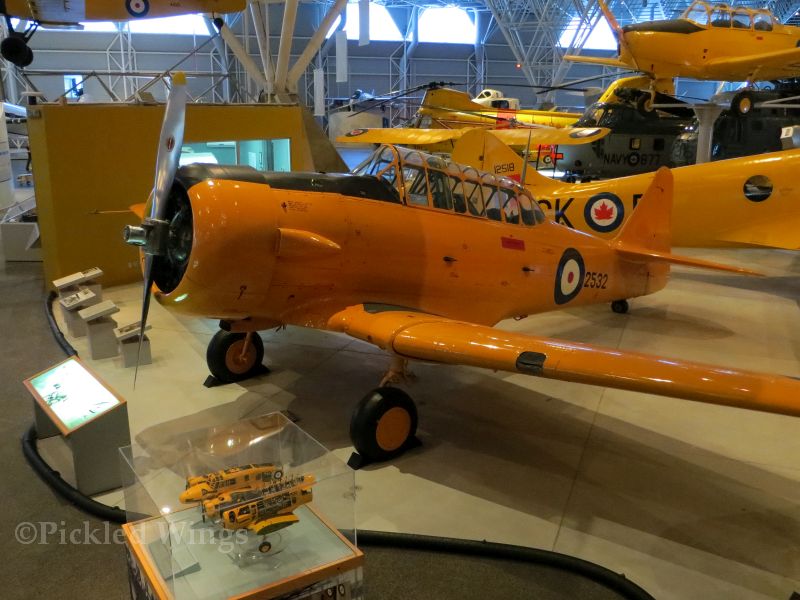
The Harvard variations of the Texan served the same purpose in the British Commonwealth Air Training Plan (BCATP) that operated in Australia, Canada, South Africa and Southern Rhodesia.
While always a trainer in the main, the Texan had a very long service life, and flew in the armed forces of over 60 countries. The aircraft’s simple and durable construction, along with affordability, easy maintenance, and ability to carry weapons, led it to see combat in several places over the years.
While the Second World War was underway in Europe, a border war between Ecuador and Peru was fought in July of 1941. The Peruvian air force used their Texans as ground-attack aircraft.
The Arab-Israeli War of 1948 saw Texans of the Syrian air force used as air support for Syrian ground troops and to attack Israeli military positions. In the closing stages of that war, the Israeli air force used Harvards to attack Egyptian forces.
In the Greek Civil War (1946-1949), Texans of the Royal Hellenic Air Force were used to support ground forces and carry out observation and artillery spotting duties.
During the Korean War. American forces used versions of the Texan in the Forward Air Control (FAC) role. The aircraft were used for spotting and marking targets for ground attack aircraft.
Texans saw combat in Argentina during the Revolución Libertadora which took place in September of 1955 and resulted in the overthrow of Juan Perón’s government. Argentine navy Texans saw some action during the Argentine Naval Revolt in 1963.
French air force Texans were used in the counterinsurgency (COIN) role in the Algerian War, which lasted from 1954 to 1962.
Spanish air force Texans were used in the COIN role during the Ifni War (1957-1958).
Portuguese air force Texans were used in the COIN role during the Portuguese Colonial War (1961-1974)
South African air force Texans were modified for a number of roles during the South African Border War (1966-1990)
The Pakistani air force used Texans in the night-ttack role against non-armored targets in the Indo-Pakistani War of 1971.
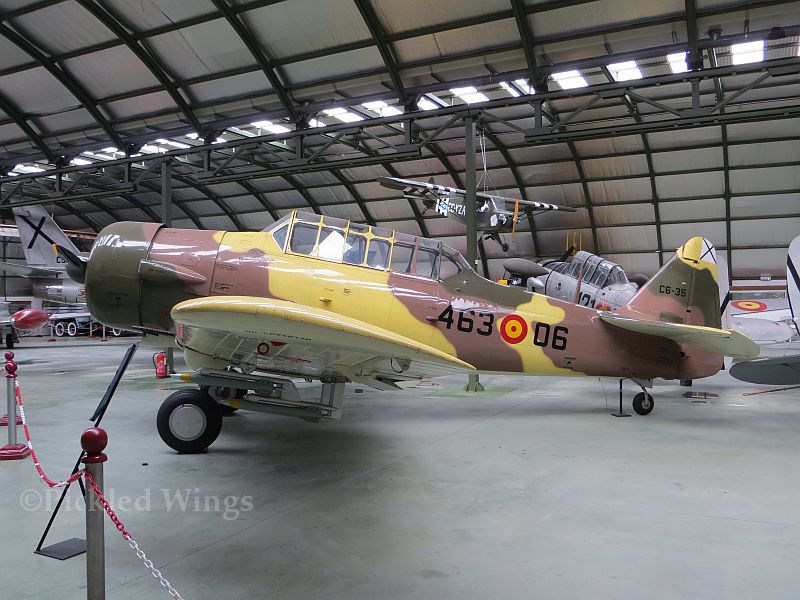
The Texan and Harvard Family
A full survey of all the aircraft types that can trace their lineage back to the NA-16 would result in an article nearly as convoluted and confusing as the aircraft family itself.
In the interest of clarity, I’m limiting my scope strictly to the Texan/Harvard branch of the family tree and their most immediate family members:
- Closest to the BC-1 were the baseline AT-6, SNJ-1 and 2 and the Harvard I and II.
- The AT-6A Texan existed also as the SNJ-3 and Harvard IIB.
- The AT-6C had direct counterparts in the SNJ-4 and the Harvard IIA.
- The AT-6D was also known as SNJ-5 and Harvard III.
- The AT-6F existed in the U.S. Navy as the SNJ-6 but had no Harvard counterpart.
In the post war context, many Texans were rebuilt and renamed as the T-6G and T-6H, The naval SNJ-7 came into being in similar fashion.
The family did have members built in lesser numbers or small batches modified for the needs of the specific service they were in:
- The AT-6B was a gunnery training version with accommodation for rear firing guns in the back section of the cockpit. Less than 500 were built.
- A number of each of the SNJ-3/4 and 5 variants were modified with tail hooks and other specific gear to satisfy the naval need to train pilots for aircraft carrier operations.
- The SNJ-7 was modified into an armed variation known as the SNJ-7B.
- The name Harvard IIA was used on two different aircraft; the Commonwealth’s version of the AT-6C and a Canadian specific armed trainer version.
- The Harvard IV was a post war production of the aircraft by Canadian Car and Foundry for the Royal Canadian Air Force and several other nations. While some references state the Harvard IV to be counterpart to the T-6G, this is not truly the case. While the T-6G was created by rebuilding existing airframes, the Harvard 4 line were completely new production machines.
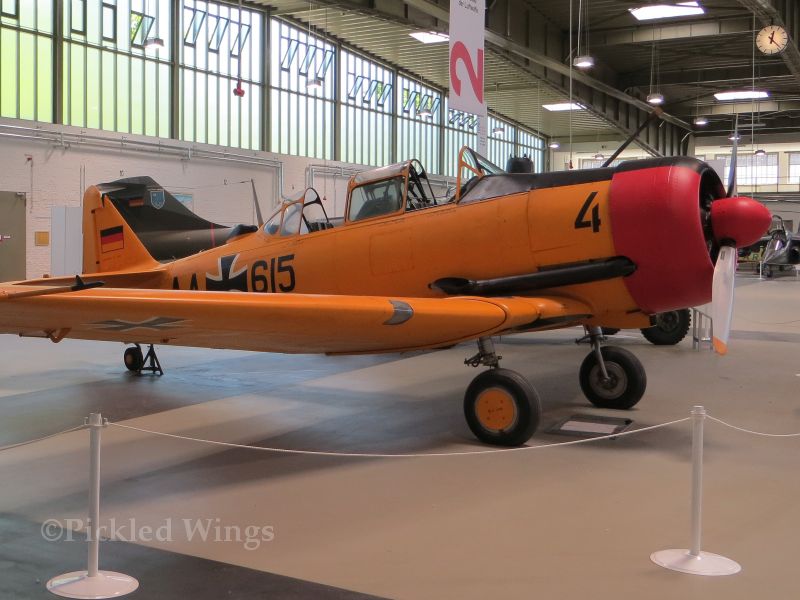
The Texan and Harvard Today
Today, hundreds of examples of this aircraft family remain flyable and on the airshow circuits to entertain us.
This is thanks to the sheer numbers in which they were built, and to as passionate a fan base as any vintage aircraft could hope for. It seems set to stay that way for several years to come.
In the postwar years, many were modified for roles representing other aircraft in films. A well-known example can be seen in the film
Tora! Tora! Tora! which used them to represent Japanese Mitsubishi Zero fighters.
Perhaps the greatest sign of reverence for the Texan and Harvard can be seen in the Beechcraft T-6 training aircraft, which currently serves with the U.S. military as the Texan II and, fittingly, in the Royal Canadian Air Force under the name Harvard II.
Further Reading
- The T-6 Texan—This article from Flying magazine looka at what keeps the aircraft popular today and the challenges of flying it.
- T6 Harvard LTD—A great deal of information on many aspects of the Texan/Harvard family can be found at this website.
- North American Harvard and Canadian Car & Foundry Harvard—This article will give you some good insights into the Harvard’s role in the Royal Canadian Air Force and BCATP.
 Pickled Wings