
A Niche to be Filled
Canada has a long and storied history of bush-flying. While bush-flying is not unique to Canada, some of the most significant innovations in this form of flight were made there.
One of those innovations was the Noorduyn Norseman — the world’s first purpose-designed bushplane.
Until the Norseman debuted in the mid-1930s, bush-flying was a risky business that relied on improvising with aircraft never intended to operate in the harsh environs of Canada’s northern reaches and other remote regions of the world.
The Norseman did not remove all the risks of bush-flying, but it was a watershed event in aviation — the first full bush-flying package available straight from the factory.
Let’s spend some time with the Noorduyn Norseman:
The Mind Behind the Machine
Dutch-born Robert B.C. Noorduyn (1893–1959) studied engineering in his native Netherlands and Germany before moving to Great Britain in 1913.
While in Great Britain, Noorduyn learned to fly and worked as a draftsman for the Sopwith company, later becoming chief draftsman for British Aerial Transport. Shortly after the end of the First World War, he returned home and joined the Fokker aircraft company.
In 1921, Fokker sent him to America to supervise the setup of a new manufacturing facility. There, he designed the Fokker Universal, which saw extensive use in Canada’s northern bush.
Noorduyn was later employed by Bellanca, where he designed the company’s Skyrocket aircraft, which also saw significant use in bush-flying. While at Bellanca, he was deeply involved in the Pacemaker — an improved follow-on to the Skyrocket that was equally popular in bush-flying.
Through designing those aircraft, Noorduyn gained valuable insight into the qualities required of an aircraft intended for harsh northern climates. In 1934, he set out to design an aircraft specifically targeted to Canadian bush pilots — one that could be profitably operated and easily maintained using the existing bush-flying skill set.
The new design incorporated fully interchangeable wheel, ski, and float landing-gear set-ups from the start. There would be no improvising in the field or major redesign work needed to prepare the aircraft for nearly any landing area the bush could offer. The Norseman also featured a heated cockpit and a spacious cabin with room for eight passengers.
The prototype Norseman took to the air for the first time in late 1935. Reflecting the aircraft’s intended work environment, it was fitting that it first flew on floats rather than conventional landing gear.

Into Uniform
Sales of the Norseman were initially slow, and it seemed total production might remain limited. The coming of the Second World War would change that.
Like so many aircraft of the period, the Norseman found itself pressed into military service during the war.
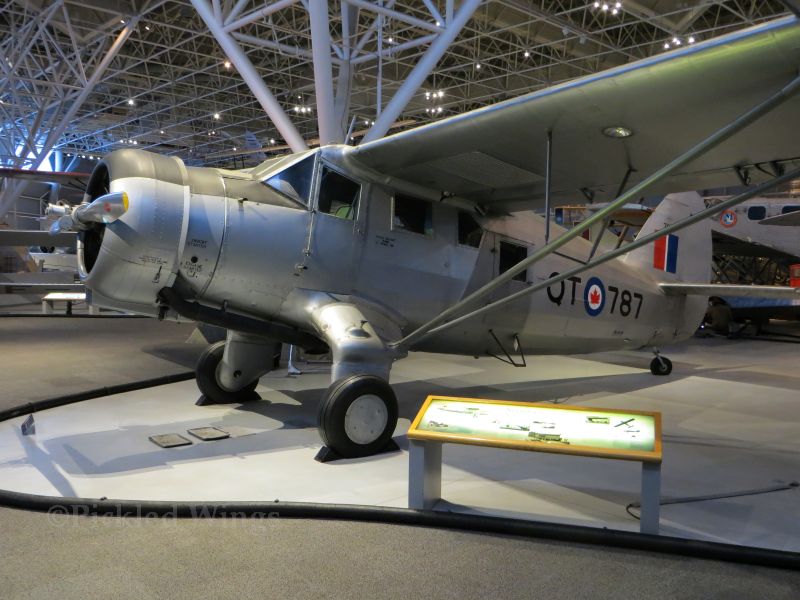
The two largest military operators were the Royal Canadian Air Force (RCAF) and the U.S. Army Air Forces (USAAF). The initial batch built for the RCAF was designated the Norseman Mk.IV, while the U.S. version was known as the UC-64. The RCAF later purchased a second batch built to the American standard, known as the Norseman Mk.VI.
Both services used the aircraft in utility and liaison roles. The RCAF placed many examples in the British Commonwealth Air Training Plan (BCATP) as trainers for wireless radio operators.
Many of the features that made the Norseman ideal for bush-flying also proved popular with military operators. In the post-war years, the aircraft continued to serve with the air arms of nearly 20 countries into the late 1950s and early 1960s.
American big-band legend Glenn Miller disappeared over the English Channel while flying from Great Britain to France in a USAAF Norseman in December 1944.
Another tragedy associated with the type was the death of George Beurling, the RCAF’s highest-scoring fighter pilot of the Second World War. Beurling was killed in 1948 while delivering aircraft to the newly formed Israeli Air Force when the Norseman he was flying crashed on landing in Rome, Italy.
Return to Civilian Life
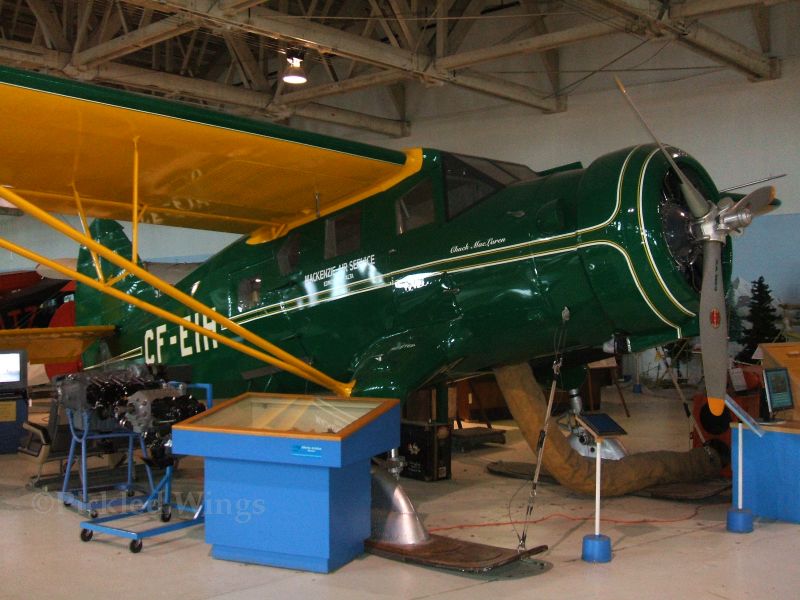
In the years following the war, the Norseman returned to what it did best — bush-flying. In the immediate post-war years, production was handled by Canadian Car and Foundry, which introduced the Mk.V, a civilian version of the wartime Mk.IV.
Noorduyn later bought back the construction jigs from Canadian Car and Foundry in the 1950s. Production ended in 1959, with just over 900 examples built.
The Norseman remained a stalwart of the bush for many years and saw extensive use flying outdoor enthusiasts to remote, sought-after camping and fishing sites accessible only by floatplane.
The aircraft also found use in police operations. The Royal Canadian Mounted Police operated several Norsemen for search and rescue, as well as patrol work.

The Norseman Today
Of the roughly 900 examples built, between 40 and 50 are known to be airworthy as of 2025. While some flying examples appear on European and American civil registers, most flying examples today remain in Canada.
Around 30 survive in museums spread between America, Canada and Europe.
Happily, the town of Red Lake, Ontario, Canada keeps the spirit of this great bushplane alive through the annual Norseman Floatplane Festival every July.
This link will take you to norsemanhistory.ca, a website with a good amount of historical information and photographs about the Norseman.
This link will take you to an article on the silverhawkauthor.com website that goes into a good amount of detail about the Norseman in RCAF service.
 Pickled Wings