On Hallowed Aviation Ground
Kbely airport, located in the north east suburbs of Prague, is used today as the main transport base of the Czech air force.
However, Kbely can trace its history back to 1918. With more than 100 years of history it has served as Prague’s first airport, Czechoslovakia’s first military airport, the departure point of Czechoslovak Airlines’ first scheduled flight in 1923 and hosted many major public airshows through the interwar era. As such, it is quite fitting that the Czech Republic’s largest aviation museum should be located here.
In conjunction with the nearby Letňany airfield, which was established in 1923, Kbely has been witness to many national and international aviation events over the decades. In its lifetime, Letňany has at various times been home to three major Czech aircraft manufacturers as well as aeronautical research and testing facilities of international repute.
This corner of Prague is indeed a very appropriate place for a major aviation museum.

A Well Rounded Collection
The main air museum at Kbely was established in 1968 and comes under the authority of the Military Historic Institute in Prague. In 2016, the museum opened the Stará Aerovka section at the nearby Letňany airport. Stará Aerovka consists of two preserved hangars that were home to the Aero aircraft company in their early years.
The museum collection numbers well over 200 aircraft, though only a fraction of them are on display at any given time. Beyond the aircraft themselves are several preserved engines and other artifacts.
The exhibits are split between indoor and outdoor displays and are primarily organised by era. Indoor displays at Kbely include:
- Czechoslovak Aviation 1918-1924
- Czechoslovak Aviation 1925-1938
- Second World War
- Czechoslovak Aviation 1945-1990
- First Generation Jet Aircraft
- Jet Trainer Aircraft
Outdoor displays are sorted into type with areas dedicated to transport aircraft, helicopters and airliners.
The Stará Aerovka collection is all indoors. The smaller hangar is dedicated to the history of the Aero company, while the larger hangar houses Cold War military jets and some Second World War aircraft.
Aside of the aircraft exhibits, you will also find a souvenir shop and refreshment stand at the Kbely museum.
From Home and Afar
As might be expected, this museum puts primary emphasis on the long and rich aviation heritage of the Czech lands. Names of local manufactures such as Aero, Avia, Let, Letov, Praga, Zlín and others take prominence here.
However, it’s not all local produce at this museum. A selection of international aircraft have found their way into the collection.
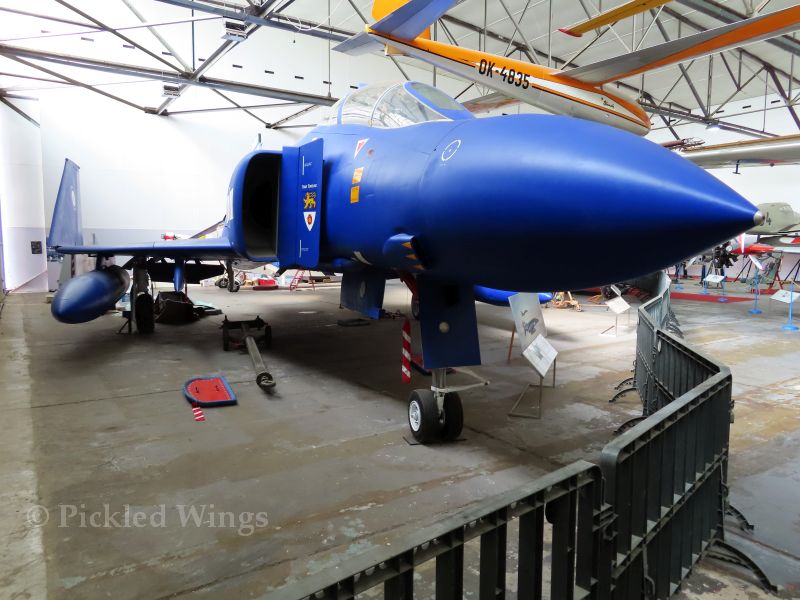
One example of foreign flavour in the museum collection is a former Royal Air Force F-4 Phantom II fighter that was gifted to the former Czechoslovakia in the early 1990s as a gesture of gratitude to the Czechoslovak airmen who served in the RAF during the Second World War.

Starting on the Outside
You can take in the museum’s exhibits in any order you choose. I usually start with the outdoor exhibits.
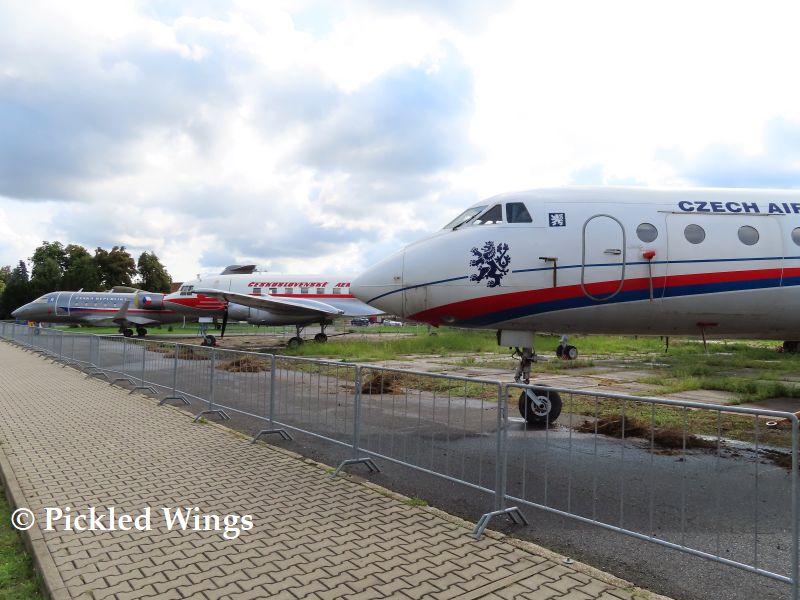
The aircraft on outdoor display at Kbely are typically larger types that would be difficult to house indoors, such as airliners and military transports.
A selection of Czechsolovak Airlines aircraft from the 1950s that include the Ilyushin Il-14, Ilyushin Il-18 and Tupolev Tu-104 are on view.
Military transport aircraft such as the Antonov An-26, Canadair Challenger, Let L-410 Turbolet, and Yakovlev Yak-40 can be seen.
Also outdoors, you will find a timeline of helicopters from the Mil company that served the Czech military through the years. Included in the historical helicopter line are the Mi-1 and Mi-2 utility helicopters, the Mi-4 and Mi-8 transport helicopters, as well as an Mi-24 attack helicopter.

Going Indoors
As mentioned earlier, the museum’s indoor exhibits are organized mostly by time period. However, the display halls do not physically follow each other in sequence. I’ll present them in time sequence here:
Czechoslovak Aviation 1918-1924
In this display hall, you will find exhibits that show the very formative years of both military and general aviation in Czechoslovakia.
Exhibits include First World War era fighters of French and German origin that the Czechoslovak military began with and the domestically developed Letov Š-2 observation and bomber aircraft, which debuted in 1920.
The Letov aircraft, while still a biplane, is noticeably smoother in design than the World War One aircraft that went just a few years before it. This is testament to the competence of Czech aircraft designers, even at such an early point in the development of their nation’s aviation industry.
Czechoslovak Aviation 1925-1938
The interwar period was a very active period in aviation development worldwide, and it was no different in Czechoslovakia.
In this hall, you will see many aircraft of Czech origin that show the small nation’s still young aviation industry was fit to be a player at the international level.
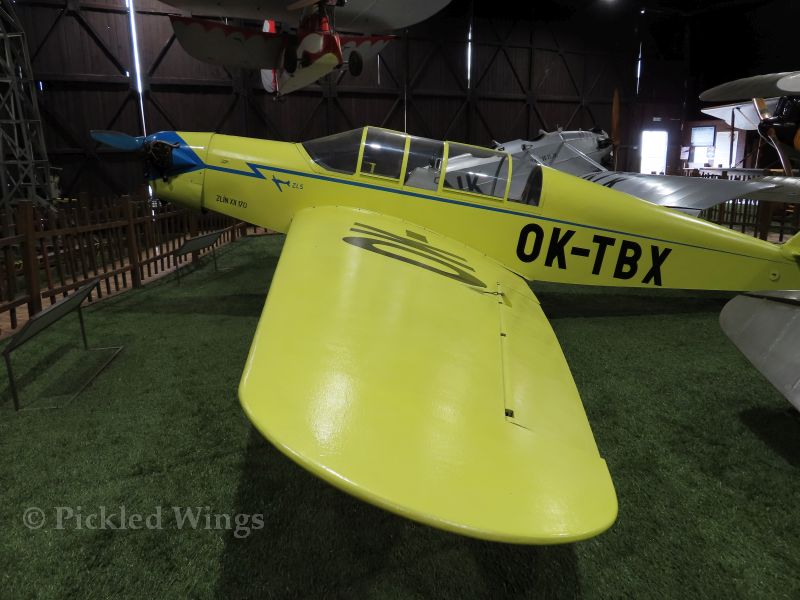
A significant aircraft in this part of the collection is the Zlín Z-XII, which first flew in 1935. The Z-XII was a two place touring aircraft that was very popular at home and abroad. It was the first major aircraft produced by the Zlín company and the first aircraft to be an export success for a Czech aircraft company.
Another quite important aircraft in this display is the Avia B.534 fighter. The B.534 first flew in 1933 and was one of the last biplane fighters to see combat.
While browsing this part of the collection, you will also encounter the Aero A.10 airliner, which first flew in 1922. While only a small handful of the type were built, it was the first Czech designed and built airliner and flew the route between Prague and Bratislava until their retirement in 1928.

Second World War
The World War Two exhibition contains aircraft of American, British, French, German and Russian origins.
The display is dominated by a Lisunov Li-2 transport, the Russian license built version of the legendary Douglas DC-3.
You can see examples of the Lavochkin La-7 fighter and Ilyushin Il-2 attack aircraft flanking the Li-2 in the central part of the display.
The display also includes examples of the DeHavilland Tiger Moth and North American Harvard training aircraft.
Another training aircraft on display is the Morane-Saulnier MS.230, from France.
There is also a Messerschmitt Me-262 jet fighter on view. However, the museum’s example is a Czech built variation that was produced after the war and painted in German wartime colours.

Czechoslovak Aviation 1945-1990
This is the museum’s largest indoor display area and it contains a variety of civilian and military aircraft of both domestic and foreign origins.
The first thing you will see when you enter the hall is a series of display cabinets showing historic photos and uniforms from the history of Czech military aviation.
The main aircraft exhibition starts with a display of domestically produced aircraft engines and works through a selection of domestically designed and produced aircraft from the late 1940s to the late 1980s.
Significant domestic aircraft in this part of the collection include the Aero Ae-45, a twin engine touring aircraft that was the first successful Czech designed aircraft after the end of the Second World War.
The is also the Let L-13 Blaník sailplane, which first flew in the late 1950s and has enjoyed worldwide popularity to the present.
You will also find foreign aircraft that were significant in the Czech military.
The Avia S-199 Mezek (mule) was a post-war Czech variation of the famous Messerschmitt Bf-109 fighter. It first flew in 1947 and had a fearsome reputation as a difficult aircraft to fly. The S-199 is also significant as the first fighter used by the Israeli air force and saw combat in the Arab-Israeli War of 1948.
Various Russian Made MiG jet fighters, such as the MiG-17, MiG-23 and MiG-29 are also in this part of the collection.
You will also find the aforementioned former Royal Air Force F-4 Phantom II fighter here.
First Generation Jet Aircraft
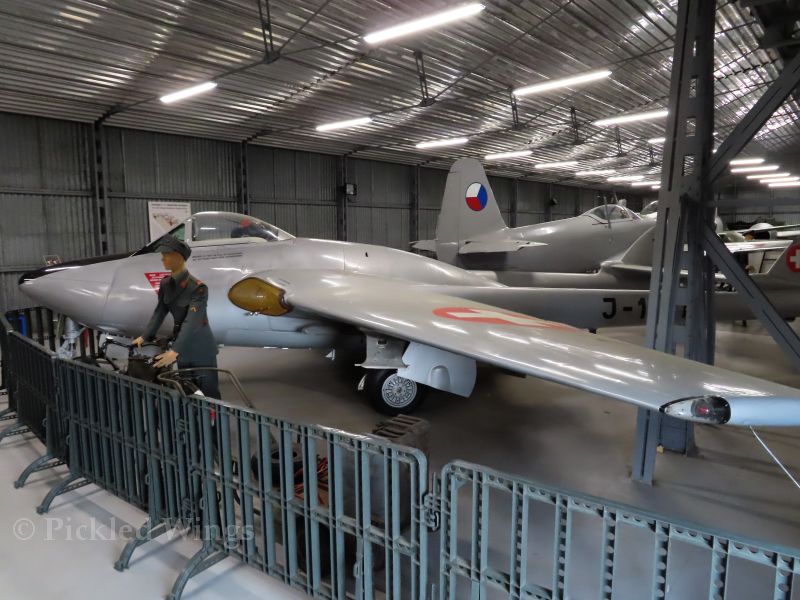
This is a quite interesting collection of aircraft to view, but quite challenging to photograph as the display hall is long and narrow and the barriers keeping the public from touching the aircraft are of a rather obtrusive type.
This part of the collection focuses on the first generation of military jets.
Here, you’ll find the DeHavilland Vampire and Gloster Meteor of British origins sharing space with a Russian designed Yakovlev Yak-17 and Lockheed T-33 from America
There is also an Avia S-92, the Czech made post war variation of the German designed Messerschmitt Me-262 jet fighter here.
This section of the museum has a semi-sheltered outdoor part that includes versions of the MiG-15 and a MiG-17 fighter.
Jet Trainer Aircraft
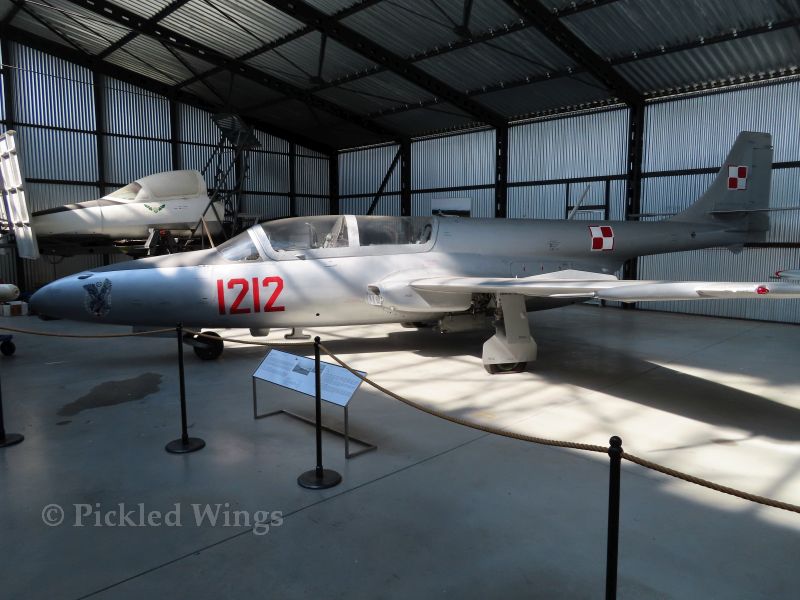
This is a smaller display hall that contains important Cold War era jet trainers.
Here you’ll find a two seat variant of the MiG-15 fighter along with a pair of domestically developed Aero L-29 Delfín trainers and their successor design, the Aero L-39 Albatros.
An interesting addition to this collection is the Polish designed PZL TS-11 Iskra. The Iskra was a direct competitor to the L-29 Delfín to become the standard basic jet training aircraft for Warsaw Pact air forces. While the L-29 Delfín won that competition, Poland pushed forward with the Iskra.
It is quite interesting to see the two types next to each other and compare how differently their designers approached the same objective.
As with the First Generation Jet Aircraft display, photography is a challenge here as there really is not a lot of room to move around and get a full aircraft into your camera viewfinder.
Stará Aerovka
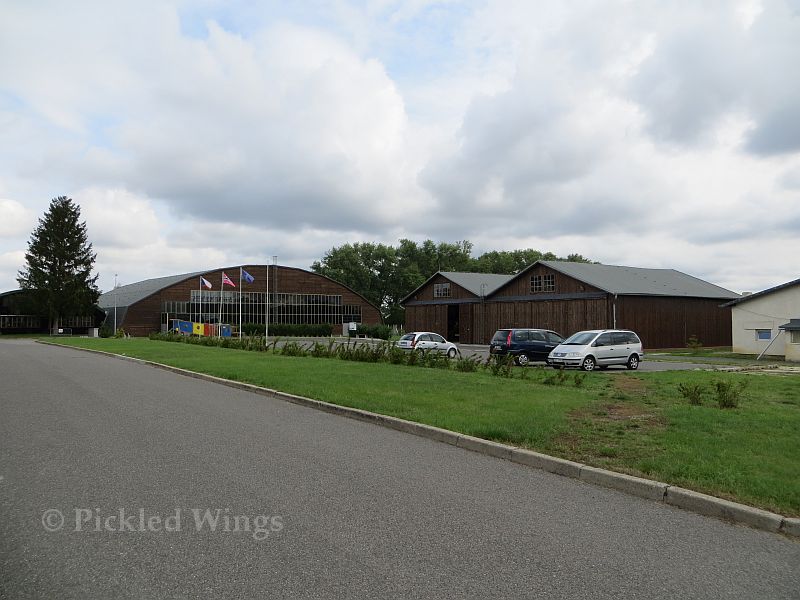
As mentioned earlier, Stará Aerovka is the most recent section of the museum. It was first opened to the public in 2016.
While Stará Aerovka is at the Letňany airport, it is a very short walk between it and the main collection at Kbely.
Stará Aerovka started as a way to preserve a pair of hangars that once belonged to the Aero company when they were based at Letňany in their early years. The display is made up of a large hangar and a smaller one.
The large hangar houses a variety of Cold War military jets of Russian origin that were used by the Czech military. They include a MiG-15, MiG-23, Sukhoi Su-22 and Sukhoi Su-25 among others.
In the large hangar, you will also find an example of the Aero C-3, a Czech made post-war variation of the German designed Siebel Si 204 transport and utility aircraft.
The small hangar is dedicated to the history of the Aero company. There are many photographs on display as well as some aircraft that represent significant landmarks in the company’s history.
You will find prototypes of the L-29 Delfín and L-39 Albatros trainers as well as a prototype of the L-159 light attack aircraft that was developed from the L-39 Albatros.
There is also a replica of an Aero A.18 biplane fighter from the interwar years.

Paying a Visit and Learning More
The Kbely museum and Stará Aerovka are not at all difficult to access by Prague’s public transport system and entry to both is free of charge.
Take the red ( C ) line of the Prague metro system to the Letňany terminus. From there, you can find buses that will take you to the Kbely museum. The stop is called Letecké Muzeum and it is a request stop on some lines. There is a matching stop across the street to take you back to the metro station.
If the weather is nice, it is not a difficult walk from the metro station to the museum. Once you are above ground, walk along Beladova street and then turn onto Mladoboleslavská street. Stay on the Letňany side of Mladoboleslavská street until you reach the crossing to the Kbely museum gate. The pedestrian walking path is continuous on the Letňany side, but not the Kbely side.
If you walk, you will reach Hůlkova street before you reach the Kbely museum entrance. Stará Aerovka is located at the end of Hůlkova street, so you could go there before going to Kbely if you wished.
Both are open from May to October everyday except Mondays from 10:00 to 18:00.
Follow this link to the Military Historic Institute website for full information on the Kbely museum and other museums under the institute’s authority. The site is available in Czech and English.
Note: The information and photographs presented in this article are current as of September, 2023. Please visit the museum’s website or social media pages for the most up to date information if you are planning a visit.
 Pickled Wings
I’ve had the pleasure to visit many times. First visits in the early 1990s. Many great changes over the years.
Indeed, Kbely is quite a dynamic museum and good at keeping things fresh. Kunovice is another Czech air museum that is quite dynamic and always seems to have some new incremental improvement every season.