
From Pioneers to Legends
Of all nations that ventured into designing and building their own aircraft, France was among the earliest. Of French aviation companies, few are as legendary as Morane-Saulnier.
The company was founded in 1911 by aviation pioneers Raymond Saulnier and the Morane brothers. It remained active for about half a century before being bought by the Potez aircraft company in 1962.
Raymond Saulnier (1881–1964) was an aeronautical engineer and graduate of the prestigious École Centrale in Paris. He had collaborated with Louis Blériot on the Blériot XI aircraft and the famous 1909 English Channel flight. He also designed the aircraft with which Roland Garros made the first flight across the Mediterranean in 1913. Saulnier stayed with Morane-Saulnier from its establishment until its dissolution, proving himself a prolific designer and holder of many patents.
Léon Morane (1885–1918) was a well-established pilot. In 1910, he became the first man to fly at 100 kilometres per hour (62 mph) and the first to reach an altitude of over 2,500 metres (8,200 feet). His life was tragically cut short by the Spanish flu epidemic of 1918.
Robert Morane (1886–1968), a passionate automotive racer, earned his pilot’s licence and entered aviation in the footsteps of his brother. Following Léon’s death, Robert immersed himself in the company’s work. He later helped establish Air Union in 1923, an airline that merged with others in 1933 to form Air France.
After Morane-Saulnier was absorbed by Potez, further reorganizations among French aircraft companies eventually led to the formation of SOCATA in 1966, which carried forward Morane-Saulnier’s sport and general aviation division. SOCATA continued development of the Rallye family of aircraft and introduced its own piston and light turboprop models. Since 2008, the Morane-Saulnier legacy has been carried on by Daher, which acquired a controlling share of SOCATA.
Modern: For the Military and the Masses
In France, as elsewhere, the First World War revealed aviation’s practical potential, both militarily and publicly. The 1920s saw the rise of flying clubs, schools, and the growth of commercial, corporate, general, and sport aviation.
The British De Havilland DH.60 Moth, first flown in 1925, quickly became the workhorse of flying schools worldwide. In 1928, the French Air Ministry issued a requirement for a new two-seat training aircraft for the army and naval aviation branches. Several companies submitted designs, but only Morane-Saulnier’s proposal aligned with contemporary design philosophies, and it won the competition.
The resulting aircraft, the MS.230, first flew in 1929. It quickly gained favour not only with the military but also with civilian flying schools. While it served much the same role in France as the Moth did in Britain, to call the two equals would understate the French aircraft’s advantages.
Compared to most trainers of the era, the MS.230 represented a significant advance.
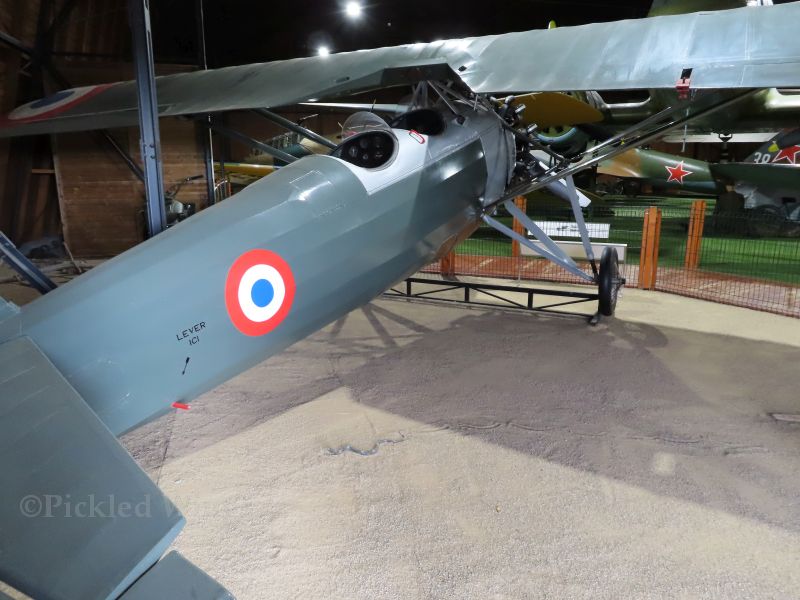
While many training aircraft were biplanes, the MS.230 was a parasol-wing monoplane. This configuration used fewer materials, as it required only one wing, and improved downward visibility for both pilot and observer. The wing, raised above the fuselage on struts, also simplified design and construction by eliminating wing-root junctions.
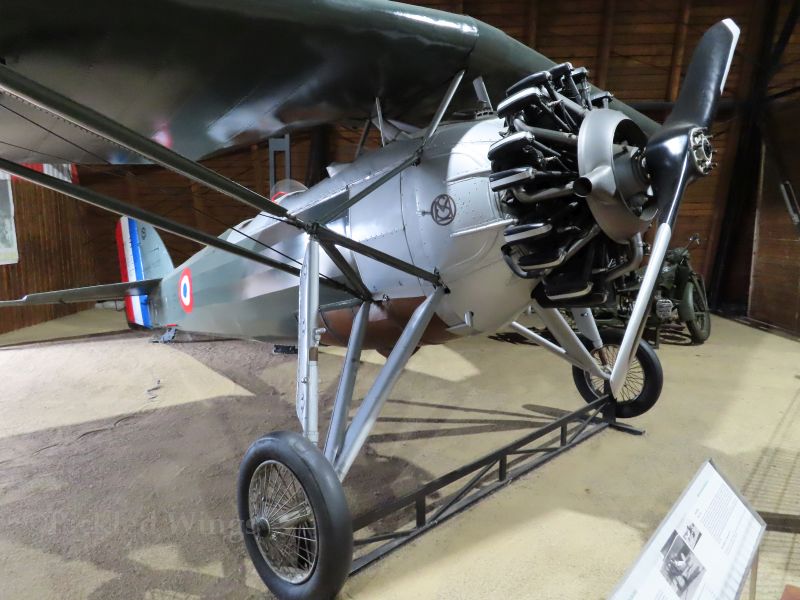
The aircraft was powered by a 230-horsepower nine-cylinder radial engine from Salmson. Radial engines of the period offered advantages over in-line types: they were air-cooled, eliminating the need for heavy radiators and coolant, and were generally more robust and easier to service.
Structurally, the MS.230 combined metal and fabric. Its wings and rear fuselage were fabric-covered metal framework, while the forward fuselage used sheet-metal construction. At a time when many contemporaries still relied heavily on wood, the MS.230’s materials made it distinctly modern.
A Tutor and an Acrobat
The MS.230 earned a strong reputation as a trainer. Stable enough for basic instruction, it was also aerobatic enough for advanced training.
Much as most British Commonwealth pilots of the Second World War began in the DH.82 Tiger Moth, most French military pilots of the conflict had their first flights in the MS.230. Its aerobatic qualities also made it the mount of the Patrouille d’Étampes demonstration team—a predecessor of today’s Patrouille de France—from 1931 until the late 1930s.
The aircraft was exported to about a dozen countries and licence-built in Belgium, Greece, Portugal, and Romania. Beyond training, it also served in liaison, observation, and glider-towing roles. A small number were even used by Republican forces during the Spanish Civil War.
When Germany occupied France in the Second World War, the Luftwaffe tested the MS.230 and praised its robust construction and pleasant handling. By then, however, it was outdated, and German forces had little use for it given their own modern trainers.
Few MS.230s survived the war. Those that did sometimes found second lives in sport flying or cinema. Notably, the aircraft appeared in the 1966 film The Blue Max, where it was used to portray a German monoplane prototype.
What Remains and Learning More
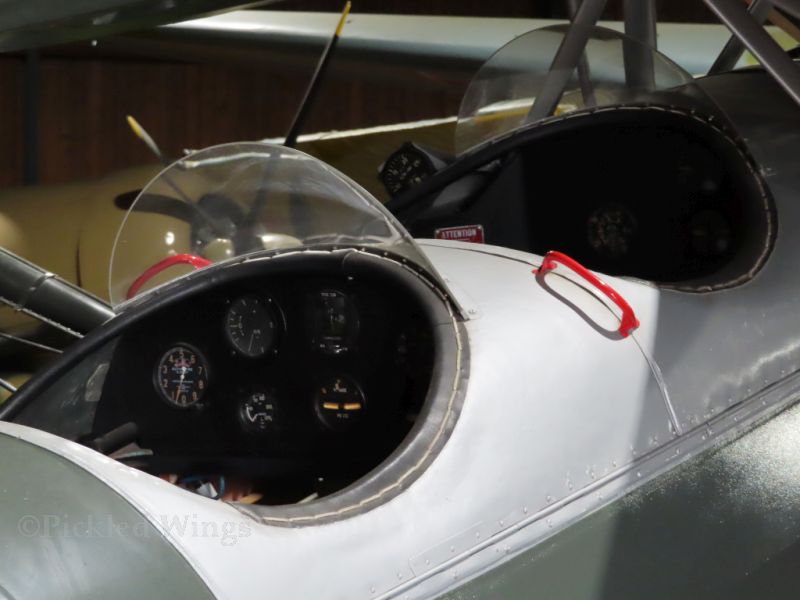
Of more than 1,000 MS.230s built, fewer than ten are believed to remain intact today. Preserved examples can be found in museums in Belgium, the Czech Republic, France, Spain, and the United States. A small number in France may still be ground-runnable as of the mid 2020s, though none appear to have flown since around 2015.
Dedicated information about the MS.230 is limited, but several sources provide valuable insight:
The War Machines Drawn blog has an extensive three part article on the MS.230 that covers the history, variants, and users of the type:
The Kbely Museum in Prague preserves an MS.230; while its online description is in Czech, it translates reasonably well with online tools.
The now-defunct Air Enthusiast magazine published an article in its August 1972 issue, offering a pilot’s impression of the type in flight. Tracking down a back issue may be worthwhile for those seeking a firsthand account.
 Pickled Wings