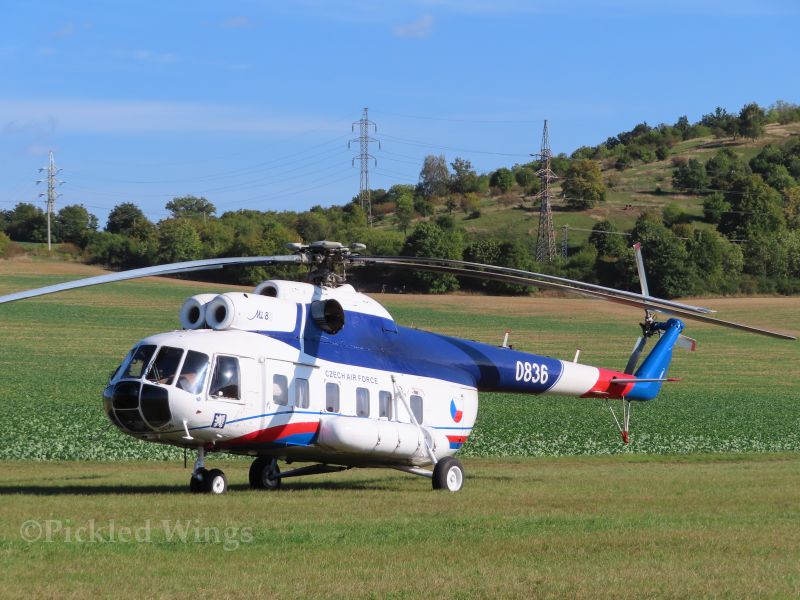
Mil’s Masterpiece
As helicopter makers from the former Soviet Union and modern Russia go, the Mil design bureau is nothing short of legendary. Named for Mikhail Mil (1909–1970), the bureau was established in 1947 and quickly made its mark with the Mi-1 light utility helicopter—the Soviet Union’s first helicopter designed for mass production. With more than 2,500 built and over 20 countries operating it, the Mi-1 was an impressive start.
The Mi-4 transport helicopter followed, becoming even more successful. More than 4,000 were produced, serving over 30 military air arms and numerous civilian operators. By the time the massive Mil Mi-6 first flew in 1957, Mil’s reputation was firmly established. The Mi-6 was the world’s largest and fastest helicopter of its day, the first Soviet rotorcraft powered by turbines rather than piston engines, and a prolific record-setter. Though it didn’t see the same widespread service as the Mi-4, it proved Mil was a force to be reckoned with internationally.
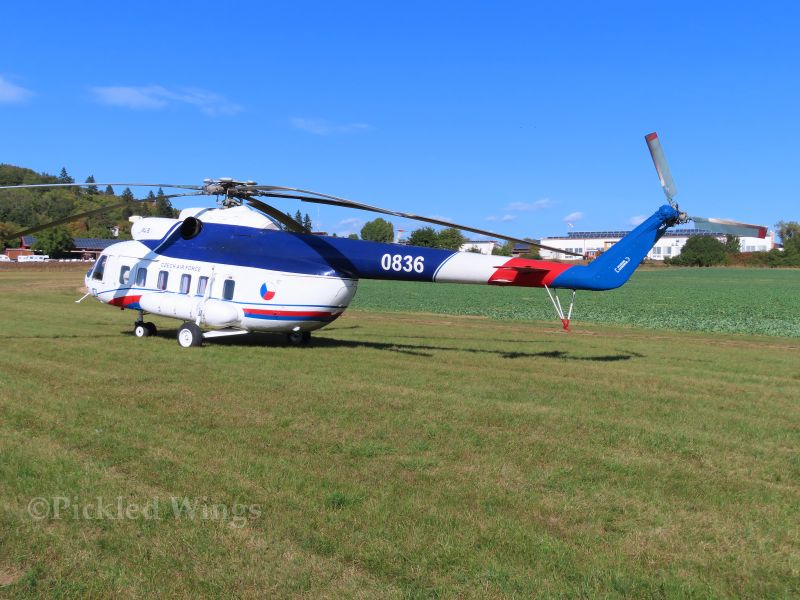
Building on the achievements of both the Mi-4 and Mi-6, Mil began designing a turbine-powered successor to the Mi-4 in the late 1950s. The prototype of this new machine took to the air in July 1961. It would eventually carry the designation Mi-8.
While the designers undoubtedly knew they were creating something new and noteworthy, it’s unlikely they realized they were witnessing the birth of a legend.
From that single prototype grew a long-lived family of helicopters—the Mi-8, Mi-17, and Mi-171—collectively known by NATO as the “Hip.” More than 17,000 have been built, with civilian and military operators in more than 70 countries. Few helicopters in history have matched its adaptability, longevity, or global reach.
Since 2007, Mil’s legacy has been carried forward by Russian Helicopters, which continues to produce new “Hip” variants today.
Progress and One-upmanship
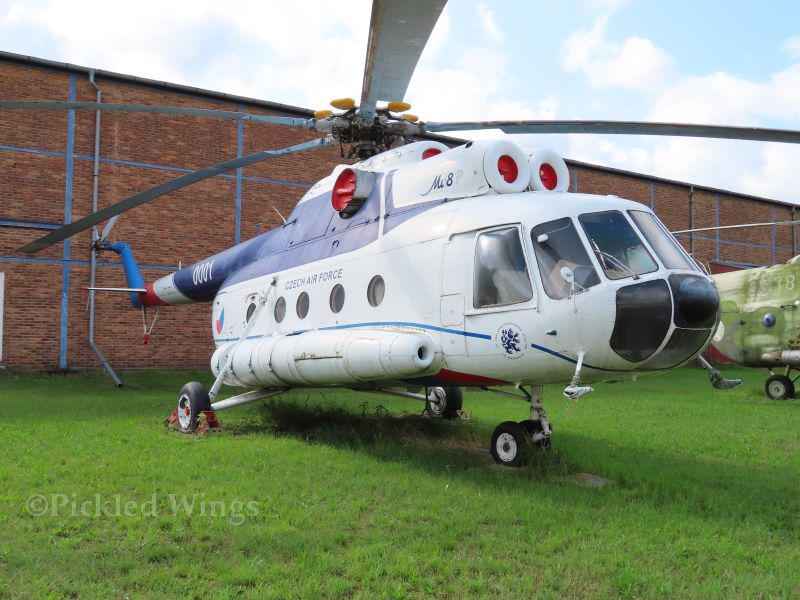
Despite its enduring success, the “Hip” family had a rocky start.
By the late 1950s, Mikhail Mil recognized that turbine engines were the future. Turbine-powered helicopters like the French Sud Aviation Alouette II and the American Bell UH-1 Iroquois had already demonstrated the key advantages of the turbine: lighter weight, more power, and easier maintenance.
Mil proposed a turbine-powered, twin-engine successor to the Mi-4, but the Soviet military wasn’t initially convinced. They were satisfied with the Mi-4 and saw no need to replace it. Mil then reframed his idea as a development of the Mi-4 rather than an outright replacement and received reluctant approval to build a prototype: the V-8.
Early versions of the V-8 had only a single turbine engine. The idea to fit two engines is often attributed to Nikita Khrushchev’s 1959 diplomatic visit to the United States, during which he was impressed by the Sikorsky S-58 helicopters used to transport him. Wanting something superior for a reciprocal visit, Khrushchev became more open to Mil’s persuasion. After a demonstration flight in a VIP-modified Mi-4, Mil convinced him that the new V-8 needed two engines for safety and reliability. Khrushchev agreed, clearing a major hurdle in the project’s development.
The Power to Perform
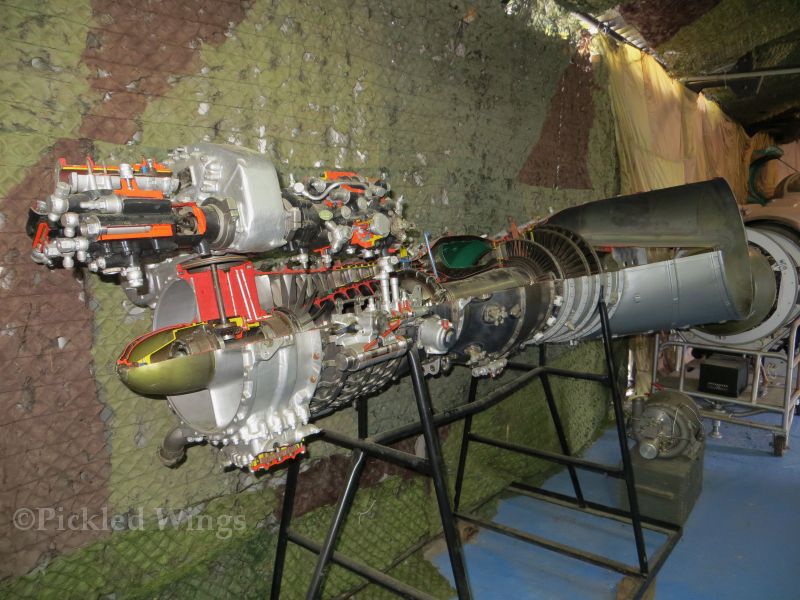
When the V-8 first flew in 1961, the design team was disappointed. Its Ivchenko AI-24V engine—originally intended for fixed-wing transports like the Antonov An-26—was not optimized for helicopter use. It was inefficient and had to be significantly detuned to be useful as a helicopter engine.
A new engine was needed. For the two-engined V-8A prototype, the Isotov engine bureau created a clean-sheet design: the TV2, paired with an entirely new gearbox. When the V-8A flew in August 1962, the improvement was immediately obvious. The TV2 eventually evolved into a respected engine family, later taken over by the Klimov bureau.
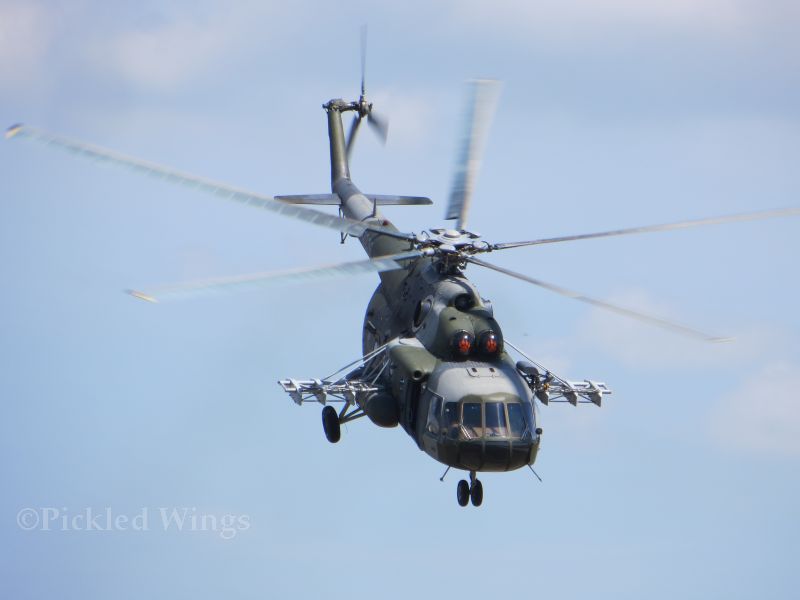
The earliest V-8A kept the four-blade main rotor of the Mi-4 and was laid out as a civil passenger variant. Two more prototypes followed in 1963–64: one military assault version and one VIP demonstrator. During this period, the main rotor was redesigned from four blades to five—a major refinement in vibration and noise reduction.
The Soviet government was impressed and ordered the helicopter into production in late 1964 as the Mi-8. Civil and VIP versions entered service in the mid-1960s, while military uptake came a little later.
A major milestone came at the 1965 Paris Air Show, where the Mi-8 made its international debut. Western observers—who were often dismissive of Soviet designs—found little negative to say. The aircraft’s refinement, ergonomics, and smooth five-blade rotor system earned widespread praise. Interest was so strong that a global sales tour followed, resulting in numerous international orders.
Embracing the New
Civilian operators embraced the Mi-8 before the Soviet air force did. Only in 1967 did the military adopt it, encouraged by its growing civilian success and by the example of the turbine-powered UH-1 in the Vietnam War, whose speed and maintainability highlighted the advantages of turbine technology.
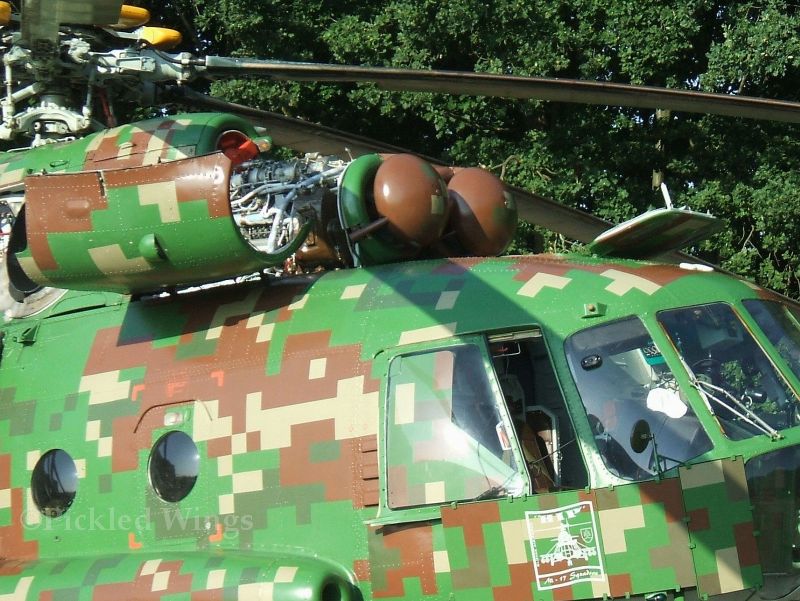
The Mi-8 proved to be a substantial leap beyond the Mi-4. Crews appreciated its improved ergonomics and straightforward maintenance. It was designed for rugged field conditions—features like a hatch in the cockpit roof allowed crew to reach upper components without ladders, and the engine and gearbox bay doors were strong enough to sit on during servicing.
The Mi-8 also carried far more weight and offered greater speed. Unlike the Mi-4, which had to be adapted to carry weapons, the Mi-8 was designed from the start to accept a wide range of armament.
Growing domestic and export demand required expanded production capacity. In 1970, a second factory opened in Ulan-Ude, supplementing the long-established Kazan plant.
Popular and Proven
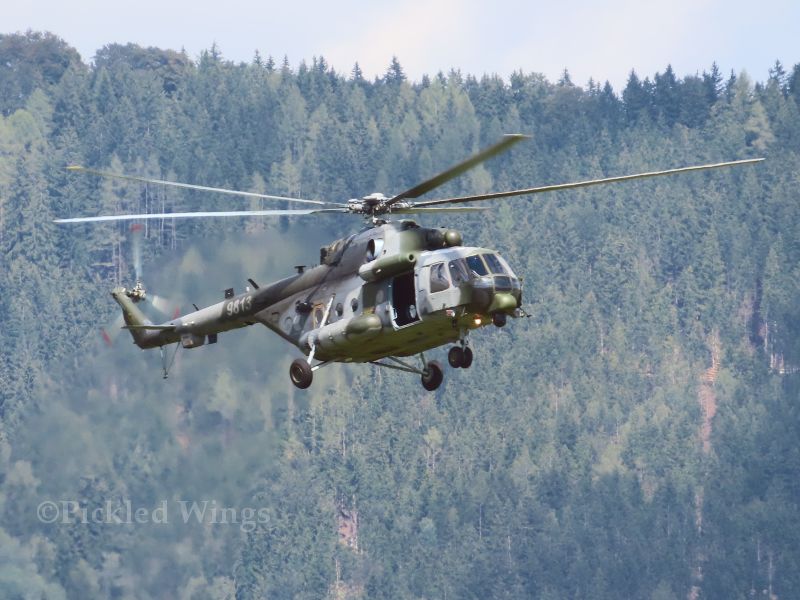
What truly sets the “Hip” apart—both in military and civilian contexts—is its unparalleled adaptability. Whether operating in Antarctica, dense jungle, high mountains, humid rain forests, or the world’s hottest deserts, the Mi-8/17 family has proven it can handle almost anything. Modern versions are rated to operate in temperatures from –50 to +50°C (-58 to 122 degrees Fahrenheit).
Many older airframes have been modernized with updated avionics originally developed for newer models, extending their service life substantially.
The Mi-8’s combat experience mirrors that of the American UH-1. Early versions of both helicopters revealed serious limitations in wartime, prompting extensive upgrades and leading each to evolve into large, capable families of aircraft. While the Vietnam War was the proving ground of the UH-1, the Soviet-Afghan War (1979 to 1989) would serve that purpose for the “Hip”.
Conflict in Afghanistan continued long after the Soviet withdrawal, and the Mi-8 returned in significant numbers as part of the International Security Assistance Force (ISAF) after the September 11, 2001 attacks. Many ISAF nations—especially former Warsaw Pact members—contributed Mi-8 and Mi-17 aircraft.
More recently, following Russia’s 2022 invasion of Ukraine, many European nations accelerated the retirement of Russian-made equipment, including “Hip” variants, donating them to Ukraine’s armed forces. This shift reflects political considerations and supply-chain concerns rather than any deficiency in the aircraft itself.
The “Hip” Family Line
Over its long life, the “Hip” family has been in almost continuous development. Few aircraft have as complex a lineage, with overlapping variants and multiple designations often describing the same model. The list below highlights the major production versions across the three generations.
First Generation — Mi-8
Mi-8T / TV:
Standard transport version, seating up to 24 passengers. The Mi-8TV was an armed version.
Mi-8TVK / TBK:
Heavily armed gunship variants, with the Mi-8TBK being the export version.
Mi-8IV:
Airborne command post variant, visually similar to the transport model aside from antenna arrangements.
Mi-8MV / PP:
Electronic warfare platforms designed to accompany transport formations and jam ground-based radar. The Mi-8PP is recognizable by six large X-shaped antennas on each side of the fuselage.
Mi-8P / S:
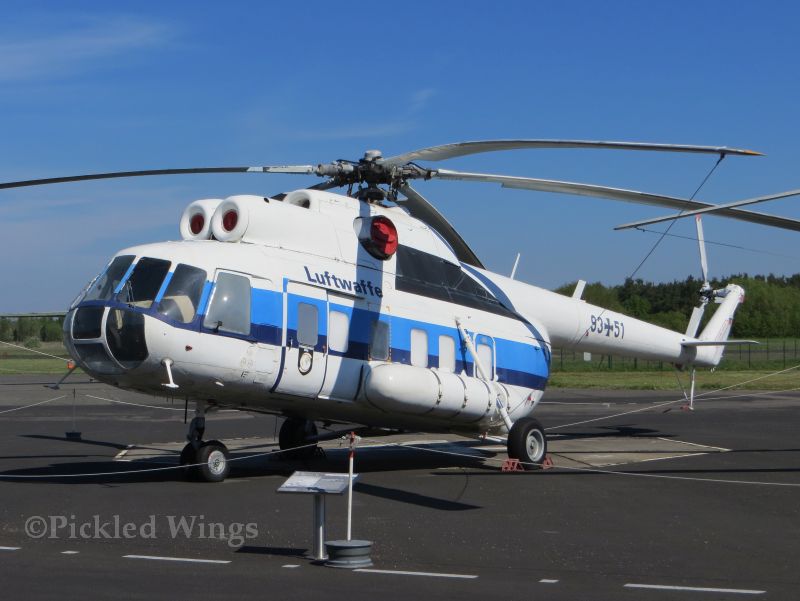
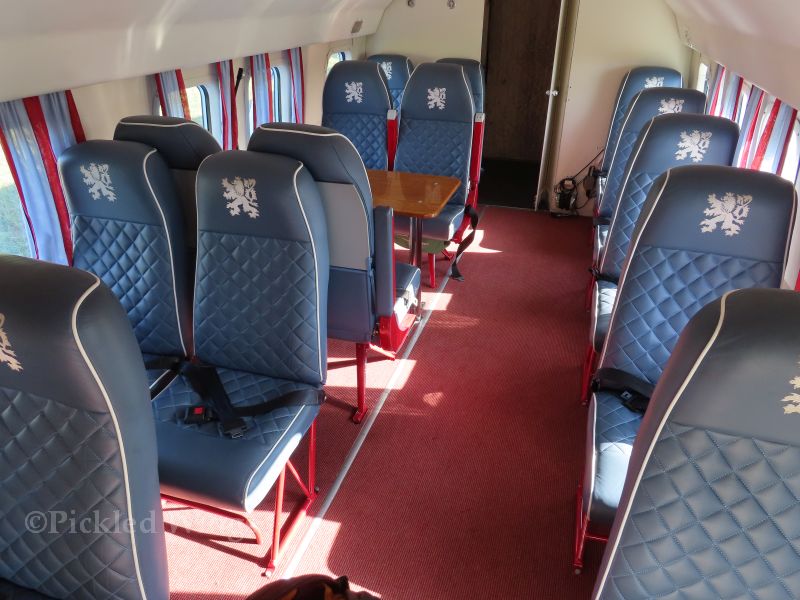
Civil passenger version seating up to 32, featuring larger square windows and a rear door with steps. The Mi-8S was the VIP version.
Mi-8MA:
Polar-optimized model.
Mi-8ATS:
Agricultural version equipped for spraying.
Mi-8TS:
Desert-optimized version.
Second Generation — Mi-8MT and Mi-17
Mi-8MT / Mi-17:
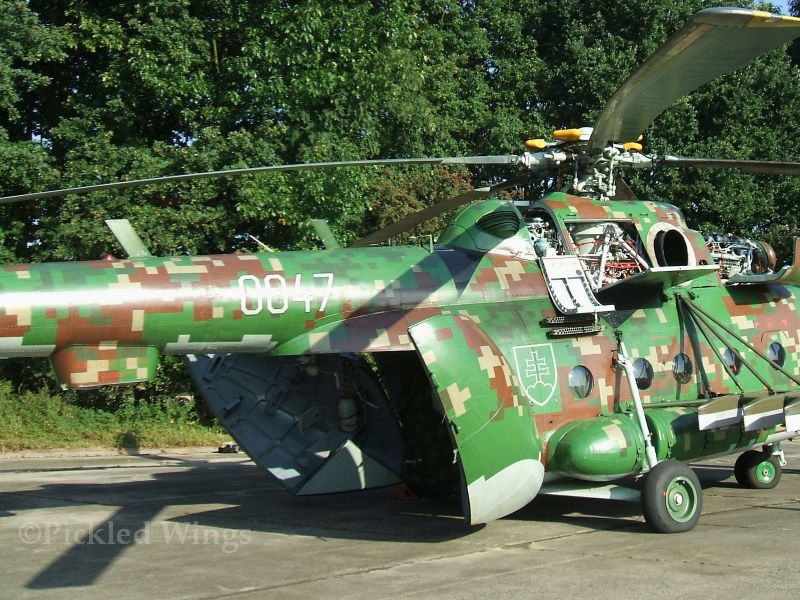
Introduced in 1975 with more powerful TV3 engines, improved gearbox, and the rotor system developed for the Mi-14 naval helicopter. Mi-17 is the export designation.
Mi-8MTV / Mi-17-1M:
Designed for high-altitude and hot-climate operations, achieving altitudes around 6,000 metres.
Mi-8MTV-1 / Mi-17-1V:
Radar-equipped variant; the Mi-17-1VA could be set up for medical evacuation.
Mi-8MTV-2 / Mi-17-2:
Improved armour, avionics, and a refined rotor system. Troop capacity increased to 30.
Mi-8MTV-3 / Mi-17V-3:
Focused on gunship operations with a broader range of weapon options.
Mi-8MTV-5 / Mi-17V-5 / CH-178:
The pinnacle of second-generation development and a bridge to the third generation. Early versions introduced the rear loading ramp now common on modern “Hips.” Extensively upgraded avionics and NVG-compatible cockpit.
The CH-178 designation refers to a small fleet leased by the Canadian military for ISAF operations (2009–2011).
Third Generation — Mi-8AMT and Mi-171
Mi-8AMT / Mi-171:
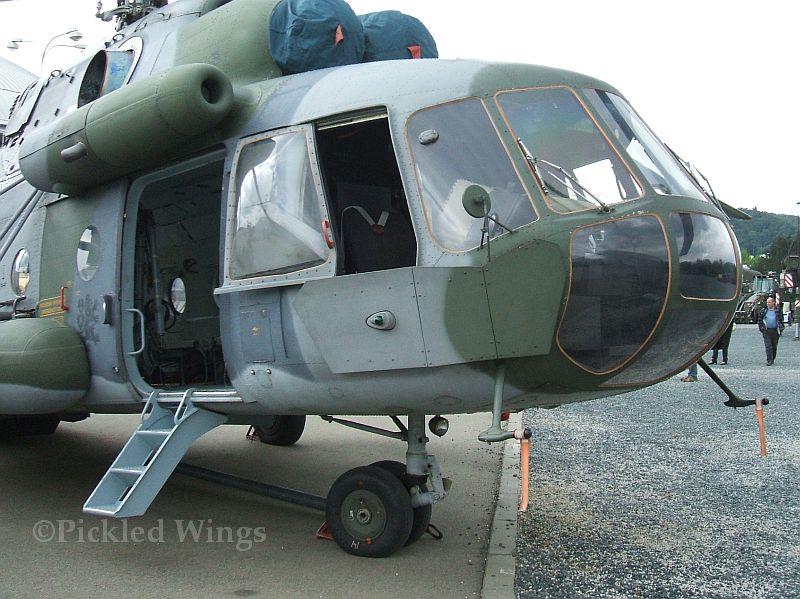
Debuting in 1991 with major improvements, including revised air-conditioning placement to allow a sliding starboard door and optional rear ramp. Available with Klimov VK-2500 engines.
Mi-8AMTSh / Mi-171Sh:
A substantially enhanced military version with modern avionics and self-defence systems.
Mi-171A / A1 / A2:
Civilian variants, with the A2 featuring major upgrades including reduced crew requirements (two instead of three), a new rotor system, and systems adapted from the Mi-38.
Mi-171C:
Chinese licence-built version.
Mi-171Sh Storm:
Optimized for special forces operations.
Staying in the Game
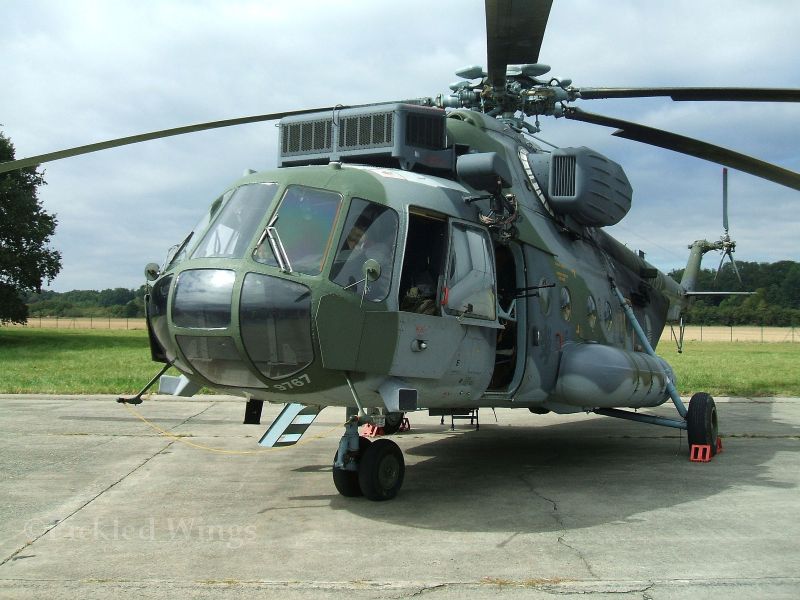
As of late 2024, the “Hip” family remains in active production and continues to be a central product of Russian Helicopters. Beyond new builds, the “Hip” is consistently strong on the second-hand market.
Five decades of service have scarcely slowed it down, and its adaptability suggests it has many years ahead. It’s often easier to list what the Mi-8/17 can’t do than what it can.
While geopolitical tensions have accelerated its retirement in some countries, the same tensions may prolong its life elsewhere. The modern Mi-38 was positioned as a successor, but limited export prospects—owing largely to political conditions—make it unlikely to replace the “Hip” globally anytime soon.

Learning More
Many “Hip” helicopters now reside in museums, yet thousands remain active worldwide.
A good first stop to learn more about this family of helicopters is the Russian Helicopters official website. There you can find dedicated pages for the Mi-8/17 and the Mi-171. These pages included downloadable .pdf brochures on the types for further reading.
These two links will take you to archives of articles about the Mi-8 and the Mi-17 and Mi-171 at the Afterburner Aviation Magazine website.
 Pickled Wings