An Overshadowed Existence
When the name “MiG” is mentioned, the legendary MiG-15 and MiG-21 are likely the first images that enter the mind of anyone familiar with the Mikoyan-Gurevich design bureau’s line of jet fighters, which became almost synonymous with Warsaw Pact air power during the Cold War. The MiG-15 established Mikoyan-Gurevich’s reputation for producing formidable jet fighter aircraft, while the MiG-21, with nearly 11,500 built and many still in active military service after 50 years, cemented that reputation.
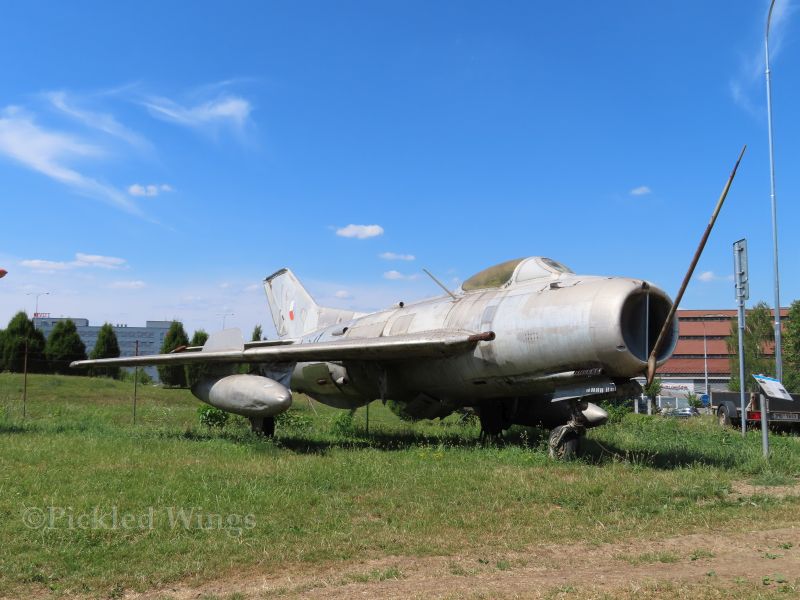
The MiG-19, which bore the NATO code name “Farmer,” had the misfortune of falling between the MiG-17, the offspring of the MiG-15, and the MiG-21. Preceded by the descendant of a legend and followed by the aircraft that defined the term “MiG” for decades, it’s hardly surprising that the MiG-19 is sometimes overlooked in discussions about Mikoyan-Gurevich aircraft.
The MiG-19 lived in the shadows of not only its better-known MiG stablemates but also its more numerous Chinese derivative, the Shenyang J-6. Many nations operated the Shenyang-built version alongside the true MiG-19. Continued production of the J-6 long after other MiG-19 production lines had closed ensured that the Shenyang variation would have a longer life than its progenitor did.
A total of 2,172 aircraft were built to the true MiG-19 specifications between the former Soviet Union and Czechoslovakia, whereas at least 3,000 aircraft of the J-6 family are known to have been built.
Through the Barrier
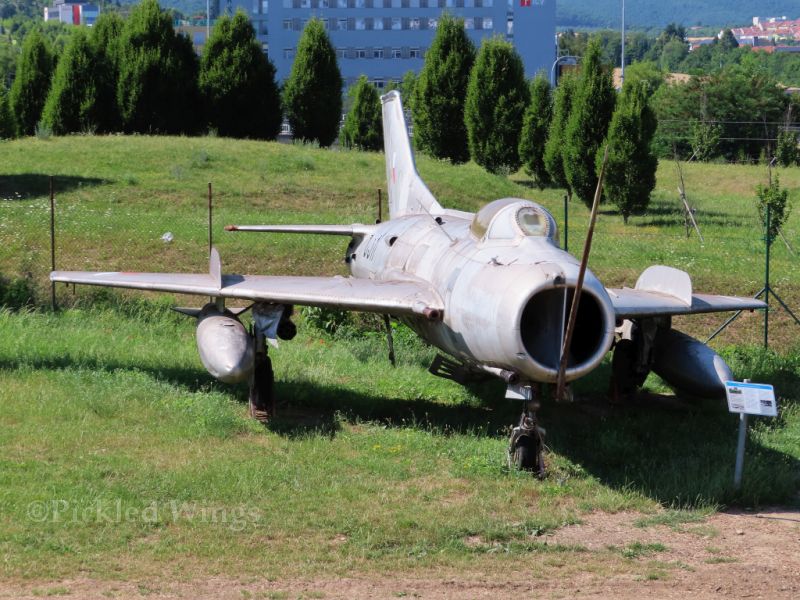
The MiG-19 lineage had the distinction of being the first aircraft in the former Soviet Union to break the sound barrier in level flight, as well as the first aircraft in the world approved for series production that was capable of doing so.
For clarity, it should be noted that while the North American F-100 Super Sabre was the world’s first aircraft in military service to exceed the speed of sound in level flight, the MiG-19 received its approval for series production before its American counterpart did. Although the F-100 beat the MiG-19 into service, it suffered numerous accidents due to stability problems in its early years.
The MiG-19 was born of a 1951 requirement of the Soviet military for a heavily armed, supersonic fighter capable of reaching the altitudes required to intercept western strategic bombers. It was a very high order at a time when the jet fighter was barely out of its infancy as a technology.
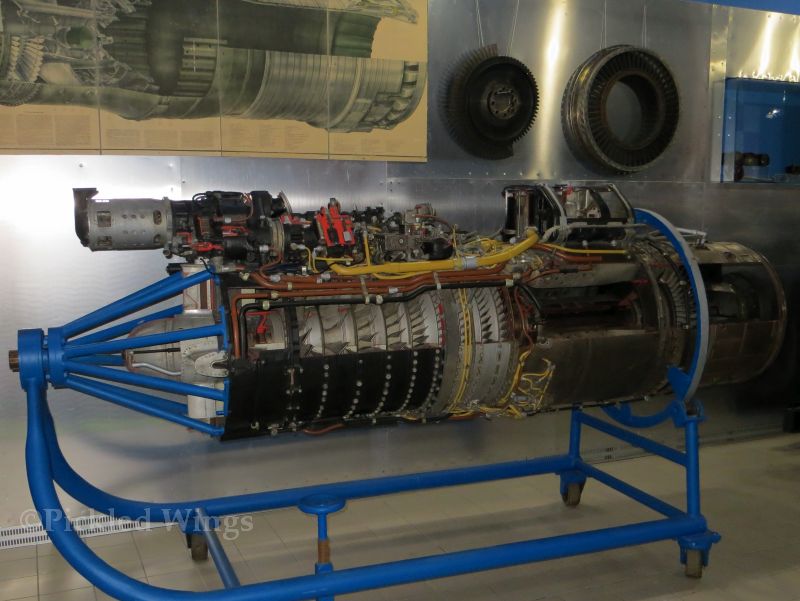
In 1953, the bureau introduced a prototype designated SM-9/1, which incorporated significant modifications, including a redesigned tail unit and a pair of Tumansky RD-9B turbojets. The aircraft first flew in January 1954 and was approved for series production the following month. Factory testing continued until September 1954.
Mikoyan-Gurevich was, for the time period, working in largely uncharted territory in the quest to design an aircraft that was at once supersonic and suitable for mass production. The primary obstacle wasn’t so much in designing the aircraft as it was finding an engine that was adequate to the task of getting the aircraft through the sound barrier in level flight. Mikoyan-Gurevich produced a series of prototypes, some of which were mildly supersonic, before they hit upon the right combination of aircraft and engine.
The initial SM-9/1 variant faced several problems, including stability and responsiveness issues in supersonic flight, and the potential for a fuel tank located between the engines to explode mid-flight. These problems made the early MiG-19 less than popular. Further modifications resulted in the SM-9/2, which became the direct basis for the most numerous member of the aircraft family, the MiG-19S.
While the MiG-19 through its aerobatic performance and speed did eventually win popularity among those who flew it, it was a quite demanding aircraft for both the pilots and maintenance crews.
Typical of fighters of its era, the MiG-19 did not have a dedicated two seat trainer variant, this made pilot transition to the type quite difficult. The aircraft’s very high landing speed and tendency to enter spins led to a number of accidents through the type’s years in service.
Fame and Infamy
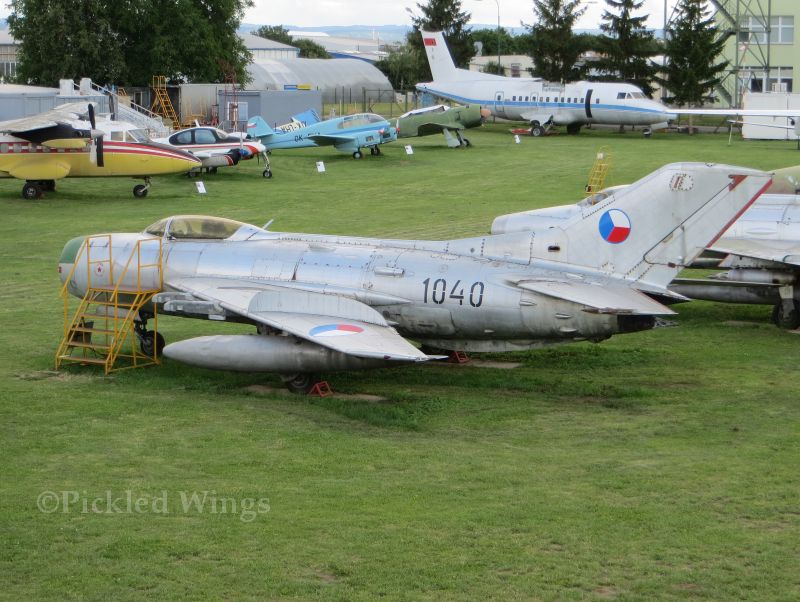
The MiG-19 was involved in intercepting many Western aircraft which ventured too close to Warsaw Pact territory during the Cold War. The first documented encounter between a Warsaw Pact aircraft and America’s secretive Lockheed U-2 spy plane occurred in 1957 when a MiG-19 pilot spotted a U-2 but was unable to get close enough to attack.
MiG-19s were also involved in the downing of at least two American military aircraft over Europe in the 1960s. In July 1960, a British-based RB-47 reconnaissance aircraft was shot down over the Barents Sea. In January 1964, a Soviet MiG-19 shot down an unarmed T-39 training aircraft which had strayed into East German airspace.
The MiG-19, along with the Shenyang J-6, saw a variety of combat action in their careers. With a standard armament consisting of three 30mm cannons, it was a fearsome adversary in both air-to-air and air-to-ground combat environments.
During the Vietnam conflict, North Vietnamese forces operated
both MiG-19s and J-6s, scoring seven confirmed aerial victories over American aircraft with them. In 1969 the U.S. Air Force received a J-6 from Pakistan and evaluated it quite favourably with the exception of very short range and high maintenance requirements of the engines.
Various conflicts throughout the Middle East have also involved the MiG-19 and J-6:
Egypt fielded their MiG-19s against Israeli forces in the Six Day War, the War of Attrition and the Yom Kippur War.
In the Iran-Iraq War, which raged through most of the 1980s, both sides used the J-6 for ground attack missions.
In Africa, the Uganda-Tanzania War in the late 1970s saw Tanzanian MiG-19s used against Ugandan forces. In the same time frame, the Ogaden War between Somalia and Ethiopia saw Somalian J-6s used against Ethiopian forces.
The J-6 was also used by Pakistani forces during the Indo-Pakistani War of 1971.
Who’s Who in the “Farmer” Family
Defining the MiG-19 family can be challenging, primarily because Shenyang continued to produce and develop the J-6 long after production of the Soviet MiG-19 had ceased. Many of Shenyang’s later J-6 derivatives have no direct counterparts in the original MiG-19 lineage.
Another point of confusion is that designations for Chinese-built models differ between domestic and export markets. For instance, the export designation for the J-6 is F-6.
In the following list of major MiG-19 variants, I’ve limited mention of the J-6 only to those variations of it which have close counterparts in the main MiG-19 family. It should be kept in mind that none of the Shenyang J-6 variants are exact copies of Mig-19 family members; while they can be seen as equivalents, they are not identical.
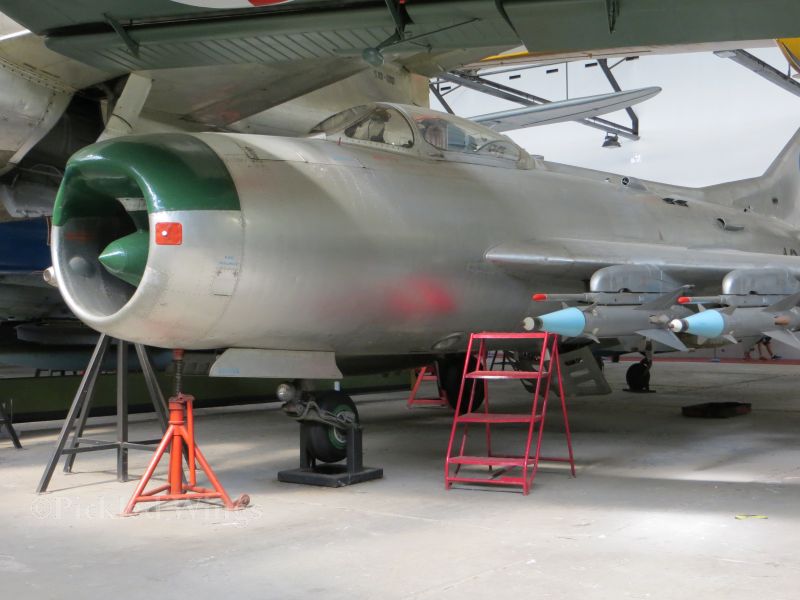
MiG-19S / Aero S-105 / Shenyang J-6 (F-6)
- This was the standard day fighter variant of the family and, by far, the most numerous variant. All variations had a trio of 30mm cannons and optional under wing rocket pods as armament.
- The Aero S-105 was the Czechoslovak license built version,
- The Shenyang J-6 was the Chinese built version, F-6 was the export designation for the J-6.
MiG-19R / Shenyang JZ-6 (FR-6)
- Reconnaissance version based on the day-fighter variant.
- FR-6 was the export designation for the JZ-6.
MiG-19PF / Shenyang J-6A (F-6A)
- Radar equipped, all weather fighter variant. Two cannons were retained in the wings while the nose cannon was deleted to make room for the radar.
- F-6A was the export designation for the J-6A.
MiG-19PM / Shenyang J-6B
- A development of the radar-equipped all-weather fighter. All cannons were removed, and the aircraft was rearmed with four air-to-air missiles.
- Very few J-6Bs were built, and there is no evidence that the J-6B was ever exported.
The “Farmer” Today
Most sources indicate that the MiG-19 has been completely retired from military service, while the J-6 remains in limited use. A 2023 survey of global air forces showed small J-6 fleets in the air arms of Pakistan, Sudan, Tanzania, and Zambia. The same survey reported that North Korea maintained a fleet of around 100 J-6s.
In the 2022–2023 timeframe, reports emerged that North Korea was converting its J-6s into unmanned drones. North Korea possesses a well-developed drone industry and has been repurposing obsolete military aircraft as target drones for many years. Recent reports speculate that North Korea might be fitting some J-6s with guidance systems and explosives to use as cruise missiles against industrial and infrastructure targets in South Korea.
While it’s plausible that North Korea could repurpose its obsolete J-6s in this way, verifying these claims is extremely difficult given the country’s icy relations with the outside world.
I can find no evidence that there are, or are likely ever to be, any airworthy examples of either MiG-19 or J-6 in civilian hands. Given the type’s demanding reputation from both flying and maintenance perspectives and the fact that most military operators likely flew theirs until the maximum fatigue life had been reached, it’s hardly a surprise that we don’t see any restored ones on the airshow circuits.
As it stands, it would seem that sitting quietly in museums is the only way we will be seeing this historically important aircraft.
Learning More
Compared to the likes of the MiG-15 and MiG-21, finding information on the MiG-19 online can be more challenging. However, there is some to be found:
- MiG-19 / První Nadzvuk — A thorough article about the MiG-19 and S-105 in Czechoslovak service. Written in Czech but responds well to online translators.
- Old Weapons, New Tricks — A 2023 article from the Korea Times discussing the possibility that North Korea is converting its remaining MiG-19 fleet into drones.
- Flying the MiG-19 (F-6) — An engaging video interview with former Pakistan Air Force pilot Tahir Alam, who offers a first-hand perspective on flying the Chinese-built F-6 variant.
 Pickled Wings
Excellent article. The MiG-19 was an excellent dogfighter and often underrated, yet the Chinese built more examples of the J-6 than any other variant. Great to see this fine aircraft getting the publicity that it deserves.
Thanks for the kind comments, I’m glad you enjoyed the article.
I am fascinated by your post. I knew nothing about this. It’s wonderful to learn more about the MIG-19.
Thanks for the kind comments! I’m glad you enjoyed the article and found it enlightening. 🙂
Thank you. You are very kind. The MiG-19 has been largely ignored by history, often overshadowed by the MiG-21. The total production of the MiG-19 in all variants exceeds 10,000. The Chinese operated the most versions of this aircraft and it was known as the The J-6 (Jianjiji 6, or Fighter Aircraft Type 6). Thanks for your comment!
Well researched article with a great introduction. According to a book “Russia’s Top Guns” , in the late 1980s the countries in the Warsaw pact including Czechoslovakia used a small number of S-105 aircraft for support duties. Do you have an idea about what these support roles involved?
Hi Timothy,
Thanks for your kind comments on this article.
As for your question, It’s the first I’ve heard of such a use of the MiG-19. I’m rather skeptical that such a thing would have occurred as Albania would have been the only Warsaw Pact nation with MiG-19 variants still in active service by that point. Albania kept theirs until about 2005 while the rest of the WP air forces had retired their Mig-19 fleets by the early to mid 1970s. Czechoslovakia, for example, retired their last MiG-19s around 1968.
I looked up the book you mentioned and noticed it was first published in 1991, so still quite soon after the “Iron Curtain” fell. I have found that a lot of books published about Russian Cold War military subjects from that period of time can still carry traces of myths and apocrypha from Cold War era propaganda and misinformation that have since been debunked.
I’m not saying what you asked about couldn’t have happened, but books on that subject from that era should never be taken as full gospel.
Yes you are right. Much of the book is gathered from US intelligence and based on the western world view.
Interesting information.
As of now the Albanian air force is going to auction off 42 AC. Mig 15, 17, 19, 21. Now is the chance to get one 🙂
Interesting and I’m sure very tempting for someone with the money. Though it is important to point out that the Albanian MiGs, at least the 17, 19 and 21 are Chinese built variations and can be quite different in many ways from the original Soviet specifications.
Is the S-105 still on display outside the Technical Museum in Brno? I was most recently there in 2011 and photographed it extensively for a ‘walk-around’, but have not had the chance to re-visit Brno since. It did not look to be in the best condition even then.
Yes, it’s still there. They seem to keep it generally clean, but it is dented up and has a fair bit of corrosion in places.
Thank you for visiting my blog!
You might also be interested in my “Gear Head Tuesday” post about Packard trucks:
https://56packardman.com/2018/03/06/gear-head-tuesday-guest-author-how-i-got-into-packard-trucks/
Thanks for checking in! I quite enjoyed your article about the Packard side of the Merlin engine production and I look forward to checking out more of your block as time permits.
On holiday in Albania and stopped at a roundabout 10km north of the tourist city of Berat, adorned with a MiG-19 – well, a Chinese built J6, I suppose. Clearly the Albanians couldn’t find buyers for all of them.