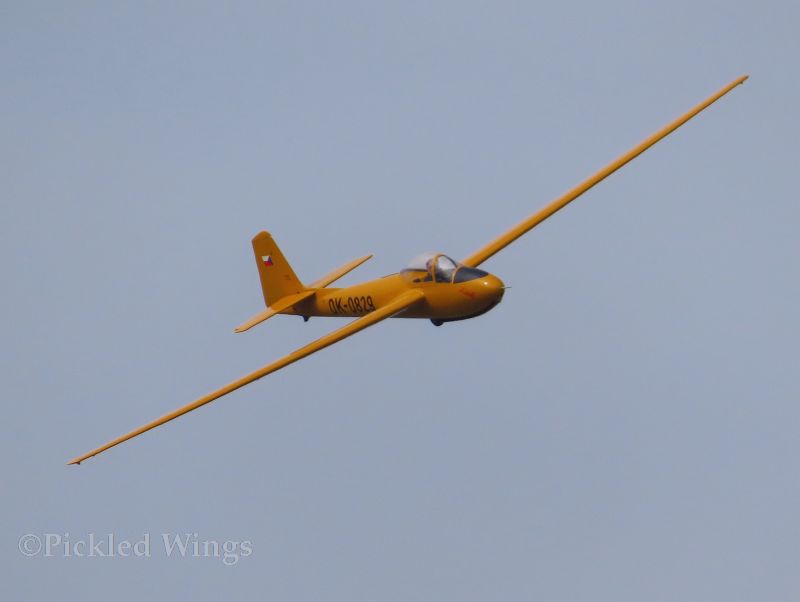
Luňák at Brno, Czech Republic in 2025.
Of Proud Pedigree
Established in Prague by the Czechoslovak Defence Ministry in 1918 to repair aircraft of the fledgling Czechoslovak air force, Letov was the first Czech aircraft manufacturer.
The company designed and produced the first indigenous Czech military aircraft, the Š-1 surveillance biplane, which first flew in 1920.
Letov performed very strongly in the interwar years, producing a range of civil and military aircraft. Like all Czechoslovak companies, however, it was pressed into service for Hitler’s Germany during the Second World War, acting as both a repair depot for Luftwaffe aircraft and a production site for military variants of the Junkers Ju 290.
The company briefly returned to designing its own aircraft in the late 1940s, with the LF-107 Luňák glider being the most significant of its post-war efforts. From the early 1950s onward, Letov focused on building components and structures for aircraft made by other manufacturers.
Since 2000, Letov has been a subsidiary of the France-based Groupe Latécoère. Today, it produces components and assemblies for civilian aircraft from Airbus, Dassault, and Embraer.
First flown in 1948, the Luňák was among the last complete aircraft Letov built before moving permanently into subcontract production.
Let’s spend some time with the LF-107 Luňák:
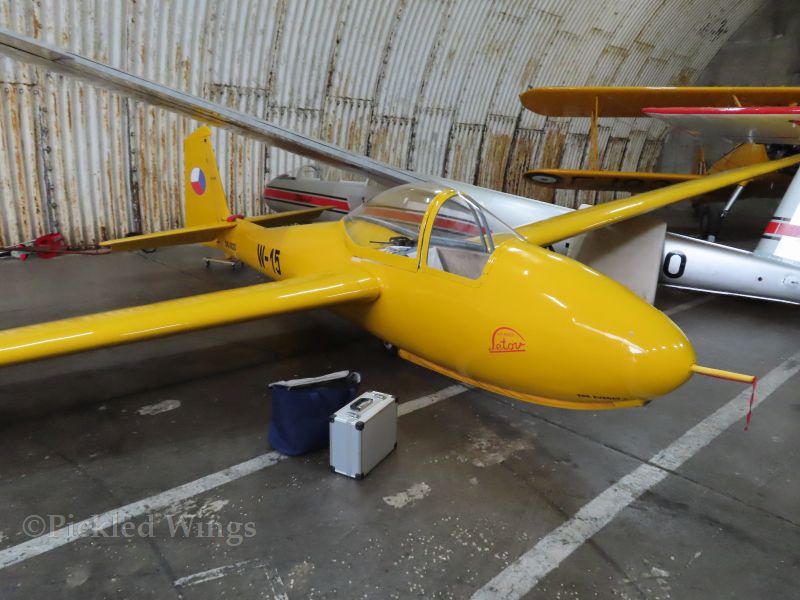
Acrobatics Above All
For roughly a decade between the mid-1940s and mid-1950s, several Czech aircraft companies showed a keen interest in designing and producing sailplanes. Many of those designs found international success, the best-known being the Let L-13 Blaník of 1956.
Letov’s LF-107 Luňák, which first flew in 1948, was a sleek, single-seat glider of largely plywood construction. It was conceived as an aerobatic specialist, suitable for both solo and formation displays as well as advanced aerobatic training.
Design work began in 1947 under the supervision of chief engineer Vladimír Štros. The team aimed to produce a sailplane that could surpass the aerobatic performance of the German-made DFS Habicht, which had debuted in 1936 and was highly respected in competitive flying circles.
Because of the Luňák’s projected performance, Letov was able to secure the interest and support of the Czechoslovak air force early in the design phase. The military sought a high-performance glider to test fighter pilots’ fitness and skill in aerobatics.
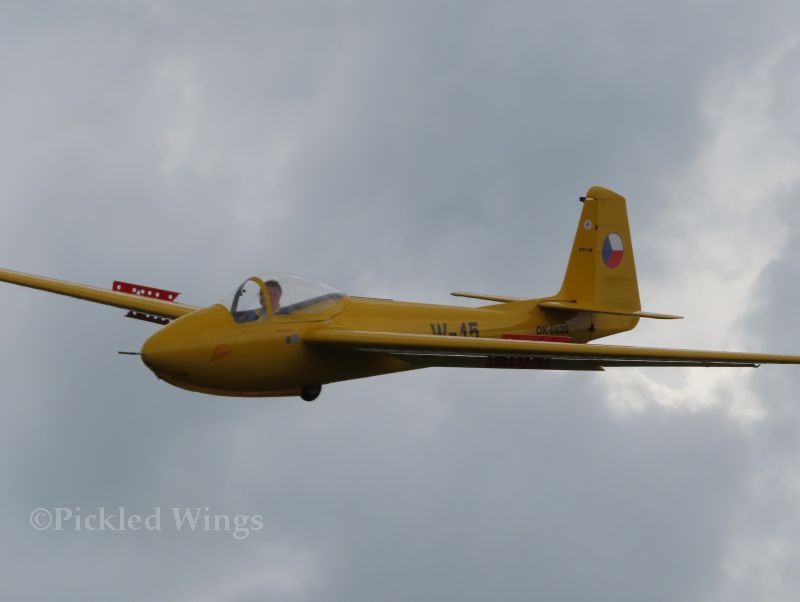
The prototype demonstrated excellent handling during its maiden flight in June 1948. Test pilot Jan Anderle reported the aircraft’s performance to be virtually flawless. A second flight took place the following month before delegates from the Ministries of Defence and Transport, along with numerous military and civilian pilots. During this demonstration, Anderle put the prototype through a demanding series of aerobatic manoeuvres that showcased the aircraft’s agility, speed, and robust construction. Official authorisation for series production followed shortly thereafter.
Even before production began, the Luňák prototype attracted international attention. In 1948 and 1949 it appeared at competitions in Poland and Switzerland, turning many heads with both its design and performance.
While Letov had envisioned a production run of around 200 of the type, rising Cold War tensions led to only 75 Luňáks being made in total before the company was ordered to cease production and was charged with producing components and structures for other aircraft companies who were producing Soviet designed MiG-15, MiG-19 and MiG-21 fighter aircraft for the Czechoslovak military.
In addition to the baseline LF-107 model for civilian use, a small number of simplified variants were built for the military and designated VT-7. A derivative known as the XLF-207 Laminar was also developed to test laminar-flow wings, making it one of the first sailplanes ever equipped with that feature.

The Kite Aloft
The word luňák translates into English as kite — a predatory bird noted for its mastery of both soaring and agile flight, as well as its bursts of speed when diving on prey. It was a fitting name for an aerobatic sailplane with a top speed of 300 kilometres per hour.
The aircraft’s agility and speed earned it the nickname “Engineless Fighter” among some pilots.
From an experienced pilot’s perspective, there was much to admire beyond its speed and agility. The cockpit was spacious, and the fighter-style bubble canopy provided an excellent all-around view. In true fighter fashion, the canopy slid backward to open, allowing the pilot to fly with it open if desired.
The Luňák was known for its highly responsive controls and, despite its aerobatic design, was appreciated for being quite stable and controllable in most phases of flight. However, owing to its aerobatic-optimised features and single-seat configuration, it was not considered suitable for less-experienced pilots.
Despite its limited production, the Luňák gained popularity beyond Czechoslovakia. Small numbers were exported to Bulgaria, Hungary, Poland, and Romania, and examples later appeared in the United States, Germany, Switzerland, and the United Kingdom.
By the early 1970s, the arrival of more modern and efficient sailplanes led most Luňáks to be retired, stored, or scrapped. A renewed interest in vintage gliders during the 1990s, however, saw several restored to airworthy condition.
Perhaps the strongest testament to the design’s enduring quality is that one of the few surviving Luňáks won the British National Aerobatics Championships three years in a row — 1999, 2000, and 2001.

The Luňák Today
With fewer than one hundred built, it’s unsurprising that only a small handful of Luňáks remain today, whether in museums or still flying.
As of 2024, nine flying examples were known to exist: four in the Czech Republic with the rest in other European countries. Very few appear to have made it into museums, so your chances of seeing a Luňák — in any condition — are slim indeed.
A Swiss page offers interesting details about similarities between the Luňák and a contemporary Swiss glider design:
- Article at sagach.ch
For a Luňák that found its way to America, see:
- Article at museumofflight.org
 Pickled Wings