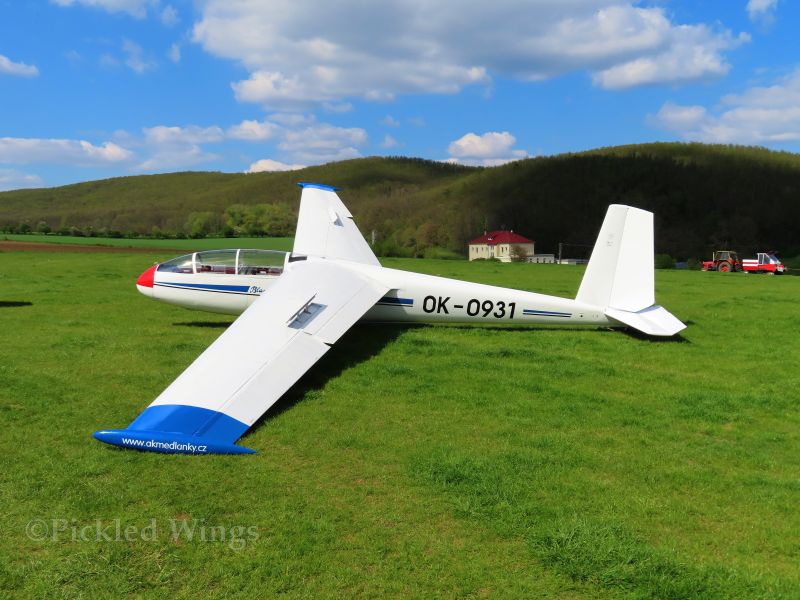
A Sailplane for the Masses
To travel aloft in a glider and be kept airborne by nothing more than thermal updrafts, no engine or fuel to worry about, is an experience quite different from flying in any sort of powered aircraft and likely as close as humans will ever come to flying as the birds do.
The sense of freedom that comes from gliding has made it a very popular activity worldwide and the Let L-13 Blaník and its variations have been catering to the training needs as well as touring and aerobatic desires of sailplane clubs and pilots in almost every corner of the globe since the late 1950s.
From it’s first flight in 1956 and subsequent production starting in 1958, the Blaník had a quick rise to popularity thanks to its durable construction, affordability and ease of handling both on the ground and in the air. It was extensively exported and became the stalwart of gliding clubs in many countries.
In its lifetime, the Blaník has held many records for two seat sailplanes. With over 3000 built, the Blaník still holds the record for the world’s most produced glider of post World War Two design.
A Breed Apart
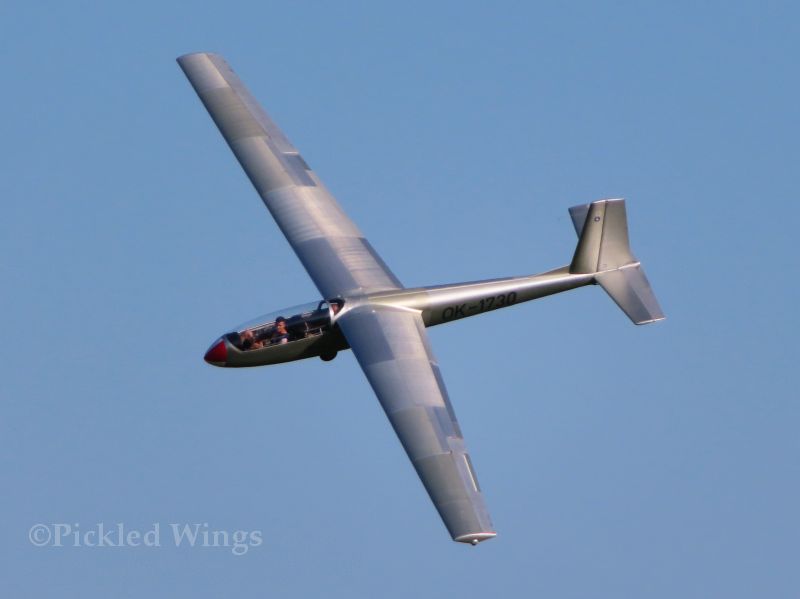
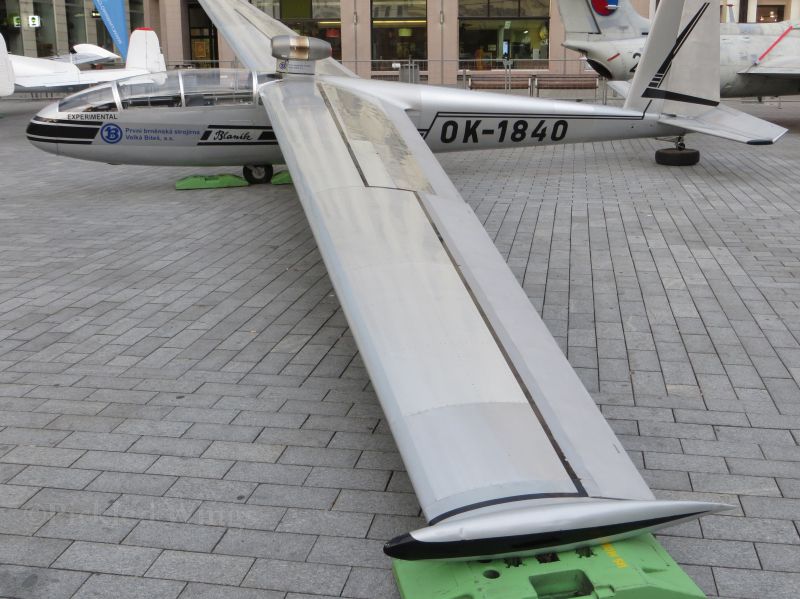
Designed and built by the Let aircraft company of Kunovice, in the south east of the Czech Republic, the Blaník was in several key ways a radical departure from sailplane designs which had gone before it. Chief among those departures was the extensive use of metal in the Blaník’s construction; with the exception of the elevators and rudder, the aircraft structures were entirely of metal.
The Blaník was designed from the outset with training in mind; to this end, it incorporated a semi retractable main landing gear with a strong shock absorption system which would allow the aircraft to withstand gear up landings and such similar beginners’ mistakes with little to no ill effect on the aircraft.
With a high level of durability afforded by its all metal construction, the Blaník proved particularly popular as a training aircraft in gliding clubs for its ability to withstand heavy handling that would do serious damage to more expensive and modern types made of composite materials. Beyond civilian groups, the Blaník also served as a military trainer; it was known as the TG-10 series in U.S. Air Force service.
Clipping the Wings
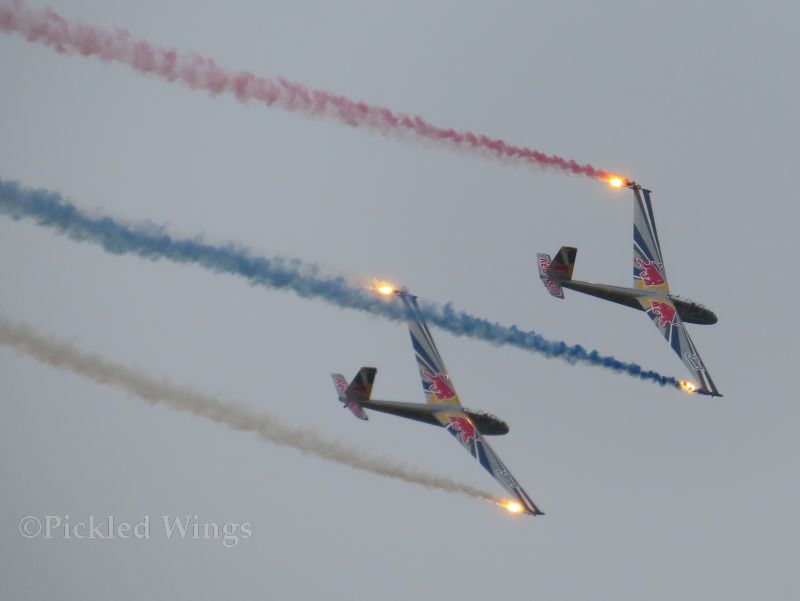
In spite of its durability, the Blaník is not unbreakable. Following a fatal crash in 2010 of a Blaník in Austria, baseline versions of the aircraft were grounded in many countries when the cause of the accident was attributed to metal fatigue in the wing spar area.
The grounding was controversial in many quarters for a variety of reasons, not the least of which was that it affected all baseline L-13 and L-13A models – even those with total flight hours well short of the aircraft’s fatigue life.
In 2016, L-13 and L-13A models were allowed to resume flying activities after being put through a rebuilding program that included strengthening of the wing spar and area of the fuselage around the wing root.
Interestingly, while other nations scrambled to find a fix to the fatigue problem, Australia had already come up with a Blaník life extension solution in 1979 known as the Llewellyn Modification. Aircraft which received the modification were re-designated L-13A1 and not affected by the grounding. While this modification did keep a handful L-13s in Australia flying, it was not approved as a fix outside of Australia and New Zealand.
The reasons for the Llewellyn Modification only being approved in Australia and New Zealand are bureaucratic in nature. The European Union Aviation Safety Agency, EASA, has no bilateral airworthiness agreement with Australia; this precludes the modification being applied to Blaníks in Europe.
In the case of Blaníks in America, the Federal Aviation Administration did not approve the Llewellyn Modification there because they did not accept Supplemental Type Certificates (STC), certification that approves modification of an aircraft, from countries other than an aircraft’s country of origin.
The impetus behind the creation of the Llewellyn Modification was a 1978 announcement from Let that the 3000 hour service life of the Blaník, as stated in the aircraft’s original specification, had been (by calculation) successfully demonstrated. This caused great concern among operators of the aircraft in Australia as there were a number of Blaníks in that country with significantly more than 3000 hours on them already.
The Australian agent for the Blaník contacted Let with their concerns on the matter. This resulted in Let conducting a full series of fatigue tests, to destruction, on the aircraft and concluding the the service life of the Blaník could be increased to 4000 hours; a figure still well under the number of hours that some Australian Blaníks had already accumulated.
In response, a domestically developed life extension program was sought for Australian Blaníks. Dafydd Llewellyn, the aeronautical engineer the modification was eventually named after, was given the task of creating that life extension program.
A total of 11 aircraft in Australia received the Llewellyn Modification package. There were two primary reasons for it being applied to so few aircraft:
Firstly, the Llewellyn Modification was essentially an extensive rebuild of large sections of the aircraft’s wings and tail section and very costly from a financial point of view. The modifications also included machined and heat treated components that had to be made by appropriately certified people. The modifications could extend the usable life of the aircraft to 12,000 flying hours, but many L-13s had already been flown over 5,500 hours. Spending a lot of money to keep already well used aircraft flying didn’t make a lot of sense to many Blaník owners.
Secondly, aircraft that received the Llewellyn Modification were subject to significant restrictions in the aerobatics that could be performed with them. One such restriction was that they could only be put into a spin for training purposes. This was a definite point against the modifications for anyone who enjoyed the aircraft for its aerobatic qualities.
The L-13 Family
Naturally, with the popularity that the baseline L-13 enjoyed, it’s not surprizing that Let would try to get as much as they could from the design.
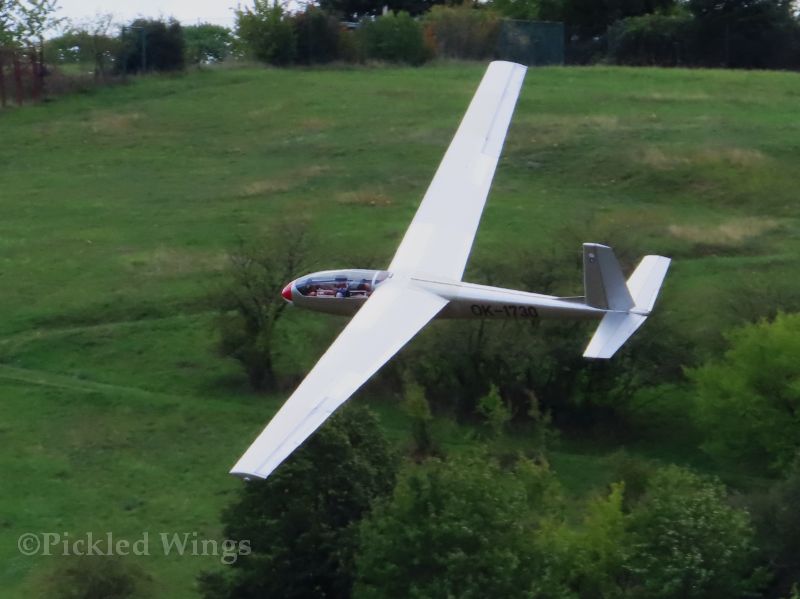
The L-13 family consists of both pure gliders as well as motorised variations.
L-13/L-13A/L-13A1
The L-13 is the baseline version of the Blaník.
L-13A is the designation for the first major modernisation of the Blaník. The L-13A first appeared in the early 1980s. It features a strengthened fuselage and the wings adapted from the L-13 Vivat motorised variation. Many baseline L-13 models have been modified to the L-13A standard.
L-13A1 is the designation for the 11 aircraft in Australia that received the aforementioned Llewellyn Modification.
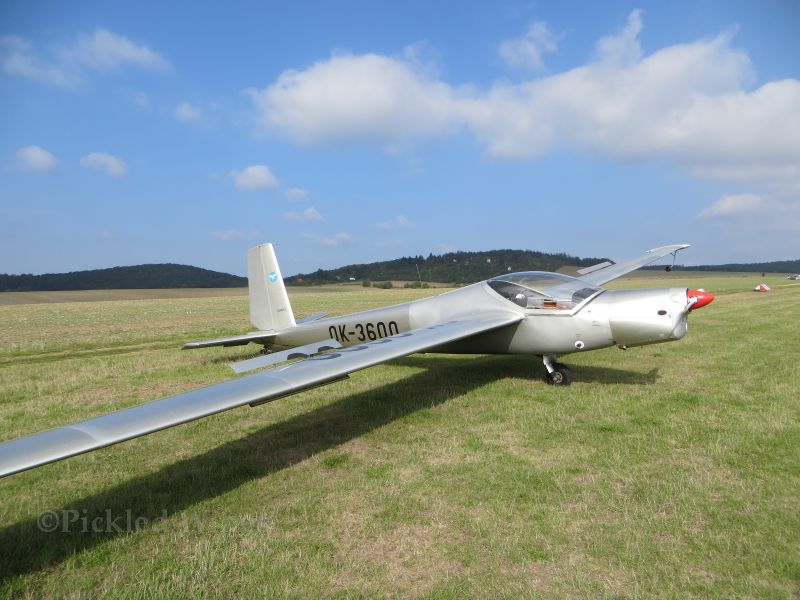
L-13AC/TG-10C Kestrel
The L-13AC was a development intended to increase the Blaník’s flight parameters so it could be used to train pilots to a higher level. The L-13AC has a different, and shorter, wing design than the baseline L-13 and was not subject to the 2010 groundings. The L-13AC first flew in 1997.
The most visible external features differentiating the L-13 AC from the baseline L-13 are a small extention at the base of the vertical tail fin and less support framing on the cockpit canopy. Additional changes included the cockpit sill in a lower position to allow better outward visibility, and moulded fiberglass wingtips with small wheels in them to replace the basic metal wingtips of the baseline Blaníks.
TG-10C Kestrel was the designation given to the L-13AC when it was in service with the U.S. Air Force Academy as an advanced trainer between 2002 and 2012.
L-13J
The L-13J was the earliest motorized version of the Blaník. It had a specially built three cylinder engine from the Jawa company, best known for their motorcycles, mounted on struts above the wing spar. The first flight of the L-13J took place in March of 1968.
L-13 Vivat
A more meaningful development in terms of self launching abilities for the L-13 family was the Vivat series of aircraft. The Vivat first flew in 1978.
The Vivat took rear fuselage, tail and modified wings of the L-13 Blaník and connected them to a newly designed forward fuselage and cockpit. Most Vivats have a retractable single wheel main landing gear with outrigger wheels at the wingtips, though a small number were also made with a fixed two wheel main landing gear arrangement.
The Vivat kept the Blaník’s two seat arrangement, but put the seats side by side rather than tandem, thus creating a much more roomy cockpit. The Vivat can be fitted with a Czech made Walter Mikron engine, a German made Limbach engine, or a Rotax engine from Austria.
Construction of the Vivat was undertaken by Aerotechnik, also based at Kunovice, and over 150 of the type were completed before production ended in the late 1990s.
L-13 B Bačostroj
The L-13 B Bačostroj first flew in 1979 and has only ever existed as a single example. The concept of the L-13 B was to create a single seat motorized version of the Blaník by removing the front seat and placing the engine there.
L-13 TJ
2006 saw the first flight of the L-13 TJ, a jet powered version of the Blaník. Two L-13 aircraft were modified to be fitted with small jet engines and were used to set new records for sailplanes in speed and time to height.
The Blaník Today
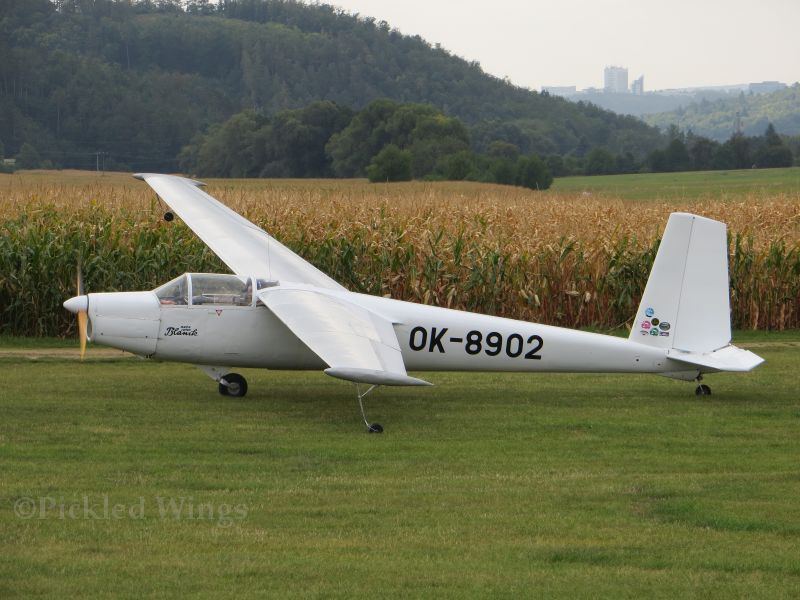
In spite of the groundings that affected the baseline variant, popularity and numbers are still very much in the Blaník’s favour and its name is still respected.
Blaník Aircraft, a company established in Prague in 2014, currently holds the certificates for all Blaník types and has actively been pursuing life extension programs for existing L-13 Blaníks as well as the conversion of baseline L-13s to the L-13A standard.
While some Blaníks have found their way into museums, it is safe to say that members of this aircraft family will be flying for several years to come.
Learning More
This link will take you to the Blaník Aircraft company website where you can find the latest developments regarding the L-13 and it’s family.
This article at the Flying Revue website will tell you something of the rebuilding process required for L-13 and l-13A models to be allowed to fly again.
Aircraft Design & Certification Ltd. of Germany is a company that holds the certification for EASA approved modifications to Blaníks that were grounded in Europe and countries with bilateral airworthiness agreements with EASA. This link will take you to the dedicated page on their website about Blaník modifications and what countries they are valid for outside of Europe. At the bottom of that page, you will find links that go more indepth on the technical aspects of the modifications.
This link will take you to a 2011 issue of Soaring Australia magazine. On pages 26 and 27, there is an article by Dafydd Llewellyn that goes into more details about the Llewellyn Modification applied to some Australian Blaníks. While the second section of the article is somewhat dated, the information in the first section is still quite valid.
This article at the orlita.net website gives a lot of information about the Blaník, its history and development as well as its accomplishments. It’s all in Czech, but responds well to online translator functions.
Acknowledgement: During 2024, I was contacted by Dafydd Llewellyn. He provided me with a great deal more information about the modification that he designed than I was able to find when I initially wrote this article some years ago. His help in giving greater context to that chapter of the Blaník story is very much appreciated.
 Pickled Wings
One thought on “Let L-13 Blaník – Gliding Globally”