Wings for an Empire
In 1914, the air arm of the Austro-Hungarian military was far from optimal and in desperate need of modern aircraft to fight effectively in the aerial battlefields of the First World War.
At the time, the Austro-Hungarian military faced a perplexing procurement problem: the entire aviation industry of the empire was under a monopoly held by two men, Ludwig Lohner (1858–1925) and Camilio Castiglioni (1879–1957). This monopoly was firmly established well before the outbreak of war.
Wishing to avoid the limitations and compromises of dealing with a monopoly, the military encouraged other aircraft companies to establish themselves within the Austro-Hungarian Empire. While this did create more choice for military procurement, it led to the opposite problem: too many companies producing too many aircraft types and consuming excessive resources in the process.
To counter this issue, the Knoller Programme was created in 1915. Named for Professor Richard Knoller (1869–1926), a respected engineer at the Vienna University of Technology with whom the military already had a good working relationship, the programme aimed to entrust Knoller with the design of new aircraft, which would then be built under contract by various manufacturers.

Rushed and Ruined
The Knoller Programme lasted from 1915 to 1917 and primarily aimed to produce powerful two-seat aircraft capable of fulfilling multiple roles. The programme resulted in three aircraft types, the C.II being the final one. All were ultimately failures, deemed unfit for military service.
The failure was not due to any incompetence on Richard Knoller’s part, but rather to the ridiculously short deadlines he was given. He simply did not have the time to bring any of the designs to maturity within the imposed timeframes.
The first aircraft of the Knoller Programme was the B.I. Designed in January 1915 but not completed until November that year, the B.I suffered numerous delays and was found to be a dangerous aircraft to fly due to structural weaknesses and poor handling.
The B.I was followed by the C.I, which, like its predecessor, faced various developmental delays before its first flight. Also like the B.I, the C.I had significant structural and handling shortcomings that rendered it unsuitable for service.
The third and final aircraft of the programme was the C.II, which first flew in 1916. Like the two earlier designs, the C.II was structurally unsound, poorly built, and unpleasant to fly.
The Knoller Programme was terminated by parliamentary decision in 1917. Parliament, reconvening for the first time since 1915, was made aware of the vast sums of money and resources expended on the programme with little to show for it. Consequently, all funding was cut, and the programme was formally ended.
That decision came too late to prevent the military from having ordered a total of 185 Knoller aircraft. A fatal crash involving a C.II occurred after its wings collapsed in flight. Ultimately, the military was left with nearly 200 useless aircraft from the programme. Most of these aircraft were stored incomplete and never flew at all. According to some sources, a few did see limited use as ground maintenance trainers.
The Knoller Programme was, in the end, a tremendous waste of money that hindered the Austro-Hungarian military’s efforts to modernise its air arm rather than support them. Companies that might have been building superior designs were often tied up producing Knoller aircraft instead.
The Knoller C.II Itself
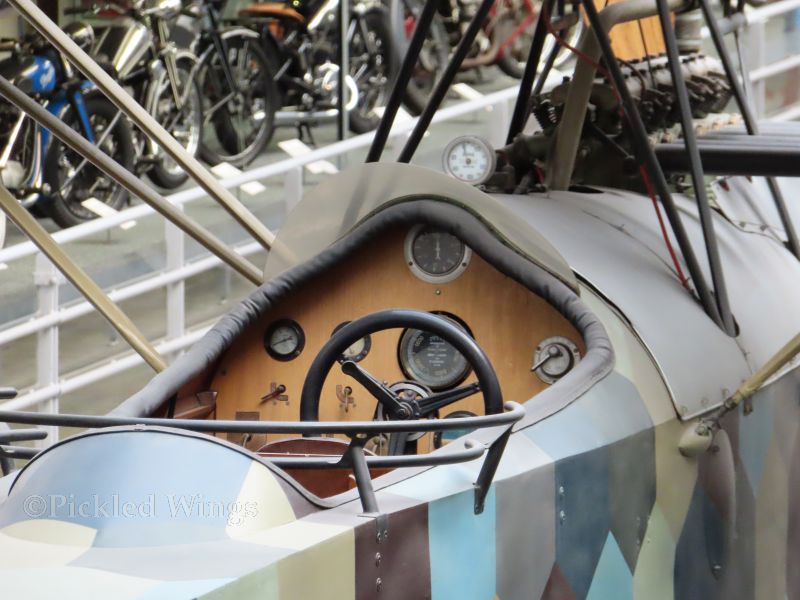
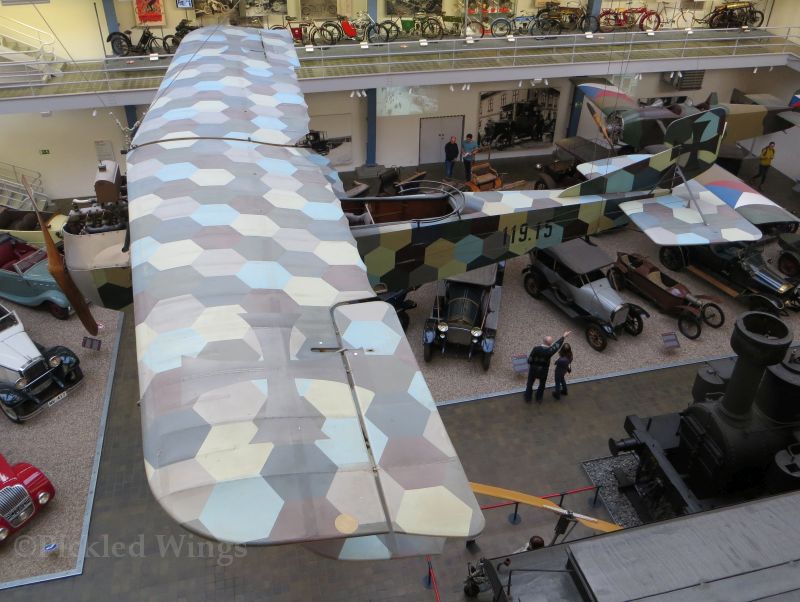
The C.II was a fairly typical biplane design for its time. Its wings were fabric-covered, with the upper wings slightly swept. The fuselage was of all-wood construction.
The aircraft was designed primarily for observation duties and carried a crew of two. The observer’s station featured a mount for a defensive machine gun, and a bomb rack was installed on the fuselage with space for three bombs.
Around 75 examples of the C.II were built by three companies: Aviatik, Lohner, and WKF.
All versions of the C.II were powered by Daimler six-cylinder, liquid-cooled engines producing either 160 or 185 horsepower.
What Remains and Learning More
Given the abject failure and wastage represented by all three Knoller aircraft types, and their unpopularity among those required to fly them, it is rather surprising that any example survives today.
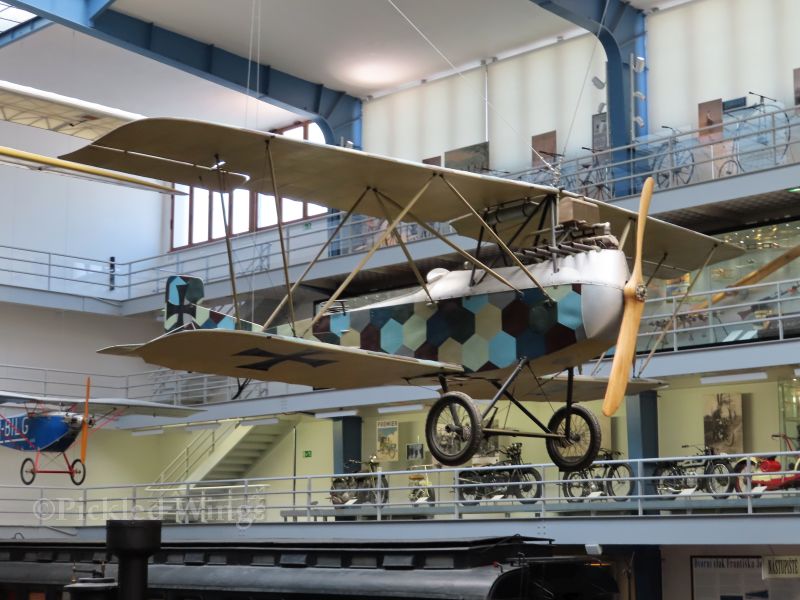
There is certainly no nostalgia surrounding the C.II that might inspire someone to build a full-scale flying replica any time soon. Nevertheless, one genuine C.II still exists. The National Technical Museum in Prague, Czech Republic, has a Lohner-built example of the C.II on display in its transport hall.
The following links lead to articles about aviation in Austria-Hungary, the Knoller Programme, and the aircraft the programme produced:
 Pickled Wings