Avia: Born Running
Established in 1919, the Avia company has remained a strong player on the Czech industrial landscape to this day. Making its name in both aircraft and trucks over the years; the company continues to make trucks and aircraft propellers today.
Avia built full aircraft from its founding until the early 1960s and became one of the best known names among early Czecholsovak aircraft manufacturers producing a range of successful interwar aircraft and license producing several foreign types in the post World War Two period.
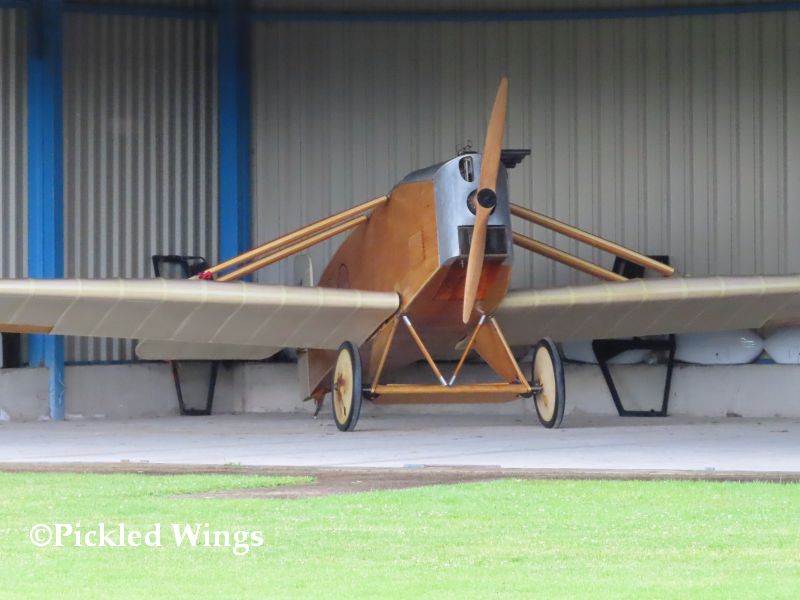
If there is any truth to the old proverb that one must crawl before they can walk and walk before they can run, then Avia needed very little crawling or walking time before they could truly run. Their first aircraft design, the BH.1, which was introduced in 1920 was a radical departure from aircraft design of the period and certainly not what one might expect of a first product from a new manufacturer.
There was very little conventional or conservative in the BH.1’s design. It was a streamlined monoplane in an era still dominated by slow biplanes. In a time where fabric on frame was still the standard method of construction, the BH.1 made extensive use of wood in its design. In its day, there was very little about the BH.1 that couldn’t be called revolutionary and pioneering.

The Minds Behind the Machine
Aircraft designers Pavel Beneš and Miroslav Hajn were two of Avia’s four founders. Both men had designed sailplanes in the years prior to Avia’s founding and so certainly were not newcomers to aviation. Both men also admired and were inspired by the design philosophies of Germany’s Hugo Junkers and the Dutch aircraft designer, Anthony Fokker.
Rather than working with existing wing designs, Beneš and Hajn designed an entirely new wing of largely internal bracing; this did away with the myriad drag inducing bracing wires so typical of biplanes, and even some monoplanes, of the day. Initially, the wings were wooden frame construction covered in canvas though later variations replaced large sections of the canvas with plywood.
They also chose to use full wood construction for the aircraft’s fuselage, this resulted in the aircraft being much stronger and robust than many of its contemporaries which used more traditional fabric on frame construction methods for their fuselages.
Beneš and Hajn both left Avia in 1930. They developed a series of aircraft during their tenure in the company which could trace their origins back to the BH.1 and firmly secured Avia’s, and Czechoslovakia’s, place as world class producers of aircraft.

Good from the Start
When the BH.1 took to the air on October 14, 1920, a day after it’s first flight, it showed itself to be very responsive in handling and quite maneuverable in spite of its ungainly, boxy appearance. the only real problem early on in its development was that the pre World War I vintage Daimler engine initially fitted to the aircraft was not powerful enough to carry the aircraft aloft with two people aboard.
The aircraft received a great deal of attention while being exhibited at an international aviation exhibition in Prague shortly after the first flight. The aircraft was so impressive that it was not only judged the best exhibit of the show, but also won Avia a generous development grant for the aircraft from the Czechoslovak president, Tomáš G. Masaryk.
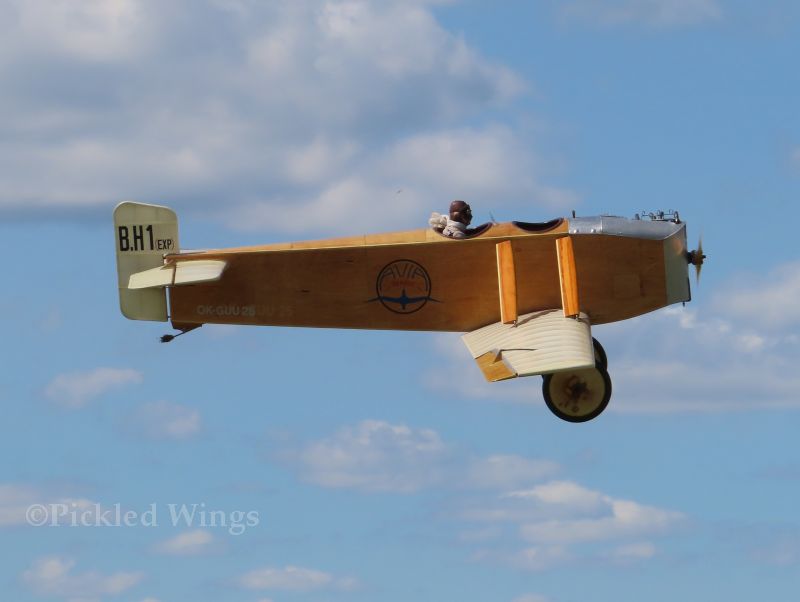
The aircraft made its final flight under the Daimler engine’s power in April of 1921, after which it was extensively rebuilt. The new modifications included a much more powerful French built Gnome radial engine and most of the canvas wing covering replaced with thin plywood.
Following the modifications, the aircraft was given a new designation: BH.1bis.
A Point Proven and a Legacy Born
The BH.1bis flew for the first time in May of 1921 and went on to participate in many competitions across Czechoslovakia and promotional events for Avia.
The aircraft proved itself as competitive and often finished ahead of more powerful aircraft. Through 1921, many pilots tried their hand at flying the BH.1 and were impressed with its performance and handling. The BH.1 was proving beyond a doubt that the monoplane was the way forward in aircraft design.
The BH.1 took its final flight in spring of 1922 and was determined to be not worth repairing after being seriously damaged in a landing accident. However, the BH.1 had proven itself worthy enough of further development.
In fact, Avia already had more refined designs based on the BH.1 underway at the time of the crash.

Descendant Designs
Beneš and Hajn developed a family of eight aircraft types based on the design principles of the BH.1. Some, like the BH.1, were simple one off machines intended for development or competition purposes.
Where competition was concerned, members of this aircraft family did very well in distance races, both non-stop and staged, during the 1920s and 1930s. They won several prizes and set a number of records.
BH.2
The BH.2 appeared in 1921 and only one was built. It was intended to power it with an engine from an Indian motorcycle, but that engine was not of sufficient power. A two cylinder aircraft engine made by British aircraft manufacturer, Bristol, as later fitted to the aircraft.
There is no record of the BH.2 ever taking flight.
BH.3
The BH.3 was a military variant that first flew in 1921. It is significant as it marked Czechoslovakia as one of the first nations in the world to use monoplanes in the fighter role.
The BH.3 was agile, but very sensitive on the controls and had a tendency to enter spins easily. These qualities made it a very demanding aircraft that was unforgiving of any inattention from the pilot. Such qualities did not make it popular among fighter pilots who were accustomed to biplanes.
After deciding to revert to biplanes for fighters, the Czechoslovak military made the very questionable decision to reassign the BH.3 fleet to its flight school. Not surprizingly, this resulted in a number of accidents that injured several student pilots and killed at least two of them.
The BH.3 was used by the Czechoslovak military from 1923 to 1927.
Total production of the BH.3 was 14 aircraft.
BH.4
The BH.4 first flew in 1922. It was designed as an attempt to improve the BH.3’s preformance by fitting a more powerful engine to the design. Ultimately only one BH.4 was built.
The BH.4 had a substantially redesigned nose to accommodate the more powerful Hispano-Suiza engine that replaced the BMW engine used in the BH.3.
Ultimately, the BH.4 did not deliver enough of an improvement over the BH.3. The Czechoslovak army opted for the Letov Š-4 biplane to replace the Avia BH.3 in the fighter role rather than support further development of the BH.4.
BH.5
The BH.5 first flew in 1923. While only one BH.5 was made, it was the most notable of the BH.1 descendants.
The BH.5 represented a true modernization in the aircraft family. While The BH.1 to the BH.4 all featured a combination of wood and fabric in their designs, the BH.5 was of fully wood construction.
Designed as a two seat sports aircraft, the BH.5 won Czechoslovakia its first international aviation prize in the Belgian Touring Aircraft Contest in 1923.
The legend of the BH.5 lives on in a very faithful full scale flying replica that is a regular attendee at Czech airshows. The replica also incorporates some original components, including a Walter NZ-60 radial engine from 1923.
In 2008, the BH.5 replica was flown from Prague to Brussels in a re-enactment of the original’s prize winning flight in 1923.
BH.9
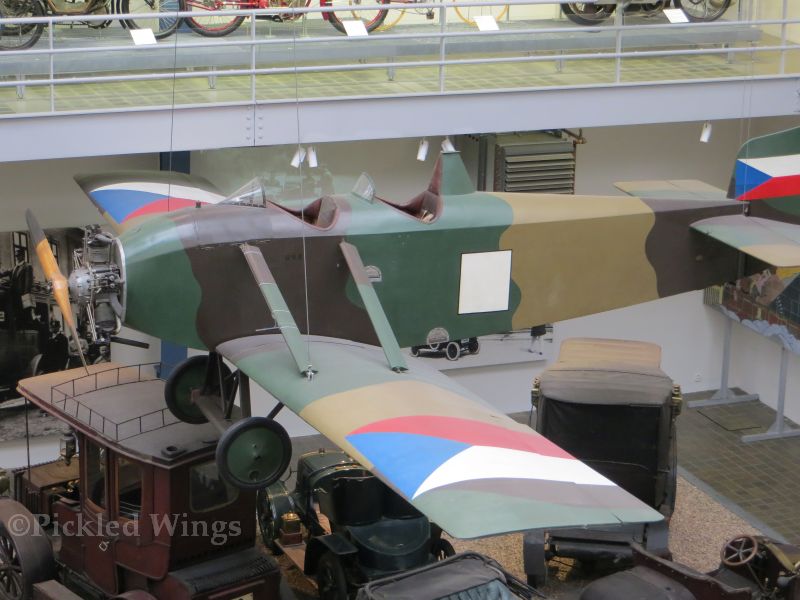
The BH.9 first flew in 1923 and was a military variant based on the BH.5. The BH.9 was the result of Avia strengthening the BH.5 design structurally, at the Czechoslovak army’s request, so that more powerful engines could be fitted to it.
Eleven were made and they served in the Czechoslovak military from 1923 to the end of the 1920s
The BH.9 also proved popular in flying clubs and other civil aviation activities. While it was designed as a two place aircraft, the front cockpit could easily be converted to a cargo hold to allow the aircraft to be used for courier purposes.
BH.10
The BH.10 was a single seat variant designed for acrobatics. It first flew in 1924. The BH.10 was based on the BH.9, but was smaller due to the removal of the second cockpit that was a feature of the BH.9.
BH.10 production totalled 21 aircraft, 10 of those aircraft were used by the Czechoslovak military as aerobatics trainers.
The BH.10, thanks to its agility and speed, found favour in the civilian sector as a competition aircraft. Eight of the ten aircraft the Czechoslovak military used were purchased and placed on the civil register after the type was retired from military service.

BH.11
The BH.11 was a further development of the BH.9. Specifically, the BH.11 featured larger fuel tanks and a revised fuel system. The BH.11 first flew in 1924.
The exact production total for the BH.11 is not known. It is known that the Czechoslovak army ordered at least 15 and a total of 14 were known to exist on the Czech civil register. the last BH.11 was struck from the Czech civil register in 1937.
The BH.11 built on the popularity of the BH.10 and became one of the longest lived members of the family. The last flying BH.11 was in Switzerland and it was lost in a crash in the early 1950s.
BH.12
The BH.12 was the final aircraft design that descended from the BH.1. It was designed specifically as a touring aircraft.
The BH.12 was nearly identical to the BH.11 with the exception of a refined wing design. the new wing design included a hinge that allowed the wings to be folded parallel to the fuselage sides so the aircraft could be easily towed by a vehicle, or even by hand.
Only a single example of the BH.12 was built.

What Remains and Learning More
While the original BH-1 does not exist intact, since 2004 a full scale replica of the aircraft has been a regular performer at airshows across the Czech Republic. In 2007, the BH.1 replica was joined on the Czech airshow circuit by a full scale replica BH.5.
Both replicas are quite faithful to the originals and both are based at Točna airport in Prague, Czech Republic. You can find articles about the replicas, as well as other historic aircraft based at Točna, by visiting the airport website. The link will take you to the main Czech language version of the website, but there is a button to switch to the English version if you scroll to the bottom. The website also has information about regular open days at the airport; so if you’re going to visit Prague and want to see the Točna airport collection, you can look at their open day schedule.
Where original aircraft are concerned, a BH.9 and BH.10 are on display at the National Technical Museum in Prague.
Also in Prague, you can find two preserved examples of the BH.11 at the Kbely Aviation Museum.
As mentioned above, the Točna airport website has articles about the BH.1 and BH.5. Both articles will tell you about the original aircraft as well as the replicas. Both links take you to the Czech version of the website, but you can switch to the English version by clicking the button at the bottom of the website.
The Radio Praha website published two articles in July of 2008 about the replica BH.5 re-enacting the original’s 1923 flight from Prague to Brussels. Part 1 and Part 2.
 Pickled Wings