Albatros Ascending
Founded in 1909, the Berlin-based Albatros Flugzeugwerke produced a range of capable and respected aircraft designs until it merged with Focke-Wulf in 1931.
The name Albatros will forever be associated with some of the finest aircraft Germany and its allies flew into battle during the First World War. Of the many types designed by Albatros, it was the B Series that first brought the company to prominence in international aviation circles.
The B Series started in 1913, prior to the outbreak of the war, with the B.I. Working for Albatros at the time was Ernst Heinkel (1888-1958), who would later establish his own company in 1922 and become known for a series of pre-WWII floatplanes and a variety of German combat aircraft during the Second World War.
Heinkel claimed to have designed the B series aircraft. However, many aviation historians credit the design to Robert Thelen (1884-1968), who was Albatros’s chief designer at the time. By the time the B.II first flew and entered service, Heinkel had already moved on to become chief designer at Hansa-Brandenburg.
A Sentinel On High
The primary role of the B Series was reconnaissance, referred to at the time as “scouting.” Many military figures of the day were skeptical, or outright dismissive, of the value of aircraft in military operations. Aircraft like the Albatros B Series, and the critical intelligence they gathered on enemy movements, were instrumental in changing many minds and demonstrating the strategic value of aviation.
The B Series was produced in three primary variants: B.I, B.II and B.III. Of these, the B.II was the main production model and considered the most significant of the series. All B Series aircraft were unarmed, though field modifications typically included defensive machine gun mounts.
The B.II first flew in 1914 and was based on the B.I, featuring shortened wings and a variety of engines ranging from 100 to 120 horsepower. The Albatros B.II is notable for being the first airplane to drop a bomb on British soil, an event that took place in April of 1915 in the county of Kent.
An important B.II subvariant was the B.IIa, a dedicated training aircraft. It was extensively produced in Sweden and became the nation’s first military training aircraft. Designated Sk.1 in Swedish service, the type remained in service there until 1935.
The B.II also served as the basis for a floatplane variation, produced in modest numbers and known as B.II-W or W.I.
The B.III, which entered service in 1915, was destined for a very short front line service life. In the same year, the remaining B Series aircraft were replaced on the front lines by the armed and improved C Series. However, B Series aircraft continued in service as trainers for the remainder of the conflict and enjoyed post war use in Finland, Lithuania, Poland and Sweden.
The First World War would not be the last combat in which the B Series aircraft saw action. The Polish air force made use of the B.II, as well as other WWI-era types, during the Polish-Soviet War of 1919 to 1921.

What Remains and Learning more
There are three intact original examples of B Series aircraft known to survive in museums today:
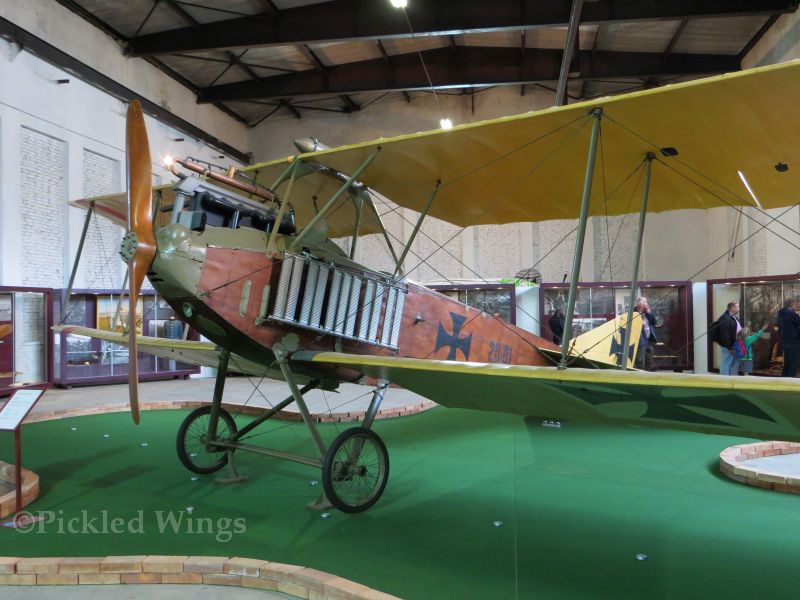
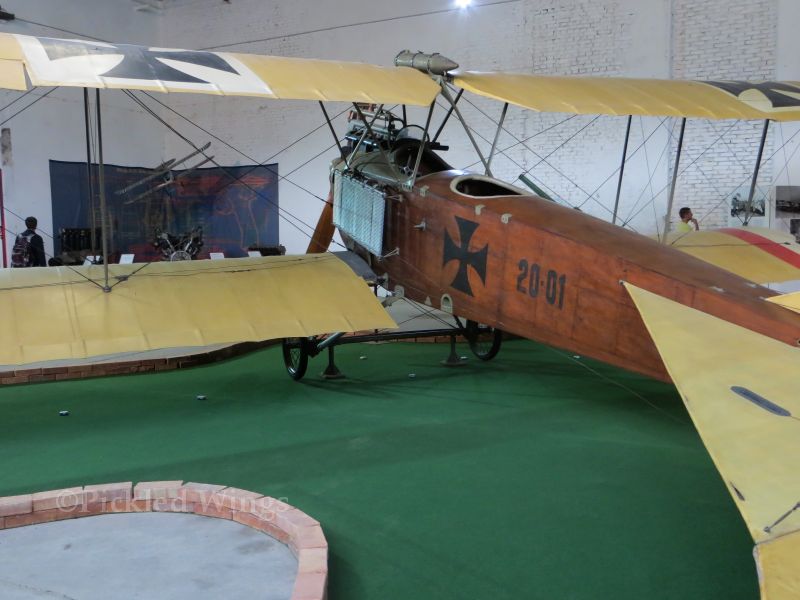
- The only surviving B.I, and the subject of the photos in this article, is housed at the Museum of Military History in Vienna, Austria. At the time of photography, it was on temporary display at the museum’s aviation collection in Zeltweg.
- Two B.IIa examples are known: one at the Swedish Air Force Museum in Linköping and the other at the Polish Aviation Museum in Kraków.
A flying replica of a B.II was built in Germany in 2000 and toured European airshows in the early 2000s. By 2006, it had been purchased by Sir Peter Jackson and relocated to New Zealand to join his 14-18 Aviation Heritage Trust collection.
Jackson loaned the aircraft to the Omaka Aviation Heritage Centre where it debuted in the “Knights of the Sky” exhibition in late 2006. The aircraft remained on public display at Omaka for six years before being returned to Jackson’s private collection.
This link will take you to more information and photo galleries of the Polish Aviation Museum’s B.II.
Acknowledgment:
Special thanks to the Omaka Aviation Heritage Centre in New Zealand for providing details on the current ownership and status of the Albatros B.II replica featured in this article.
 Pickled Wings
I really like the information about the Albatros. My research is between the wars. So I know very little about WWI aviation. I plan to read your other blogs so I am more informed. I also love the name of your blog. My blog is titled: there’s more than Amelia.
Thank you for following my blog.
Good outline of a seminal but not well known type. Everyone knows about the Red Baron’s streamlined DVII model from later in the war. But not so much the primitive, normally unarmed spy plane B model. Except for the bombing I suppose. And earning its keep as a trainer throughout WWI and beyond. Good pics too, not so easy in cluttered air museums.