A Foot in the Door
In the early 1990s, the market for pressurized single-engine turboprop business and utility aircraft began to emerge. Today, that segment is exemplified by aircraft such as the Pilatus PC-12 and the SOCATA TBM series. Both feature comfortable, spacious cabins that can be configured for a variety of purposes and offer fuel-efficient performance at near-jet speeds, thanks to engines from the proven and reliable Pratt & Whitney Canada PT6A turboprop family..
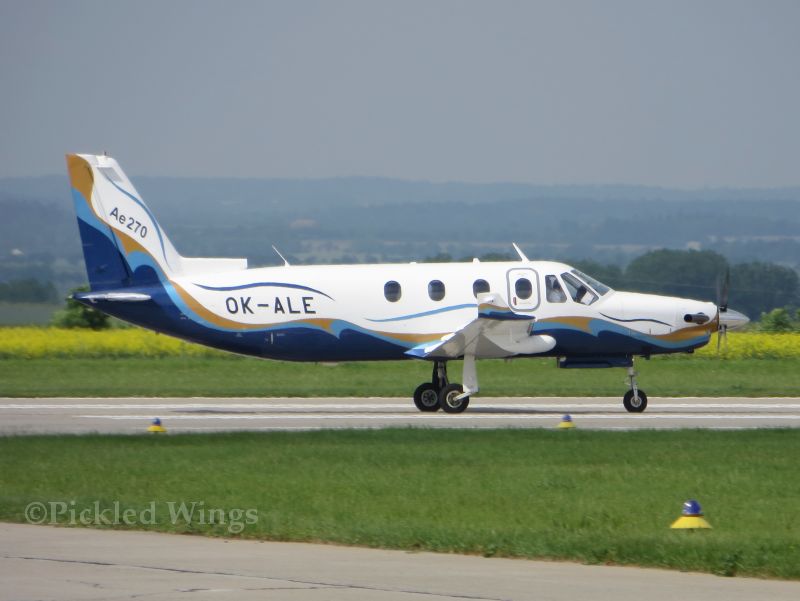
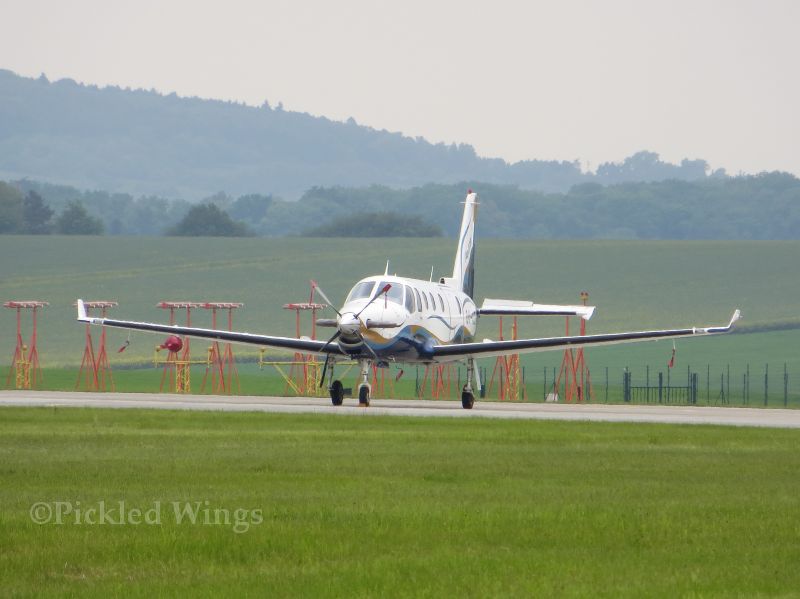
Legendary Czech aircraft manufacturer Aero Vodochody wanted a stake in this growing market and set to work designing their own aircraft—the Ae-270 Ibis. Aero finalised the Ibis design in 1993, but the journey from final design to flying prototype was long, slow, and full of obstacles.
Ultimately, the Ae-270 Ibis only ever existed as a handful of prototypes. It was a competent design, but bureaucratic, financial, and political factors, combined with shifting priorities of its manufacturers, undermined its potential.
Let’s spend some time with the Aero Ae-270 Ibis:
The Thin Ice of Freedom
Despite having a finalised design, Aero could not give the Ibis its full attention during a precarious period for both the company and the country. Czechoslovakia had officially split at the start of 1993, and Czech industries were still adjusting to denationalization and the sink-or-swim realities of a free-market economy.
After the fall of the Soviet Union and the dissolution of the Warsaw Pact in 1991, Aero attempted to promote an improved version of its successful L-39 Albatros training jet to new markets. Unfortunately, these efforts met with limited success, leaving the company on the brink of bankruptcy.
With the company’s survival uncertain, Aero chose to suspend civil aviation activities entirely and focus on military projects. Its major focus at the time was the development of the L-159 ALCA (Advanced Light Combat Aircraft)—a derivative of the L-39 Albatros intended to replace Soviet-made attack aircraft in the Czech air force.
Reawakening the Ibis
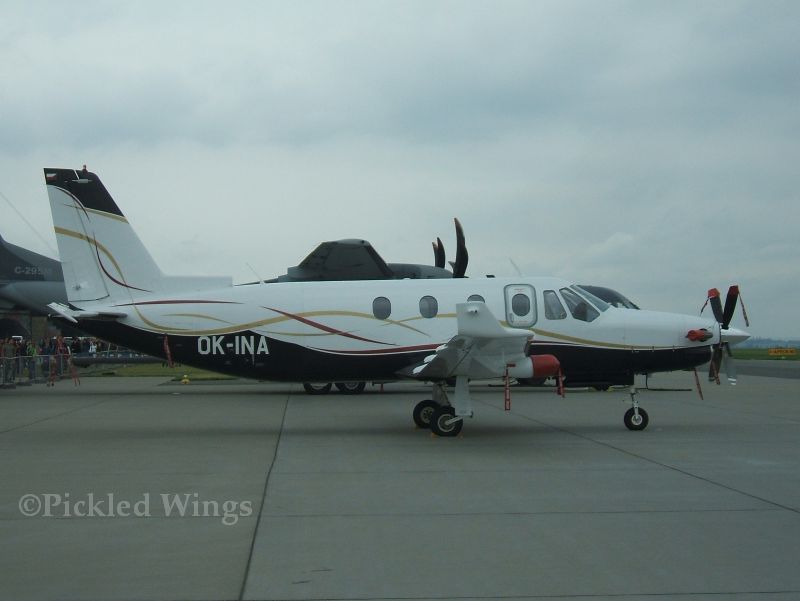
In 1997, the Ae-270 project was revived, in part due to the L-159 ALCA programme.
The L-159’s engine had originated as a joint project between the American company Garrett AiResearch and the Aerospace Industrial Development Corporation (AIDC) of Taiwan. While collaborating on the L-159, AIDC representatives became aware of the Ae-270 project and expressed interest.
Aero and AIDC formed a joint venture, Ibis Aerospace Ltd., in 1997. Under the agreement, AIDC would produce the wings and landing gear and market the aircraft in Asia, while Aero would handle the fuselage, final assembly, and marketing to global markets outside Asia.
The first Ae-270 Ibis prototype flew in 2000. However, very little proceeded smoothly after this milestone.
Struggling Skyward
From its first flight, the Ae-270 lagged behind the aircraft it had been envisioned to compete with; both the Pilatus PC-12 and SOCATA TBM series had already been in production and service for over a decade. The Ibis Aerospace team faced an almost impossible challenge to catch up.
Development was plagued by problems, including changing requirements that increased the aircraft’s weight beyond initial targets. Further modifications mandated by Czech civil aviation authorities caused delays and negatively affected performance.
Early flight testing revealed that the increased weight left the aircraft underpowered, necessitating a more powerful PT6A engine to remain competitive.
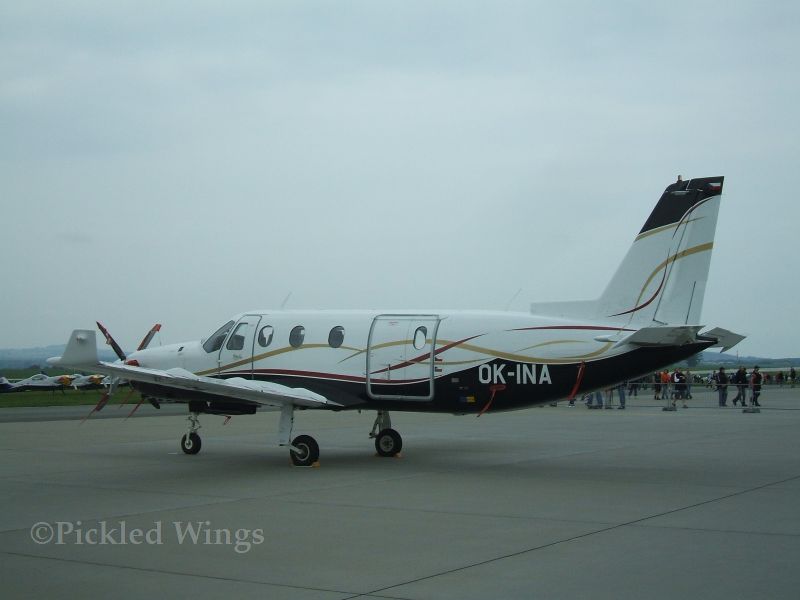
From October 2003, the sixth prototype embarked on a year-long sales tour of the United States. Programme delays meant the aircraft’s early public appearances were finished only in primer and without complete interiors. These shortcomings were corrected during the tour. To potential customers in the United States, the aircraft was marketed as the Ae-270 Spirit Propjet.
In 2004, AIDC, responsible for producing the wings, refused to deliver additional sets beyond the first ten. This problem was exacerbated by the lack of a contingency plan for wing manufacture in the Czech Republic.
Despite these setbacks, the Ibis achieved EASA certification in 2005 and FAA certification in 2006. However, this success was short-lived. By 2006, Aero had slowed the programme and reassigned personnel to other projects.
In 2007, AIDC withdrew from the joint venture, effectively ending Ibis Aerospace. Aero formally cancelled the project in 2008. Under the dissolution agreement, knowledge assets and completed aircraft were divided between the two companies.
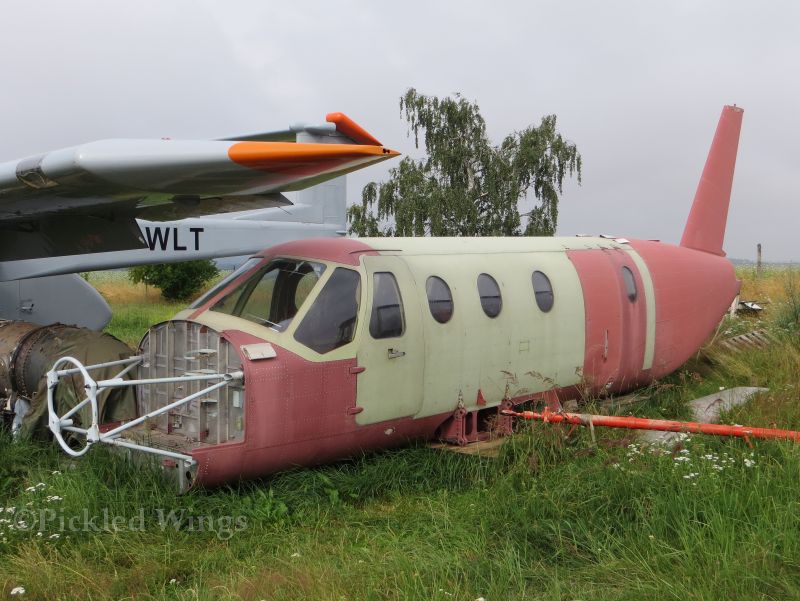
What Remains of an Opportunity Lost
Detailed information about the Ibis and the reasons for its failure remains limited. Technical requirements played a significant role, but financial constraints and shifting partner priorities also contributed.
Aero retained at least two Ibises in flyable condition, with others used for instructional purposes in its educational programmes. Partially completed airframes are held in air museums in Zruč and Koněšín, Czech Republic.
The last known flight of an Ae-270 occurred in December 2018, with the eighth prototype operated by Aero.
In 2011, there was discussion of selling the Ibis project to a buyer in Belarus, but nothing materialised. In 2016, Aero sold intellectual property rights, type certificates, and construction jigs to Nigerian investors via Lebanon-based COPS Investments. The same year, Aircraft Integrated Solutions Ltd. (AIS) was established in the UK to produce the aircraft as the AIS Spirit. Some sources suggest AIS operated as a subsidiary of COPS, though this is difficult to verify.
A review of the AIS website in early 2026 shows no progress toward production. The site includes planned specifications and cabin configurations, but all photos are of prototypes built by Aero.
Learning More
Neither Aero nor AIDC currently provide information about the Ibis on their websites, and official sites for Ibis Aerospace and the Ae-270 are no longer active.
The orlita.net aviation website has a detailed article about the Ae-270, providing valuable insights into its development and eventual failure. It is in Czech but translates well using online tools.
 Pickled Wings