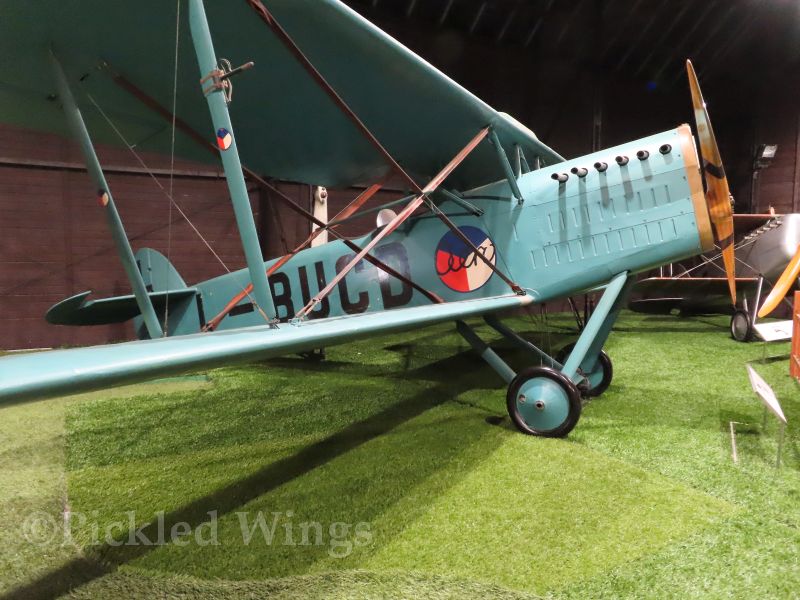
Aero Ascending
As the clouds of the First World War cleared over Europe, the newly independent Czechoslovakia emerged as an ambitious nation, rich with talent in aviation and many other technical fields.
Founded in 1919, the year following the establishment of Czechoslovakia, Aero is one of the oldest Czech aircraft manufacturers. The Aero name is emblazoned upon many legendary Czechoslovak aircraft designs, from the interwar period up to the present day. Having survived the Second World War and the rise and fall of socialism, Aero remains active in aircraft manufacturing today. The company produces components for foreign aircraft as well as complete aircraft of its own design.
Along with Avia and Letov, Aero formed the foundation of the young nation’s aviation industry and played a key role in both civilian and military developments during the interwar period.
The Aero A.11 was a particularly important aircraft, serving as the basis for no fewer than seven later aircraft types that served the Czechoslovak air force—and a few foreign air arms—effectively until the outbreak of the Second World War.
From Good Stock
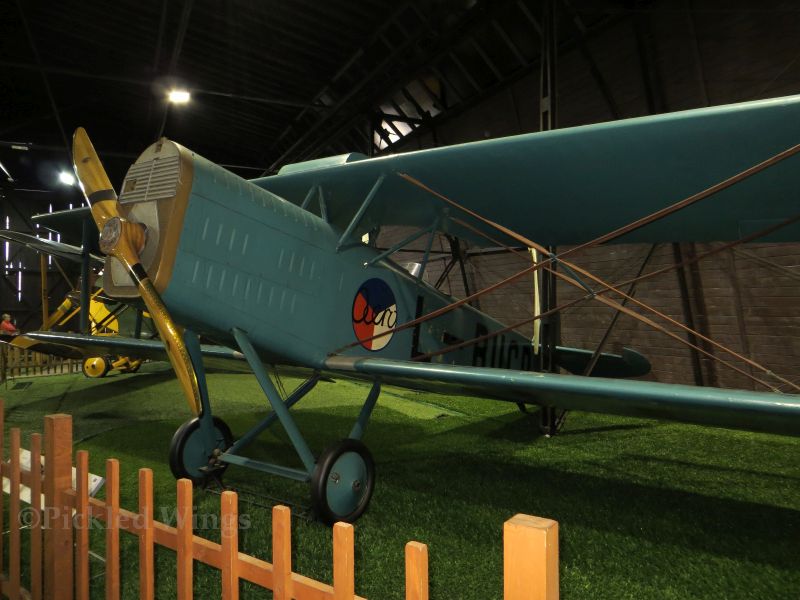
The A.11 was a two-seat light bomber and reconnaissance aircraft that, despite its numerical designation, was developed from Aero’s earlier A.12 design.
The A.12 first flew in 1923 and proved to be a popular and reliable aircraft. Aside from some engine vibration issues, it was relatively easy to maintain and operate. When the time came to provide the Czechoslovak military a new light bomber and reconnaissance aircraft, Aero had a strong foundation in the A.12.
Aero co-founder and chief designer Antonín Husník (1894–1948) developed the A.11 from the A.12 and succeeded in improving on the older design. The A.11 first flew in 1925, and variants of it served reliably on the front lines of the Czechoslovak Air Force until the mid-1930s.
The main area of improvement between the A.12 and the A.11 was the engine. The German-made 240-horsepower Maybach engine used in the A.12 was replaced with superior alternatives. Many A.11s were equipped with versions of the domestically produced Breitfeld-Daněk Perun six-cylinder inline engine, while others were powered by the Walter W-IV, another domestically developed six-cylinder inline engine.
With a maximum speed of approximately 215 kilometres per hour (134 mph) and a range of 750 kilometres (466 miles), the A.11 delivered impressive flight performance for its time. It even set at least one national speed record during the 1920s.
Perhaps the best testament to the aircraft’s performance and reliability comes from an extensive promotional tour in 1926. An A.11 and its crew flew a total 15,070 kilometres (9364 miles) across Europe, North Africa and the Anatolian Peninsula. The aircraft overflew 26 nations and spent almost 92 hours in the air without any major issues.
Outside of Czechoslovakia, the A.11 also served with the Finnish military. Finland ordered eight A.11 aircraft as an interim solution when the Dutch-designed N.V.I. F.K. 31 failed to replace their ageing fleet of French-designed Breguét 14s. In Finnish service, the A.11 proved as popular and reliable as it had in Czechoslovakia. The Finnish fleet remained in use until 1939.
A.11 variants were produced for approximately six years, though production totals vary depending on the source. Variants included:
A.11HS
This designation was used for the version exported to Finland. It differed from the Czechoslovak versions by featuring a 300-horsepower Hispano-Suiza eight-cylinder engine.
Ab.11
This was the light bomber version. It could carry up to 200 kilograms (441 pounds) of bombs.
A.11N
Night bomber version.
Aš.11
This designation was used for baseline A.11s converted to training aircraft after they were replaced in frontline service by the Letov Š-328.
The Aero A.11 Today and Learning More
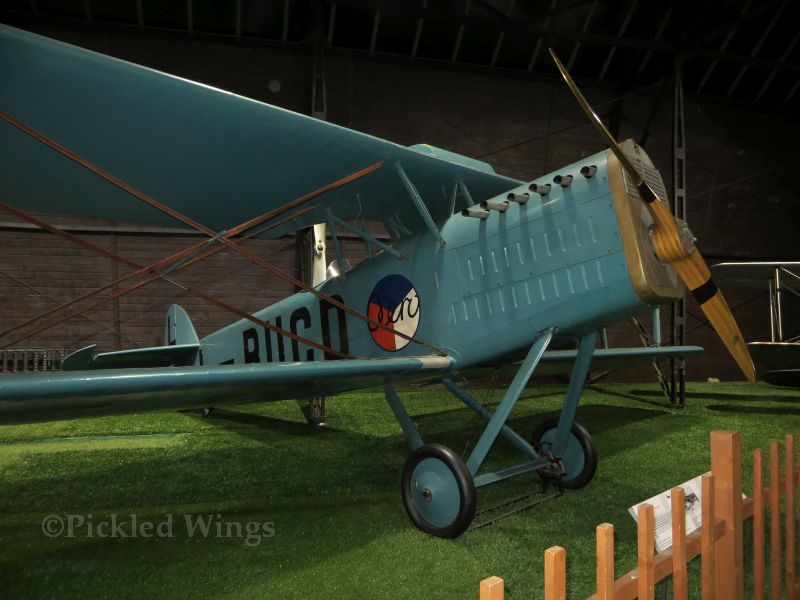
Given the rapid pace of aviation development during the interwar period and the fact that the A.11 originated in a relatively small country, it is perhaps unsurprising that no flying examples—restored or replica—are known to exist today. Opportunities to view the A.11 in museum collections are also limited.
However, a very well-made replica of an Ab.11 is on display at the excellent Kbely Aviation Museum in Prague, Czech Republic.
If you want to see an original A.11, a genuine A.11HS is preserved in the collection of the Aviation Museum in Hallinportti, located in central Finland.
There’s not much English-language information available on the A.11, but the following Czech-language sources respond well to online translators:
Additionally, this bilingual English/Finnish link offers insights into the A.11 in Finnish service:
 Pickled Wings