Pioneering Airline
Founded in 1923, Czech Airlines was one of the world’s oldest Carriers when it ceased operations in 2024.
Given this long history, it is no surprise that Czech Airlines and the Czech aviation industry share several significant connections. One of the earliest of these is the Aero A.10 airliner. Among the first aircraft types flown by Czechoslovak State Airlines (initially known as ČSA), the Aero A.10 was also one of the world’s earliest purpose-built airliners.
Aero, established in 1919, is one of the oldest Czech aviation manufacturers. Like several other early Czech aircraft producers, it began operations at Prague’s Letňany Airport. By the early 1920s, the company had relocated to a custom-built facility in Prague’s Vysočany district. Letňany and Vysočany border Kbely, where ČSA operated during its early years. Their physical proximity made cooperation between manufacturer and airline both natural and convenient.
Aero still operates today as Aero Vodochody—named after the town of Vodochody, just north of Prague, where the company is now based.

Something to Prove
The First World War demonstrated that aircraft could serve practical purposes. Before the war, aviation was often dismissed as a frivolous pursuit for wealthy hobbyists or eccentric dreamers.
The idea of passenger air travel took hold early as a faster alternative to ground transport. However, during the interwar years, air travel remained largely the territory of the wealthy. It wasn’t until after the Second World War that air travel came within financial reach of the broader public.
Some of the earliest airliners were adapted from First World War military utility aircraft. These early adaptations were typically uncomfortable and ill-suited for transporting passengers.
The air travel industry began to take shape in the early 1920s, as new airlines emerged and demanded aircraft designed specifically for commercial use. Czechoslovakia, a newly formed nation after the First World War, had already demonstrated its domestic capacity for producing modern military and general aviation aircraft.
It was a time to prove aviation was a technology with the potential to move the masses.
It was also time for an aircraft producer from a newly created nation to show it was capable of creating large and complex flying machines.
The Aero A.10 emerged from this period of ambition and innovation. It became the first Czech-designed transport aircraft, representing not only technological progress but also national pride.

Made to Order
Although ČSA was the only operator of the Aero A.10, the aircraft’s origin predates the airline. In fact, the impetus came from the Czechoslovak Aviation Joint Stock Company (ČsLAS), which ordered the aircraft from Aero in 1921.
Despite ČSA’s longevity, ČsLAS was the first airline in the country. Their specifications for the Aero A.10 called for a two-person crew (pilot and mechanic) and the capacity to carry three to five passengers in a fully enclosed cabin. Five aircraft were ordered for planned routes connecting Prague to various German cities.
Though small by modern standards, this order made the A.10 the first purpose-built airliner to enter series production globally.
However, ČsLAS went bankrupt before the prototype’s first flight in January 1922. With the airline dissolved and ČSA not yet formed, Aero faced a critical question: what to do with the near-completed aircraft?
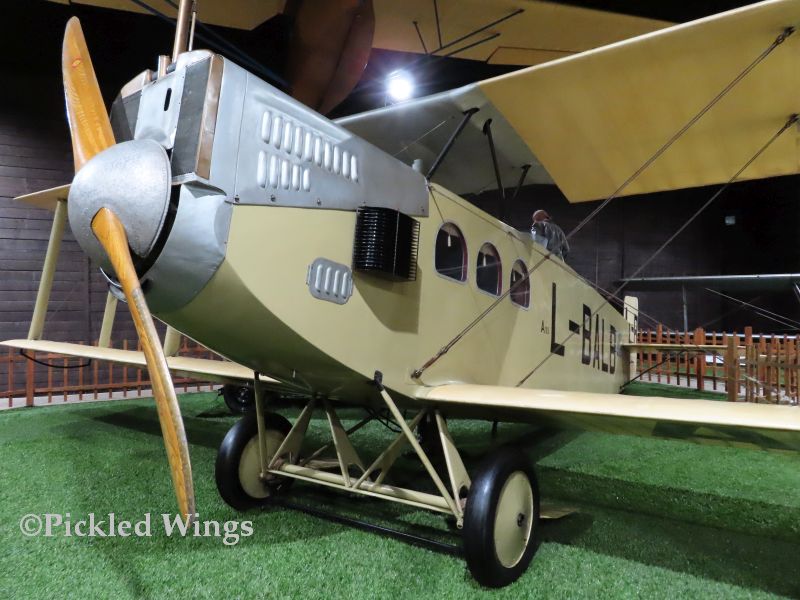
Despite this setback, the Aero A.10 was an impressive aircraft. Its passenger cabin, located directly behind the single engine, featured a double-walled design and laminated windows to reduce engine noise. Additional spacing between the engine compartment and cabin offered improved safety in the event of an engine fire.
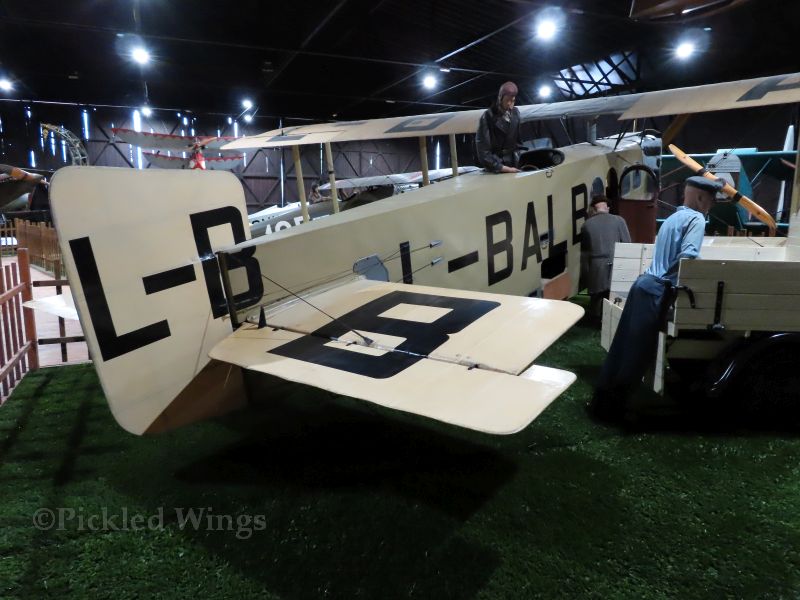
The pilot and mechanic sat side by side in an open cockpit above and behind the cabin. Luggage and cargo were stored in a compartment below the cockpit.
The aircraft’s performance was competitive for its era. It had a maximum operating height of 6,000 metres (20,000 feet), a cruising speed of 140 km/h (87 mph) and a top speed of 160 km/h (99 mph). Under ideal conditions, it could fly for four hours and had a range of around 520 kilometers (323 miles).
A Point of Pride
There was a lot riding on the success of the A.10 from standpoints of commercial and technological advances as well as national pride.
Fortunately, the Czechoslovak government took over the aircraft that were built for the ČsLAS order. Recognizing the symbolic and technological value of the A.10, the state kept the aircraft active while testing its capabilities in various scenarios.
One dramatic test occurred in December 1922, when an A.10 carried 17 people on a short flight. Beyond the overcrowded cabin and cockpit, additional passengers clung to the wings and exterior of the aircraft. This risky demonstration not only proved the aircraft’s strength but also showcased the pilot’s exceptional control under extraordinary conditions.
The aircraft’s quality was demonstrated again in July 1923 when one flew in stages to Gothenburg, Sweden, for an airshow. Despite mechanical issues with the engine radiator, the aircraft completed the journey.
ČSA was officially established in October 1923. The airline operated a fleet of four Aero A.10 aircraft on the Prague–Bratislava route. One of the five A.10s had been written off following a non-fatal crash earlier that year.
The aircraft served ČSA until June 1924. Its short operational life was largely due to the unreliable and temperamental Maybach Mb IVa engine, which demanded extremely precise throttle and carburetor adjustments to avoid power loss. This engine instability led to several emergency landings and the aircraft’s early retirement from airline service.
After retirement, the A.10s were placed in storage and struck from the civil flying register in 1928. All but one were scrapped.
Over their brief careers, the four operational A.10s accumulated 19,878 kilometres (12,352 miles) and 167.22 flying hours in total.
By the end of 1924, ČSA had replaced the A.10s with Aero A.14 aircraft, modified versions of the First World War-era Hansa-Brandenburg C.I utility plane. In 1925, the airline operated a mixed fleet of Czech-designed Letov Š-19 aircraft and British De Havilland DH.50 airliners licence-built by Aero.
The Aero A.10 demonstrated not only the feasibility of passenger aircraft but also the competence and promise of the fledgling Czech aviation industry.
The Aero A.10 Today
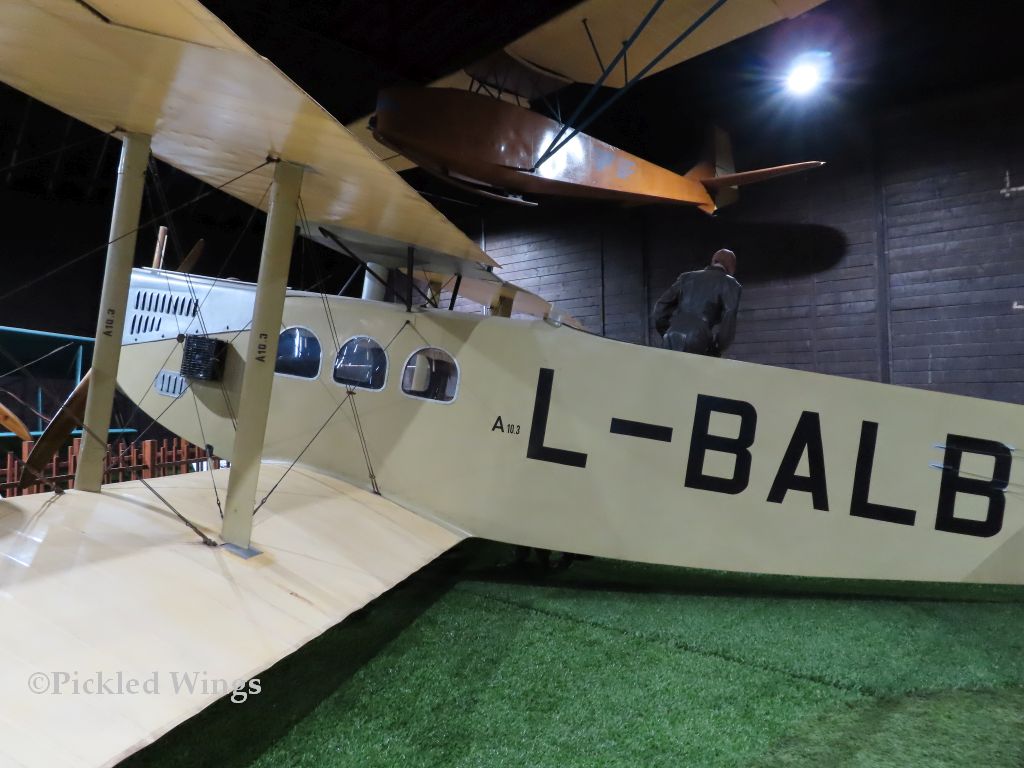
Only one of the original five A.10s survives today, preserved at the Kbely Aviation Museum in Prague. This particular aircraft, the third built, also made the final ČSA flight of the type.
It is remarkable that the aircraft survived at all. It languished in storage for years, passing through many owners before the Military Historic Institute (VHÚ) accquired it in 1973. At that time, little of the original airframe remained intact.
In 1975, an intensive restoration of the aircraft began. The restored aircraft was put on display at the museum in 1977.
Today, the aircraft takes pride of place in the museum’s interwar collection.
Further Reading
Unsurprisingly, most detailed information about the Aero A.10 is in the Czech language. However, the following online articles respond reasonably well to online translator functions:
- A feature from idnes.cz commemorating the 100th anniversary of the A.10’s first flight.
- A first flight centennial article on aeroweb.cz.
- The VHÚ website has two articles about the A.10. The first article covers some technical aspects and accomplishments while the second article talks more about the A.10 at the Kbely museum.
 Pickled Wings